
Scheme 1.
The illustration of the module replacement process.

Module Replacement of Gold Nanoparticles by a Pseudo-AGR Process
Fengming Jin , Hongwei Dong , Yan Zhao , Shengli Zhuang , Lingwen Liao , Nan Yan , Wanmiao Gu , Jun Zha , Jinyun Yuan , Jin Li , Haiteng Deng , Zibao Gan , Jinlong Yang , Zhikun Wu


For organic molecules, people can precisely tailor the specific substructure without altering the major carbon bones to endow them with various functions. Meanwhile, for traditional nanoparticles, it is nearly impossible to precisely tune the structure at the atomic level. With the development of wet chemistry, breakthroughs have been achieved in the synthesis of ultrasmall metal nanoparticles (often called nanoclusters (NCs)) in the past decades.[1-10] Metal NCs have the merits of mono-dispersity, [11-14] well-defined compositions and structures, [1, 15-22] intriguing physicochemical properties[7, 23-28] and so on. In particular, these ultrasmall nanoparticles provide opportunities for precisely tuning the overall or even partial structure (including specific sites), which is of great significance to understand the structure-property correlation and improve the performance in a sustainable way. The overall structure transformation has been repeatedly reported; for example, Au25 NCs can be converted into Au20, [29] Au23, [30] Au24, [31] Au28, [32] or Au38[33, 34] by various methods such as ligand exchange/etching, reduction and acid-induction. Recently, the single or few metal-atom tailoring of metal nanoparticles with the remnant structure untouched has also been accomplished. For example, Jin et al. reported an interesting molecular "surgery"[35, 36] by employing the combined anti-galvanic[37-39] and pseudo-anti-galvanic reactions.[31] Wu et al. successfully realized single or few metal-atom addition and replacement by employing an anti-galvanic reaction (AGR)[40-44] (notably, the same group also introduced the surface single-atom tailoring method recently).[45] However, to date, the local structural replacement involving over three net metal atoms (Scheme 1) has not been fulfilled no matter the replacement is an elementary reaction or not. For clarification, such a structure manipulation was named module replacement (MR). To explore such a concept, we conducted this study.
Unlike the common ligands such as 4-tert-butylbenzenethiolate (TBBT), 2, 4-dimethylbenzenethiolate (CHT) (2, 4-DMBT), and p-methylbenzenethiolate (p-MBT), cyclohexanethiolate is short and flexible, making it suitable for this study as a protecting ligand of metal NCs. Actually, cyclohexanethiolated gold NCs have gained extensive interest recently, and several cyclohexanethiolated gold NCs including Au18(CHT)14, [46] [Au23(CHT)16]−, [47] Au28(CHT)20, [48] Au34(CHT)22, [49] Au42(CHT)26, [49] and Au43(CHT)25[50] have been reported and structurally resolved until now. However, it remains unknown whether the cyclohexanethiolated gold NCs larger than Au43(CHT)25[50] can be structurally resolved. To address this issue as well, we investigated the synthesis of cyclohexanethiolated gold NCs and obtained a slightly larger NC Au48(CHT)26.
Electrospray ionization mass spectrometry (ESI-MS) was applied to determine the exact molecular formulas of the as-obtained gold NCs. To assist in the ionization, cesium acetate (CsOAC) was added to the NC solution to form positively charged adducts. Notably, the NCs are charge neutral since the charge number is equal to the number of adducted Cs ions, which is further supported by the fact that there were no sound signals in the mass spectra acquired in both the positive and negative ionization modes without the addition of the assistant reagent. As shown in Figure 1a, one dominant peak centered at m/z 6358.95 was shown in the mass spectrum, which can be readily assigned to [Au48(CHT)26Cs2]2+ species (calculated: 6358.37 Da, deviation: 0.58 Da). Therefore, the NC formula was determined to be Au48(CHT)26.
Single-crystal X-ray crystallography (SCXC) confirms the composition and reveals that the NCs crystallize in the axisymmetric space group P21/c with the unit cell comprised of a pair of enantiomers (Figure S1). As shown in Figure 2, the overall structure of Au48(CHT)26 is distinctly different from the previously reported Au48(TBBT)28 NC, which is protected by 28 4-tert-butylbenzenethiolates with a Au31 kernel consisting of face-fused bi-icosahedral Au23 and a special Au8 bottom cap.[51] Meanwhile, the structure of Au48(CHT)26 contains a Au35 kernel (Figure 2c) composed of one quasi-fcc Au21 unit (Figure 2a) and one non-fcc Au14 unit (Figure 2b). This quasi-dualpacked-kerneled structure resembles that of Au49(2, 4-DMBT)27, which contains a Au34 kernel consisting of one quasi-fcc Au21 unit and one non-fcc Au13 unit, [52] and it has not been previously reported in cyclohexanethiolated metal NCs. The Au35 kernel of Au48(CHT)26 is capped by an exterior shell including four Au2(SR)3 dimers, five Au(SR)2 monomers and four bridging SR thiolates (Figure 2d-2f).

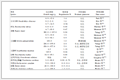
A pseudo-anti-galvanic reaction (AGR) was employed for the MR of the as-obtained Au48(CHT)26 due to that pseudo-AGR has shown great potential to modulate the structure of gold NCs in a controlled way.[31, 35, 44] Luckily, we successfully achieved the MR manipulation and obtained a novel NC, whose composition was determined to be Au37(CHT)23 (Figure 1b). SCXC further confirms this composition and reveals that Au37(CHT)23 crystallizes in the axisymmetric space group P-1, with the unit cell comprised of a pair of enantiomers (Figure S2). The overall structure of Au37(CHT)23 is composed of an Au25 kernel capped by an outer shell containing one Au3(SR)4 trimer, three Au2(SR)3 dimers, three Au(SR)2 monomers and four bridging SR thiolates (Figure S3). It can be readily found that the Au35 kernel of Au48(CHT)26 can be regarded as the net addition of one Au10 unit to the Au25 kernel of Au37(CHT)23 (Figure 3a-3f). In the Au10 unit, four Au atoms belong to the part of the quasi-fcc structure, and the other six Au atoms belong to the part of the non-fcc structure. Of note is that the proportion of fcc structure in the kernel of Au37(CHT)23 increases compared to that in the kernel of Au48(CHT)26. However, the Au25 kernel connected staples in Au37(CHT)23 are the same as those in Au48(CHT)26, i.e., Au37(CHT)23 and Au48(CHT)26 share the same Au31(CHT)12 section with the other section different (Au6(CHT)11 vs. Au17(CHT)14). Therefore, the transformation from Au48(CHT)26 to Au37(CHT)23 can be regarded as a MR process (Figure 4), and the net reaction can be described in Table 1. DFT calculations (see Supporting Information for the details) reveal the formation energy (ΔE) is -22.0 eV, indicating that the reaction is energy-favorable. It should be noted that Au48(CHT)26 and Au37(CHT)23 can also be regarded as kernel homologues previously proposed by Zhuang et al.[51] The local internal structural change also leads to the remarkable alternation of the external structure (crystallographic arrangement). As shown in Figure S4, the Au48(CHT)26 adopts the "ABCD" arrangement, which is essentially different from the "ABAB" arrangement in Au37(CHT)23 crystals.


More interest pertains to the property tuning of the MR. Photoluminescence is an intriguing property that has been extensively studied, [53-61] while photothermy is rarely studied for well-defined NCs despite its potential in a large range of fields such as energy conversion[62, 63] and biomedicine.[64-68] To the best of our knowledge, the combination study of photoluminescence and photothermy for well-defined metal NCs has not yet been examined. Herein, we investigated and compared their photoluminescence and photothermy. As shown in Figure 5 and Figures S5 and S6, both NCs exhibit obvious photothermal effects. Specifically, the temperatures of Au48(CHT)26 and Au37(CHT)23 solutions with a concentration of 0.1 mmol/L increased by 17.2 ℃ and 12.0 ℃ under the investigated conditions with photothermal conversion efficiencies of 42.9% and 30.3%, respectively (see Figure 5a and Supporting Information), indicating that Au48(CHT)26 had a stronger photothermal effect than Au37(CHT)23, which is also supported by their infrared thermal imaging results (Figure S5). However, the emission intensity of Au37(CHT)23 is about three-fold the intensity of Au48(CHT)26 (Figure 5b), indicating that emission and photothermy are in a balance[69-71] and they can be at least partly converted into each other, which was not previously reported for well-defined NCs. These facts also indicate that MR can efficiently tune the properties of metal NCs. It should be noted that such bi(multiple)-functional NCs are particularly promising for practical applications. For example, such materials might be applied for both imaging and curing cancer since they have both NIR photoluminescence and photothermy properties. Nevertheless, this is beyond the scope of the current study and should be pursued in the future.

In summary, we have succeeded in synthesizing the largest cyclohexanethiolated metal NCs structurally resolved by ESI-MS and SCXC, revealing that one NC is composed of 48 gold atoms and 26 cyclohexanethiolates with a quasi-dual-packed-kerneled structure not reported in cyclohexanethiolated metal NCs. For the first time, we fulfill the MR manipulation of metal NCs by a pseudo-AGR process and obtain another novel NC Au37(CHT)23, which can also be regarded as the kernel homologue of Au48(CHT)26. DFT calculations also support the transformation from Au48(CHT)26 to Au37(CHT)23 is energy-favorable. The MR weakens the photoluminescence but strengthens the photothermy in this work, indicating that photoluminescence and photothermy are in a balance and they can be at least partly converted into each other for NCs. The property tuning by MR might endow NCs better potential for bi(multiple)-functional applications, which need to be pursued in the future. Overall, our work not only provides novel insights into the structures of metal NCs but also has important implications for future tuning of the compositions, structures and properties of metal nanoparticles and understanding of the interactions between various properties as well.
The synthesis is facile. Briefly, the precursors of the polydisperse Aux(CHT)y clusters were first synthesized by reducing the Au(I)-(CHT) complexes with NaBH4. Then, the Aux(CHT)y was treated with excess cyclohexanethiol at 80 ℃ for 15 h. The crude products were washed with excess methanol and then purified by preparative thin-layer chromatography (PTLC) (see Supporting Information for the experimental details). The as-purified NCs were recrystallized from the solution of toluene/methanol (V:V=4:3) at 0 ℃ over one week.
Jadzinsky, P. D.; Calero, G.; Ackerson, C. J.; Bushnell, D. A.; Kornberg, R. D. Science 2007, 318, 430. doi: 10.1126/science.1148624
Negishi, Y.; Chaki, N. K.; Shichibu, Y.; Whetten, R. L.; Tsukuda, T. J. Am. Chem. Soc. 2007, 129, 11322. doi: 10.1021/ja073580+
Sánchez-Castillo, A.; Noguez, C.; Garzón, I. L. J. Am. Chem. Soc. 2010, 132, 1504. doi: 10.1021/ja907365f
Parker, J. F.; Fields-Zinna, C. A.; Murray, R. W. Acc. Chem. Res. 2010, 43, 1289. doi: 10.1021/ar100048c
Desireddy, A.; Conn, B. E.; Guo, J.; Yoon, B.; Barnett, R. N.; Monahan, B. M.; Kirschbaum, K.; Griffith, W. P.; Whetten, R. L.; Landman, U.; Bigioni, T. P. Nature 2013, 501, 399. doi: 10.1038/nature12523
Yamazoe, S.; Koyasu, K.; Tsukuda, T. Acc. Chem. Res. 2014, 47, 816. doi: 10.1021/ar400209a
Mathew, A.; Pradeep, T. Part. Part. Syst. Charact. 2014, 31, 1017. doi: 10.1002/ppsc.201400033
Alhilaly, M. J.; Bootharaju, M. S.; Joshi, C. P.; Besong, T. M.; Emwas, A. H.; Juarez-Mosqueda, R.; Kaappa, S.; Malola, S.; Adil, K.; Shkurenko, A.; Hakkinen, H.; Eddaoudi, M.; Bakr, O. M. J. Am. Chem. Soc. 2016, 138, 14727. doi: 10.1021/jacs.6b09007
Zhao, Y.; Zhuang, S.; Liao, L.; Wang, C.; Xia, N.; Gan, Z.; Gu, W.; Li, J.; Deng, H.; Wu, Z. J. Am. Chem. Soc. 2020, 142, 973. doi: 10.1021/jacs.9b11017
Zhu, M.; Li, M.; Yao, C.; Xia, N.; Zhao, Y.; Yan, N.; Liao, L.; Wu, Z. Acta Phys.-Chim. Sin. 2018, 34, 792. doi: 10.3866/PKU.WHXB201710091
Qian, H.; Zhu, Y.; Jin, R. ACS Nano 2009, 3, 3795. doi: 10.1021/nn901137h
Jin, R.; Qian, H.; Wu, Z.; Zhu, Y.; Zhu, M.; Mohanty, A.; Garg, N. J. Phys. Chem. Lett. 2010, 1, 2903. doi: 10.1021/jz100944k
Wu, Z.; MacDonald, M. A.; Chen, J.; Zhang, P.; Jin, R. J. Am. Chem. Soc. 2011, 133, 9670. doi: 10.1021/ja2028102
Knoppe, S.; Boudon, J.; Dolamic, I.; Dass, A.; Bürgi, T. Anal. Chem. 2011, 83, 5056. doi: 10.1021/ac200789v
Qian, H.; Eckenhoff, W. T.; Zhu, Y.; Pintauer, T.; Jin, R. J. Am. Chem. Soc. 2010, 132, 8280. doi: 10.1021/ja103592z
Yang, H.; Wang, Y.; Huang, H.; Gell, L.; Lehtovaara, L.; Malola, S.; Häkkinen, H.; Zheng, N. Nat. Commun. 2013, 4, 2422. doi: 10.1038/ncomms3422
Chen, J.; Zhang, Q. F.; Williard, P. G.; Wang, L. S. Inorg. Chem. 2014, 53, 3932. doi: 10.1021/ic500562r
Tian, S.; Li, Y.-Z.; Li, M.-B.; Yuan, J.; Yang, J.; Wu, Z.; Jin, R. Nat. Commun. 2015, 6, 8667. doi: 10.1038/ncomms9667
Dass, A.; Theivendran, S.; Nimmala, P. R.; Kumara, C.; Jupally, V. R.; Fortunelli, A.; Sementa, L.; Barcaro, G.; Zuo, X.; Noll, B. C. J. Am. Chem. Soc. 2015, 137, 4610. doi: 10.1021/ja513152h
Zeng, C.; Liu, C.; Chen, Y.; Rosi, N. L.; Jin, R. J. Am. Chem. Soc. 2016, 138, 8710. doi: 10.1021/jacs.6b04835
Wan, X.-K.; Cheng, X.-L.; Tang, Q.; Han, Y.-Z.; Hu, G.; Jiang, D. E.; Wang, Q.-M. J. Am. Chem. Soc. 2017, 139, 9451. doi: 10.1021/jacs.7b04622
Zhang, S.-S.; Feng, L.; Senanayake, R. D.; Aikens, C. M.; Wang, X.-P.; Zhao, Q.-Q.; Tung, C.-H.; Sun, D. Chem. Sci. 2018, 9, 1251. doi: 10.1039/C7SC03566G
Chen, S.; Ingram, R. S.; Hostetler, M. J.; Pietron, J. J.; Murray, R. W.; Schaaff, T. G.; Khoury, J. T.; Alvarez, M. M.; Whetten, R. L. Science 1998, 280, 2098. doi: 10.1126/science.280.5372.2098
Tsunoyama, H.; Ichikuni, N.; Sakurai, H.; Tsukuda, T. J. Am. Chem. Soc. 2009, 131, 7086. doi: 10.1021/ja810045y
Gao, Y.; Shao, N.; Pei, Y.; Zeng, X. C. Nano Lett. 2010, 10, 1055. doi: 10.1021/nl100017u
Luo, Z.; Zheng, K.; Xie, J. Chem. Commun. 2014, 50, 5143. doi: 10.1039/C3CC47512C
Azubel, M.; Koivisto, J.; Malola, S.; Bushnell, D.; Hura, G. L.; Koh, A. L.; Tsunoyama, H.; Tsukuda, T.; Pettersson, M.; Häkkinen, H.; Kornberg, R. D. Science 2014, 345, 909. doi: 10.1126/science.1251959
Li, M.; Tian, S.; Wu, Z. Chin. J. Chem. 2017, 35, 567. doi: 10.1002/cjoc.201600526
Zeng, C.; Liu, C.; Chen, Y.; Rosi, N. L.; Jin, R. J. Am. Chem. Soc. 2014, 136, 11922. doi: 10.1021/ja506802n
Song, Y.; Abroshan, H.; Chai, J.; Kang, X.; Kim, H.; Zhu, M.; Jin, R. Chem. Mater. 2017, 29, 3055. doi: 10.1021/acs.chemmater.7b00058
Yao, C.; Tian, S.; Liao, L.; Liu, X.; Xia, N.; Yan, N.; Gan, Z.; Wu, Z. Nanoscale 2015, 7, 16200. doi: 10.1039/C5NR04760A
Zeng, C.; Li, T.; Das, A.; Rosi, N. L.; Jin, R. J. Am. Chem. Soc. 2013, 135, 10011. doi: 10.1021/ja404058q
Xia, N.; Gan, Z.; Liao, L.; Zhuang, S.; Wu, Z. Chem. Commun. 2017, 53, 11646. doi: 10.1039/C7CC06210A
Dainese, T.; Antonello, S.; Bogialli, S.; Fei, W.; Venzo, A.; Maran, F. ACS Nano 2018, 12, 7057. doi: 10.1021/acsnano.8b02780
Li, Q.; Luo, T.; Taylor, M. G.; Wang, S.; Zhu, X.; Song, Y.; Mpourmpakis, G.; Rosi, N. L.; Jin, R. Sci. Adv. 2017, 3, e1603193. doi: 10.1126/sciadv.1603193
伍志鲲, 物理化学学报, 2017, 33, 1930. doi: 10.3866/PKU.WHXB201706026Wu, Z. Acta Phys.-Chim. Sin. 2017, 33, 1930(in Chinese). doi: 10.3866/PKU.WHXB201706026
Wu, Z. Angew. Chem. Int. Ed. 2012, 51, 2934. doi: 10.1002/anie.201107822
Tian, S.; Yao, C.; Liao, L.; Xia, N.; Wu, Z. Chem. Commun. 2015, 51, 11773. doi: 10.1039/C5CC03267A
Gan, Z.; Xia, N.; Wu, Z. Acc. Chem. Res. 2018, 51, 2774. doi: 10.1021/acs.accounts.8b00374
Yao, C.; Lin, Y.; Yuan, J.; Liao, L.; Zhu, M.; Weng, L.; Yang, J.; Wu, Z. J. Am. Chem. Soc. 2015, 137, 15350. doi: 10.1021/jacs.5b09627
Yao, C.; Lin, Y.; Yuan, J.; Liao, L.; Zhu, M.; Weng, L.; Yang, J.; Wu, Z. J. Am. Chem. Soc. 2015, 137, 15350. doi: 10.1021/jacs.5b09627
Liao, L.; Zhou, S.; Dai, Y.; Liu, L.; Yao, C.; Fu, C.; Yang, J.; Wu, Z. J. Am. Chem. Soc. 2015, 137, 9511. doi: 10.1021/jacs.5b03483
Zhu, M.; Wang, P.; Yan, N.; Qi, C.; He, L.; Zhao, Y.; Xia, N.; Yao, C.; Li, J.; Deng, H.; Zhu, Y.; Pei, Y.; Wu, Z. Angew. Chem. Int. Ed. 2018, 57, 4500. doi: 10.1002/anie.201800877
Zhang, W.; Zhuang, S.; Liao, L.; Dong, H.; Xia, N.; Li, J.; Deng, H.; Wu, Z. Inorg. Chem. 2019, 58, 5388. doi: 10.1021/acs.inorgchem.9b00125
Gan, Z.; Chen, J.; Liao, L.; Zhang, H.; Wu, Z. J. Phys. Chem. Lett. 2018, 9, 204. doi: 10.1021/acs.jpclett.7b02982
Das, A.; Liu, C.; Byun, H. Y.; Nobusada, K.; Zhao, S.; Rosi, N.; Jin, R. Angew. Chem. Int. Ed. 2015, 54, 3140. doi: 10.1002/anie.201410161
Das, A.; Li, T.; Nobusada, K.; Zeng, C.; Rosi, N. L.; Jin, R. J. Am. Chem. Soc. 2013, 135, 18264. doi: 10.1021/ja409177s
Chen, Y.; Liu, C.; Tang, Q.; Zeng, C.; Higaki, T.; Das, A.; Jiang, D. E.; Rosi, N. L.; Jin, R. J. Am. Chem. Soc. 2016, 138, 1482. doi: 10.1021/jacs.5b12094
Dong, H.; Liao, L.; Zhuang, S.; Yao, C.; Chen, J.; Tian, S.; Zhu, M.; Liu, X.; Li, L.; Wu, Z. Nanoscale 2017, 9, 3742. doi: 10.1039/C6NR09724C
Dong, H.; Liao, L.; Wu, Z. J. Phys. Chem. Lett. 2017, 8, 5338. doi: 10.1021/acs.jpclett.7b02459
Zhuang, S.; Liao, L.; Yuan, J.; Wang, C.; Zhao, Y.; Xia, N.; Gan, Z.; Gu, W.; Li, J.; Deng, H.; Yang, J.; Wu, Z. Angew. Chem. Int. Ed. 2018, 57, 15450. doi: 10.1002/anie.201808997
Liao, L.; Zhuang, S.; Wang, P.; Xu, Y.; Yan, N.; Dong, H.; Wang, C.; Zhao, Y.; Xia, N.; Li, J.; Deng, H.; Pei, Y.; Tian, S. K.; Wu, Z. Angew. Chem. Int. Ed. 2017, 56, 12644. doi: 10.1002/anie.201707582
Wu, Z.; Jin, R. Nano Lett. 2010, 10, 2568. doi: 10.1021/nl101225f
Yu, Y.; Luo, Z.; Chevrier, D. M.; Leong, D. T.; Zhang, P.; Jiang, D. E.; Xie, J. J. Am. Chem. Soc. 2014, 136, 1246. doi: 10.1021/ja411643u
Wang, S.; Zhu, X.; Cao, T.; Zhu, M. Nanoscale 2014, 6, 5777. doi: 10.1039/c3nr06722j
Pyo, K.; Thanthirige, V. D.; Kwak, K.; Pandurangan, P.; Ramakrishna, G.; Lee, D. J. Am. Chem. Soc. 2015, 137, 8244. doi: 10.1021/jacs.5b04210
Gan, Z.; Lin, Y.; Luo, L.; Han, G.; Liu, W.; Liu, Z.; Yao, C.; Weng, L.; Liao, L.; Chen, J.; Liu, X.; Luo, Y.; Wang, C.; Wei, S.; Wu, Z. Angew. Chem. Int. Ed. 2016, 55, 11567. doi: 10.1002/anie.201606661
Goswami, N.; Yao, Q.; Luo, Z.; Li, J.; Chen, T.; Xie, J. J. Phys. Chem. Lett. 2016, 7, 962. doi: 10.1021/acs.jpclett.5b02765
Sugiuchi, M.; Maeba, J.; Okubo, N.; Iwamura, M.; Nozaki, K.; Konishi, K. J. Am. Chem. Soc. 2017, 139, 17731. doi: 10.1021/jacs.7b10201
Gan, Z.; Chen, J.; Wang, J.; Wang, C.; Li, M. B.; Yao, C.; Zhuang, S.; Xu, A.; Li, L.; Wu, Z. Nat. Commun. 2017, 8, 14739. doi: 10.1038/ncomms14739
Zhuang, S.; Liao, L.; Yuan, J.; Xia, N.; Zhao, Y.; Wang, C.; Gan, Z.; Yan, N.; He, L.; Li, J.; Deng, H.; Guan, Z.; Yang, J.; Wu, Z. Angew. Chem. Int. Ed. 2019, 58, 4510. doi: 10.1002/anie.201813426
Wang, P. Environ. Sci.:Nano 2018, 5, 1078. doi: 10.1039/C8EN00156A
Jin, Y.; Chang, J.; Shi, Y.; Shi, L.; Hong, S.; Wang, P. J. Mater. Chem. A 2018, 6, 7942. doi: 10.1039/C8TA00187A
Huang, X.; El-Sayed, I. H.; Qian, W.; El-Sayed, M. A. J. Am. Chem. Soc. 2006, 128, 2115. doi: 10.1021/ja057254a
Huang, X.; Jain, P. K.; El-Sayed, I. H.; El-Sayed, M. A. Lasers Med. Sci. 2008, 23, 217. doi: 10.1007/s10103-007-0470-x
Chen, J.; Glaus, C.; Laforest, R.; Zhang, Q.; Yang, M.; Gidding, M.; Welch, M. J.; Xia, Y. Small 2010, 6, 811. doi: 10.1002/smll.200902216
Tang, S.; Huang, X.; Zheng, N. Chem. Commun. 2011, 47, 3948. doi: 10.1039/c1cc10451a
Tang, S.; Chen, M.; Zheng, N. Nano Res. 2014, 8, 165. https://www.researchgate.net/publication/276234875_Multifunctional_ultrasmall_Pd_nanosheets_for_enhanced_near-infrared_photothermal_therapy_and_chemotherapy_of_cancer
Abadeer, N. S.; Murphy, C. J. J. Phys. Chem. C 2016, 120, 4691. doi: 10.1021/acs.jpcc.5b11232
Liu, Y.; Yang, Z.; Huang, X.; Yu, G.; Wang, S.; Zhou, Z.; Shen, Z.; Fan, W.; Liu, Y.; Davisson, M.; Kalish, H.; Niu, G.; Nie, Z.; Chen, X. ACS Nano 2018, 12, 8129. doi: 10.1021/acsnano.8b02980
Lu, B.; Chen, Y.; Li, P.; Wang, B.; Mullen, K.; Yin, M. Nat. Commun. 2019, 10, 767. doi: 10.1038/s41467-019-08434-4

Figure 2 Anatomy of the structure of the Au48(CHT)26 NC: (a) Au21 quasi-fcc unit; (b) Au14 non-fcc unit; (c) Au35 kernel; (d) Au43(CHT)12 framework; (e) Au48(CHT)22 framework; and (f) total structure of Au48(CHT)26. For clarity, C and H are omitted. Color labels: yellow=S; others=Au.

Figure 3 Anatomy of structures of Au37(CHT)23 and Au48(CHT)26 NCs: (a) Au21 quasi-fcc unit of Au48(CHT)26; (b) Au17 quasi-fcc unit of Au37(CHT)23; (c) Au14 non-fcc unit of Au48(CHT)26; (d) Au8 non-fcc unit of Au37(CHT)23; (e) Au35 kernel of Au48(CHT)26; (f) Au25 kernel of Au37(CHT)23; (g) total staple motifs of Au48(CHT)26; (h) total staple motifs of Au37(CHT)23; (i) total structure of Au48(CHT)26; and (j) total structure of Au37(CHT)23. For clarity, C and H are omitted. Color labels: yellow, orange and pink=S; others=Au.

Figure 4 The illustration of module replacement process from Au48(CHT)26 to Au37(CHT)23.

Figure 5 (a) The photothermal effects of Au48(CHT)26 and Au37(CHT)23 with a concentration of 0.1 mmol/L under 0.25 W/cm2 650 nm laser irradiation (laser beam size: 1 cm2). (b) The photoluminescence spectra of Au48(CHT)26 and Au37(CHT)23 (the excitation wavelength λex=650 nm).

 扫一扫看文章


扫一扫关注我们
 下载:



 下载:
