Login In
Synthesis and Properties of Ultraviolet-Irradiation Resistant Carbon Dioxide Copolymer
- Corresponding author: WANG Xianhong, xhwang@ciac.ac.cn
Figures(7)
Citation:
CAI Yi, GUO Hongchen, CAO Han, GAO Fengxiang, ZHOU Qinghai, WANG Xianhong. Synthesis and Properties of Ultraviolet-Irradiation Resistant Carbon Dioxide Copolymer[J]. Chinese Journal of Applied Chemistry,
;2019, 36(11): 1248-1256.
doi:
10.11944/j.issn.1000-0518.2019.11.190210

Figures(7)


Inoue S, Koinuma H, Tsuruta T. Copolymerization of Carbon Dioxide and Epoxide[J]. J Polym Sci, Part B:Polym Lett, 1969,7:287-292. doi: 10.1002/pol.1969.110070408
Coates G W, Moore D R. Discrete Metal-Based Catalysts for the Copolymerization of CO2 and Epoxides:Discovery, Reactivity, Optimization, and Mechanism[J]. Angew Chem Int Ed, 2004,43:6618-6639. doi: 10.1002/anie.200460442
Klaus S, Lehenmeier M W, Anderson C E. Recent Advances in CO2/Epoxide Copolymerization-New Strategies and Cooperative Mechanisms[J]. Coord Chem Rev, 2011,255:1460-1479. doi: 10.1016/j.ccr.2010.12.002
Qin Y S, Sheng X F, Liu S J. Recent Advances in Carbon Dioxide Based Copolymers[J]. J CO2 Util, 2015,11:3-9. doi: 10.1016/j.jcou.2014.10.003
Grignard B, Gennen S, Jerome C. Advances in the Use of CO2 as a Renewable Feedstock for the Synthesis of Polymers[J]. Chem Soc Rev, 2019,48:4466-4514. doi: 10.1039/C9CS00047J
Kamphuis A J, Picchioni F, Pescarmona P P. CO2-Fixation into Cyclic and Polymeric Carbonates:Principles and Applications[J]. Green Chem, 2019,21:406-448. doi: 10.1039/C8GC03086C
Nakano K, Kamada T, Nozaki K. Selective Formation of Polycarbonate over Cyclic Carbonate:Copolymerization of Epoxides with Carbon Dioxide Catalyzed by a Cobalt(Ⅲ) Complex with a Piperidinium End-Capping Arm[J]. Angew Chem Int Ed, 2006,45:7274-7277. doi: 10.1002/anie.200603132
Sujith S, Min J K, Seong J E. Highly Active and Recyclable Catalytic System for CO2/Propylene Oxide Copolymerization[J]. Angew Chem Int Ed, 2008,47:7306-7309. doi: 10.1002/anie.200801852
Wang Y, Qin Y S, Wang X H. Trivalent Titanium Salen Complex:Thermally Robust and Highly Active Catalyst for Copolymerization of CO2 and Cyclohexene Oxide[J]. ACS Catal, 2014,5:393-396.
Zhuo C W, Qin Y S, Wang X H. Steric Hindrance Ligand Strategy to Aluminum Porphyrin Catalyst for Completely Alternative Copolymerization of CO2 and Propylene Oxide[J]. Chinese J Polym Sci, 2017,36:252-260.
Zhuo C W, Qin Y S, Wang X H. Temperature-Responsive Catalyst for the Coupling Reaction of Carbon Dioxide and Propylene Oxide[J]. Chinese J Chem, 2018,36:299-305. doi: 10.1002/cjoc.201800019
Liu S J, Miao Y Y, Qiao L J. Controllable Synthesis of a Narrow Polydispersity CO2-Based Oligo(Carbonate-Ether) Tetraol[J]. Polym Chem, 2015,6:7580-7585. doi: 10.1039/C5PY00556F
Liu S J, Qin Y S, Qiao L J. Cheap and Fast:Oxalic Acid Initiated CO2-Based Polyols Synthesized by a Novel Preactivation Approach[J]. Polym Chem, 2016,7:146-152. doi: 10.1039/C5PY01338K
Huang Z, Wang Y, Zhang N. One-Pot Synthesis of Ion-Containing CO2-Based Polycarbonates Using Protic Ionic Liquids as Chain Transfer Agents[J]. Macromolecules, 2018,51:9122-9130. doi: 10.1021/acs.macromol.8b01834
Yang G W, Zhang Y Y, Wang Y Y. Construction of Autonomic Self-healing CO2-Based Polycarbonates via One-Pot Tandem Synthetic Strategy[J]. Macromolecules, 2018,51:1308-1313. doi: 10.1021/acs.macromol.7b02715
Ren G J, Miao Y Y, Qiao L J. Toughening of Amorphous Poly(Propylene Carbonate) by Rubbery CO2-Based Polyurethane:Transition from Brittle to Ductile[J]. RSC Adv, 2015,5:49979-49986. doi: 10.1039/C5RA07142A
Qin Y S, Wang X H. Carbon Dioxide-Based Copolymers:Environmental Benefits of PPC, an Industrially Viable Catalyst[J]. Biotechnol J, 2010,5:1164-1180. doi: 10.1002/biot.201000134
GAO Fengxiang, ZHOU Qinghai, QIN Yusheng, et al. Preparation of Carbon Dioxide-Propylene Oxide Copolymer Foam: CN, 103304977.A[P]. 2013-09-18(in Chinese).
Liu Z R, Hu J J, Gao F X. Biodegradable and Resilient Poly(propylene carbonate) Based Foam from High Pressure CO2 Foaming[J]. Polym Degrad Stabil, 2019,165:12-19. doi: 10.1016/j.polymdegradstab.2019.04.019
ZHOU Qinghai, WANG Xianhong, GAO Fengxiang, et al. Fabrication of Full Biodegradable Films Based on Polypropylene Carbonate: CN, 101402789.2009-04-08(in Chinese).
Muthuraj R, Mekonnen T. Recent Progress in Carbon Dioxide (CO2) as Feedstock for Sustainable Materials Development:Co-polymers and Polymer Blends[J]. Polymer, 2018,145:348-373. doi: 10.1016/j.polymer.2018.04.078
Liu S J, Wang X H. Polymers from Carbon Dioxide:Polycarbonates, Polyurethanes[J]. Curr Opin Green Sustainable Chem, 2017,3:61-66. doi: 10.1016/j.cogsc.2016.08.003
Jackson R A, Oldland S R, Pajaczkowski A. Diffusion of Additives in Polyolefins[J]. J Appl Polym Sci, 1968,12:1297-1309. doi: 10.1002/app.1968.070120603
Uhde W J, Woggon H. New Results on Migration Behavior of Benzophenone-Based UV Absorbents from Polyolefins in Foods[J]. Die Nahrung, 1976,20(2):185-194. doi: 10.1002/food.19760200212
Li C F, Li Y, Chen Z L. Simultaneous Determination of Migration Amounts of Antioxidants and Ultraviolet Absorbents Byhighperformance Liquid Chromatographyin Food Contact Materials[J]. Chinese J Chromatogr, 2014,6:616-622.
Lin Q B, Liang X Z, Su Q Z. Effect of Graphene on the Migration of Two Ultraviolet Absorbents from Graphene-LDPE Composite Films into a Fatty Food Simulant[J]. Food Packaging Shelf, 2017,12:9-15. doi: 10.1016/j.fpsl.2017.01.008
Bailey D, Tirrell D, Pinazzi C. Polymers of 2, 4-Dihydroxy-4'-vinylbenzophenone, New Polymeric Ultraviolet Absorbers[J]. Macromolecules, 1978,11(2):312-320. doi: 10.1021/ma60062a006
Parmar R J, Saxena S, Parmar J S. Copolymerization of UV-Absorbers, II[J]. Angew Makromol Chem, 1998,259:1-5. doi: 10.1002/(SICI)1522-9505(19981001)259:1<1::AID-APMC1>3.0.CO;2-6
LI Hua, ZHEN Yubin, WANG Lin. Study on Synthesis of Polymeric Ultraviolet Absorber I. Emulsion Polymerization of Acrylate Containing 2-Hydroxy-4-Acryloyloxbenzonphenone[J]. China Synth Resin Plast, 2004,2:56-58, 70. doi: 10.3969/j.issn.1002-1396.2004.02.014
Liu N, Pan J Q, Lau W W Y. Preparations and Properties of New Monomeric Light Stabilizers[J]. Polym Degrad Stabil, 1999,63(1):71-77.
ZHANG Yaming, CAI Yi, ZHOU Qinghai, et al. Preparation of a Zinc-Dicarboxylate Catalyst, Modified Zinc-Dicarboxylate Catalyst and Carbon Dioxide-Epoxy Copolymer:CN, 105418907A[P]. 2016-03-23(in Chinese).
ZHANG Mingzheng, LI Ran, HUANG Dan. Microwave Syntheses and Characterization of 1, 2-Epoxy Propyl Ether Aromatic Ketone UV Absorbents[J]. Chemistry, 2014,77(12)1201.
ZHAO Yi, DAN Yi. Synthesis of a Reactive UV-Stabilizer and Its Application in Styrenic Polymers[J]. Polym Mater Sci Eng, 2006,5:74-77. doi: 10.3321/j.issn:1000-7555.2006.05.018
Xiting Zhou , Zhipeng Han , Xinlei Zhang , Shixuan Zhu , Cheng Che , Liang Xu , Zhenyu Sun , Leiduan Hao , Zhiyu Yang . Dual Modulation via Ag-Doped CuO Catalyst and Iodide-Containing Electrolyte for Enhanced Electrocatalytic CO2 Reduction to Multi-Carbon Products: A Comprehensive Chemistry Experiment. University Chemistry, 2025, 40(7): 336-344. doi: 10.12461/PKU.DXHX202412070
Zixuan Zhu , Xianjin Shi , Yongfang Rao , Yu Huang . Recent progress of MgO-based materials in CO2 adsorption and conversion: Modification methods, reaction condition, and CO2 hydrogenation. Chinese Chemical Letters, 2024, 35(5): 108954-. doi: 10.1016/j.cclet.2023.108954
Yuqing Zhong , Mengmeng Jiang , Deyong Yang , Nan Feng , Ying Sun , Huimin Wang , Feng Zhou . Nickel-catalyzed electrochemical carboxylation of propargylic esters with CO2 to 2,3-allenoic acids. Chinese Chemical Letters, 2025, 36(12): 111169-. doi: 10.1016/j.cclet.2025.111169
Tianbo Jia , Lili Wang , Zhouhao Zhu , Baikang Zhu , Yingtang Zhou , Guoxing Zhu , Mingshan Zhu , Hengcong Tao . Modulating the degree of O vacancy defects to achieve selective control of electrochemical CO2 reduction products. Chinese Chemical Letters, 2024, 35(5): 108692-. doi: 10.1016/j.cclet.2023.108692
Li Li , Fanpeng Chen , Bohang Zhao , Yifu Yu . Understanding of the structural evolution of catalysts and identification of active species during CO2 conversion. Chinese Chemical Letters, 2024, 35(4): 109240-. doi: 10.1016/j.cclet.2023.109240
Honghong Zhang , Zhen Wei , Derek Hao , Lin Jing , Yuxi Liu , Hongxing Dai , Weiqin Wei , Jiguang Deng . 非均相催化CO2与烃类协同催化转化的最新进展. Acta Physico-Chimica Sinica, 2025, 41(7): 100073-0. doi: 10.1016/j.actphy.2025.100073
Feng Zheng , Ruxun Yuan , Xiaogang Wang . “Research-Oriented” Comprehensive Experimental Design in Polymer Chemistry: the Case of Polyimide Aerogels. University Chemistry, 2024, 39(10): 210-218. doi: 10.12461/PKU.DXHX202404027
Yuting Bai , Cenqi Yan , Zhen Li , Jiaqiang Qin , Pei Cheng . Preparation of High-Strength Polyimide Porous Films with Thermally Closed Pore Property by In Situ Pore Formation Method. Acta Physico-Chimica Sinica, 2024, 40(9): 2306010-0. doi: 10.3866/PKU.WHXB202306010
Wen YANG , Didi WANG , Ziyi HUANG , Yaping ZHOU , Yanyan FENG . La promoted hydrotalcite derived Ni-based catalysts: In situ preparation and CO2 methanation performance. Chinese Journal of Inorganic Chemistry, 2024, 40(3): 561-570. doi: 10.11862/CJIC.20230276
Xianghai Song , Xiaoying Liu , Zhixiang Ren , Xiang Liu , Mei Wang , Yuanfeng Wu , Weiqiang Zhou , Zhi Zhu , Pengwei Huo . Insights into the greatly improved catalytic performance of N-doped BiOBr for CO2 photoreduction. Acta Physico-Chimica Sinica, 2025, 41(6): 100055-0. doi: 10.1016/j.actphy.2025.100055
Yanzhe WANG , Xiaoming GUO , Qiangsheng GUO , Liang LI , Bin LU , Peihang YE . Effect of Ce introduction on the low-temperature performance of NiAl catalyst for CO2 methanation. Chinese Journal of Inorganic Chemistry, 2025, 41(11): 2218-2228. doi: 10.11862/CJIC.20250202
Tong WU , Yi ZHONG , Weimin ZHAO , Hong XU , Zhiping MAO , Linping ZHANG . BiOBr/NH2-MIL-101(Fe): Preparation and performance on photocatalytic reduction of CO2. Chinese Journal of Inorganic Chemistry, 2025, 41(9): 1765-1775. doi: 10.11862/CJIC.20250103
Fangfang WANG , Jiaqi CHEN , Weiyin SUN . CuBi@Cu-MOF composite catalysts for electrocatalytic CO2 reduction to HCOOH. Chinese Journal of Inorganic Chemistry, 2025, 41(1): 97-104. doi: 10.11862/CJIC.20240350
Wenjuan SHI , Yuke LU , Xiuyuan LI , Lei HOU , Yaoyu WANG . Mg(Ⅱ) metal-organic frameworks based on biphenyltetracarboxylic acid: Synthesis and CO2 adsorption and catalytic conversion performance. Chinese Journal of Inorganic Chemistry, 2025, 41(12): 2455-2463. doi: 10.11862/CJIC.20250220
Yi YANG , Shuang WANG , Wendan WANG , Limiao CHEN . Photocatalytic CO2 reduction performance of Z-scheme Ag-Cu2O/BiVO4 photocatalyst. Chinese Journal of Inorganic Chemistry, 2024, 40(5): 895-906. doi: 10.11862/CJIC.20230434
Jiaxing Cai , Wendi Xu , Haoqiang Chi , Qian Liu , Wa Gao , Li Shi , Jingxiang Low , Zhigang Zou , Yong Zhou . Highly Efficient InOOH/ZnIn2S4 Hollow Sphere S-Scheme Heterojunction with 0D/2D Interface for Enhancing Photocatalytic CO2 Conversion. Acta Physico-Chimica Sinica, 2024, 40(11): 2407002-0. doi: 10.3866/PKU.WHXB202407002
Dong Xiang , Kunzhen Li , Kanghua Miao , Ran Long , Yujie Xiong , Xiongwu Kang . Amine-Functionalized Copper Catalysts: Hydrogen Bonding Mediated Electrochemical CO2 Reduction to C2 Products and Superior Rechargeable Zn-CO2 Battery Performance. Acta Physico-Chimica Sinica, 2024, 40(8): 2308027-0. doi: 10.3866/PKU.WHXB202308027
Zelong LIANG , Shijia QIN , Pengfei GUO , Hang XU , Bin ZHAO . Synthesis and electrocatalytic CO2 reduction performance of metal-organic framework catalysts loaded with silver particles. Chinese Journal of Inorganic Chemistry, 2025, 41(1): 165-173. doi: 10.11862/CJIC.20240409
Jianyu Qin , Yuejiao An , Yanfeng Zhang . In Situ Assembled ZnWO4/g-C3N4 S-Scheme Heterojunction with Nitrogen Defect for CO2 Photoreduction. Acta Physico-Chimica Sinica, 2024, 40(12): 2408002-0. doi: 10.3866/PKU.WHXB202408002
Haotong Ma , Mingyu Heng , Yang Xu , Wei Bi , Yingchun Miao , Shuning Xiao . Synergistic carbon doping and Cu loading on boron nitride via microwave synthesis for enhanced atmospheric CO2 photoreduction. Acta Physico-Chimica Sinica, 2025, 41(11): 100132-0. doi: 10.1016/j.actphy.2025.100132
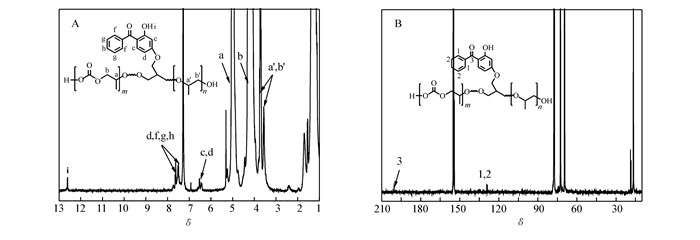
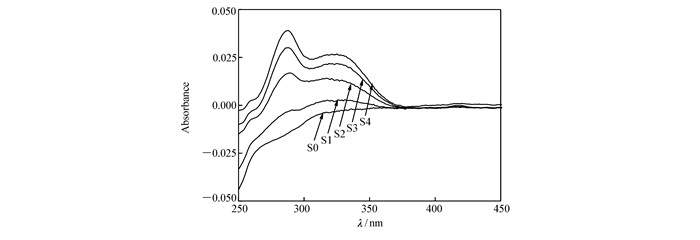
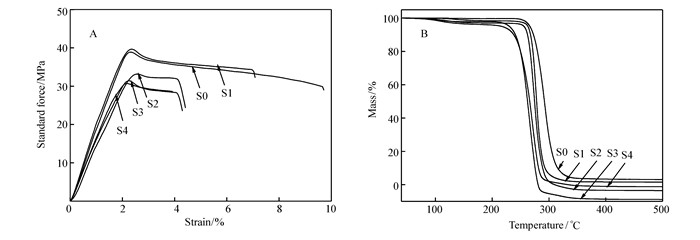
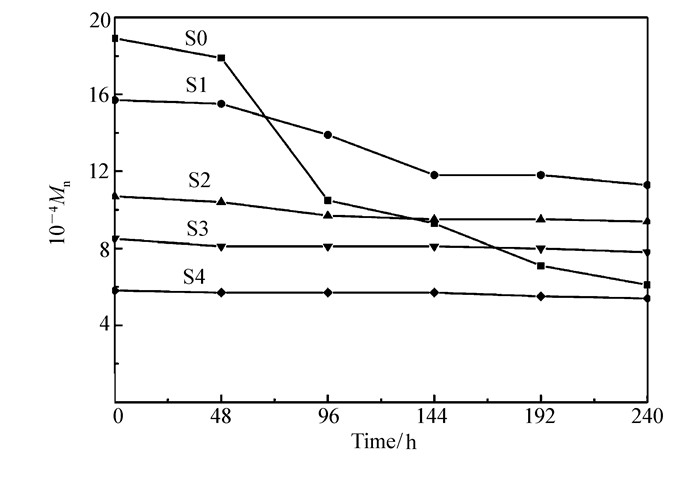
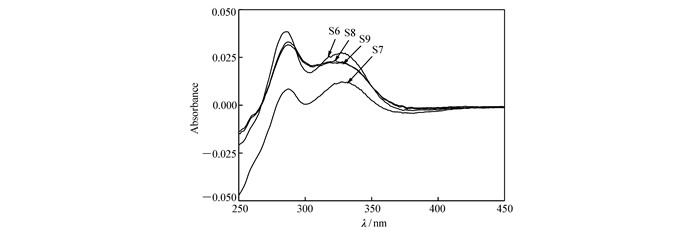
where S0 is PPC, while S1, S2, S3, and S4 corresponding to PPCH with HEB molar fraction of 0.06%, 0.19%, 0.25% and 0.32%, respectively
where S0 is PPC, while S1, S2, S3, and S4 corresponding to PPCH with HEB molar fraction of 0.06%, 0.19%, 0.25% and 0.32%, respectively
 DownLoad: