Login In
Effect of Molecular Cross-linking Degrees on the Morphology and Tribological Properties of 1, 4-Phenylene Diisocyanate-Based Polyurethane Elastomers
- Corresponding author: YE Feng, yefeng@ciac.ac.cn
Figures(6)
Citation:
TIAN Yumeng, LI Xuemin, LI Xiaoxiao, HUAN Yan, YE Feng, YANG Xiaoniu. Effect of Molecular Cross-linking Degrees on the Morphology and Tribological Properties of 1, 4-Phenylene Diisocyanate-Based Polyurethane Elastomers[J]. Chinese Journal of Applied Chemistry,
;2018, 35(9): 1148-1154.
doi:
10.11944/j.issn.1000-0518.2018.09.180217


Figures(6)


Legge N R, Holden G, Schroeder H E. Thermoplastic Elastomers:A Comprehensive Review[M]. New York:Hanser Publishers, 1987.
Ertem S P, Yilgor E, Kosak C. Effect of Soft Segment Molecular Weight on Tensile Properties of Poly(propylene oxide) Based Polyurethaneureas[J]. Polymer, 2012,53(21):4614-4622. doi: 10.1016/j.polymer.2012.08.020
Cooper S L, Tobolsky A V. Properties of Linear Elastomeric Polyurethanes[J]. J Appl Polym Sci, 1966,10(12):1837-1844. doi: 10.1002/app.1966.070101204
Abouzahr S, Wilkes G L, Ophir Z. Structure-Property Behavior of Segmented Polyether-MDI-Butanediol Based Urethanes:Effect of Composition Ratio[J]. Polymer, 1982,23(7):1077-1086. doi: 10.1016/0032-3861(82)90411-6
Saiani A, Daunch W A, Verbeke H. Origin of Multiple Melting Endotherms in a High Hard Block Content Polyurethane.1.Thermodynamic Investigation[J]. Macromolecules, 2001,34(26):9059-9068. doi: 10.1021/ma0105993
Elleuch R, Elleuch K, Salah B. Tribological Behavior of Thermoplastic Polyurethane Elastomers[J]. Mater Des, 2007,28(3):824-830. doi: 10.1016/j.matdes.2005.11.004
Yu M, Ji A H, Dai Z D. Effect of Microscale Contact State of Polyurethane Surface on Adhesion and Friction[J]. J Intell Mater Syst Struct, 2006,17(8/9):819-822.
Krol P. Synthesis Methods, Chemical Structures and Phase Structures of Linear Polyurethanes. Properties and Applications of Linear Polyurethanes in Polyurethane Elastomers, Copolymers and Ionomers[J]. Prog Mater Sci, 2007,52(6):915-1015. doi: 10.1016/j.pmatsci.2006.11.001
Delebecq E, Pascault J P, Boutevin B. On the Versatility of Urethane/Urea Bonds:Reversibility, Blocked Isocyanate, and Non-isocyanate Polyurethane[J]. Chem Rev, 2013,113(1)80e118.
Klinedinst D B, Yilgor I, Yilgor E. The Effect of Varying Soft and Hard Segment Length on the Structure-Property Relationships of Segmented Polyurethanes Based on a Linear Symmetric Diisocyanate, 1, 4-Butanediol and PTMO Soft Segments[J]. Polymer, 2012,53(23):5358-5366. doi: 10.1016/j.polymer.2012.08.005
Cuvé L, Pascault J P, Boiteux G. Synthesis and Properties of Polyurethanes Based on Polyolefin:2.Semicrystalline Segmented Polyurethanes Prepared under Heterogeneous or Homogeneous Synthesis Conditions[J]. Polymer, 1991,32:343-352. doi: 10.1016/0032-3861(91)90024-D
Nozaki S, Masuda S, Kamitani K. Superior Properties of Polyurethane Elastomers Synthesized with Aliphatic Diisocyanate Bearing a Symmetric Structure[J]. Macromolecules, 2017,50(3):1008-1015. doi: 10.1021/acs.macromol.6b02044
De D, Gaymans R J. Polyurethanes with Narrow and Polydisperse Hardsegment Distributions[J]. Macromol Mater Eng, 2008,293(11):887-894. doi: 10.1002/mame.v293:11
Petrovic Z S, Javni I, Divjakovic V. Structure and Physical Properties of Segmented Polyurethane Elastomers Containing Chemical Crosslinks in the Hard Segment[J]. J Polym Sci Part B Polym Phys, 1998,36:221-235. doi: 10.1002/(ISSN)1099-0488
Yarmohammadi M, Komeili S, Shahidzadeh M. Studying Crosslinker Chemical Structure Effect on the Tuning Properties of HTPB-Based Polyurethane[J]. Propellants Explos Pyrotech, 2018,43:156-161. doi: 10.1002/prep.v43.2
Waterlot V, Couturier D, Waterlot C. Structure and Physical Properties in Crosslinked Polyurethanes[J]. J Appl Polym Sci, 2010,119(3):1742-1751.
Narayan R, Chattopadhyay D K, Sreedhar B. Synthesis and Characterization of Crosslinked Polyurethane Dispersions Based on Hydroxylated Polyesters[J]. J Appl Polym Sci, 2010,99(1):368-380.
Yang Z, Hu J, Liu Y. The Study of Crosslinked Shape Memory Polyurethanes[J]. Mater Chem Phys, 2006,98(2):368-372.
Buckley C P, Prisacariu C, Caraculacu A. Novel Triol-Crosslinked Polyurethanes and Their Thermorheological Characterization as Shape-Memory Materials[J]. Polymer, 2007,48(5):1388-1396. doi: 10.1016/j.polymer.2006.12.051
Petrovic Z S, Ilavsky M, Dusial K. The Effect of Crosslinking on the Properties of Polyurethane Elastomers[J]. J Appl Polym Sci, 1991,42(2):391-398. doi: 10.1002/app.1991.070420211
Wu L, Guo J, Zhao S. Flame-Retardant and Crosslinking Modification of MDI-based Waterborne Polyurethane[J]. Polym Bull, 2016,74(6):1-18.
Barrioni B R, de Carvalho S M, Oréfice R L. Synthesis and Characterization of Biodegradable Polyurethane Films Based on HDI with Hydrolyzable Crosslinked Bonds and a Homogeneous Structure for Biomedical Applications[J]. Mat Sci Eng C, 2015,52(3):22-30.
Solanki A, Mehta J, Thakore S. Structure-Property Relationships and Biocompatibility of Carbohydrate Crosslinked Polyurethanes[J]. Carbohydr Polym, 2014,110(110):338-344.
Coleman M M, Lee K H, Skrovanek D J. Hydrogen Bonding in Polymers.4.Infrared Temperature Studies of a Simple Polyurethane[J]. Macromolecules, 1986,19(8):2149-2157. doi: 10.1021/ma00162a008
Yılgör E, Yılgör I, Yurtsever E. Hydrogen Bonding and Polyurethane Morphology.I.Quantum Mechanical Calculations of Hydrogen Bond Energies and Vibrational Spectroscopy of Model Compounds[J]. Polymer, 2002,43(24):6551-6559. doi: 10.1016/S0032-3861(02)00567-0
Yildirim E, Yurtsever M, Yilgör E. Temperature-Dependent Changes in the Hydrogen Bonded Hard Segment Network and Microphase Morphology in a Model Polyurethane:Experimental and Simulation Studies[J]. J Polym Sci Part B Polym Phys, 2018,56(2):182-192. doi: 10.1002/polb.24532
Leung L M, Koberstein J T. DSC Annealing Study of Microphase Separation and Multiple Endothermic Behavior in Polyether-Based Polyurethane Block Copolymers[J]. Macromolecules, 1986,19(3):714-720. doi: 10.1021/ma00157a039
Shuting Zhuang , Lida Zhao . Teaching through Research: A Comprehensive Experiment on Carbon Quantum Dots from Microplastic Waste. University Chemistry, 2025, 40(10): 217-224. doi: 10.12461/PKU.DXHX202412010
Qiying Xia , Guokui Liu , Yunzhi Li , Yaoyao Wei , Xia Leng , Guangli Zhou , Aixiang Wang , Congcong Mi , Dengxue Ma . Construction and Practice of “Teaching-Learning-Assessment Integration” Model Based on Outcome Orientation: Taking “Structural Chemistry” as an Example. University Chemistry, 2024, 39(10): 361-368. doi: 10.3866/PKU.DXHX202311007
Weiwei Zhang , Yongxin Ren , Hong Zhang , Ke Lu . Current Situation and Quality Improvement Measures of Undergraduate Education in Modern Analytical Testing Technology under the “Learning, Teaching, and Practicing” Trinity Concept. University Chemistry, 2025, 40(10): 78-85. doi: 10.12461/PKU.DXHX202412006
Baitong Wei , Rongxiu Zhu , Zhenghu Xu . Thalidomide: Defeating the Three Evils. University Chemistry, 2026, 41(2): 273-278. doi: 10.12461/PKU.DXHX202502020
Changjun You , Chunchun Wang , Mingjie Cai , Yanping Liu , Baikang Zhu , Shijie Li . Improved Photo-Carrier Transfer by an Internal Electric Field in BiOBr/N-rich C3N5 3D/2D S-Scheme Heterojunction for Efficiently Photocatalytic Micropollutant Removal. Acta Physico-Chimica Sinica, 2024, 40(11): 2407014-0. doi: 10.3866/PKU.WHXB202407014
Tong Wang , Liangyu Hu , Shiqi Chen , Xinqiang Fu , Rui Wang , Kun Li , Shuangyan Huan . Determination of Benzenediol Isomers in Cosmetics Using High-Performance Liquid Chromatography Empowered by “Mathematical Separation”. University Chemistry, 2026, 41(1): 9-19. doi: 10.12461/PKU.DXHX202503128
Zhipeng Bao , Yilin Wang , Yu Chen , Beirui Jia , Congcong Wang , Zean Xie , Xuehua Yu , Zhen Zhao . Digital and Intelligent Integration under the “Dual Carbon” Strategy: Plasma Reaction-Separation Coupling for CO2 Hydrogenation to Methanol. University Chemistry, 2026, 41(1): 29-40. doi: 10.12461/PKU.DXHX202506009
Xiaojing Tian , Zhichun Huang , Qingsong Zhang , Xu Wang , Ning Yang , Nanping Deng . PNIPAm Thermo-Responsive Nanofibers Mats: Morphological Stability and Response Behavior under Cross-Linking. Acta Physico-Chimica Sinica, 2024, 40(4): 2304037-0. doi: 10.3866/PKU.WHXB202304037
Chunyuan Kang , Xiaoyu Li , Fan Yang , Bai Yang . Ionic-bond crosslinked carbonized polymer dots for tunable and enhanced room temperature phosphorescence. Acta Physico-Chimica Sinica, 2026, 42(1): 100156-0. doi: 10.1016/j.actphy.2025.100156
Xiaohui Li , Ze Zhang , Jingyi Cui , Juanjuan Yin . Advanced Exploration and Practice of Teaching in the Experimental Course of Chemical Engineering Thermodynamics under the “High Order, Innovative, and Challenging” Framework. University Chemistry, 2024, 39(7): 368-376. doi: 10.3866/PKU.DXHX202311027
Wenwen Zhang , Peichao Zhang , Conghao Gai , Xiaoyun Chai , Yan Zou , Qingjie Zhao . Unveiling Kinetics at Natural Abundance: 13C NMR Isotope Effect Experiments. University Chemistry, 2025, 40(10): 203-207. doi: 10.12461/PKU.DXHX202411076
Jianan Fang , Youhao Gu , Zexuan Gui , Laiying Zhang , Jiawei Yan , Ruming Yuan , Xiaoming Xu . Experimental Improvement and Expansion of the Electromotive Force Method to Determine the Mean Activity Coefficient of Electrolyte Solution. University Chemistry, 2025, 40(11): 263-271. doi: 10.12461/PKU.DXHX202504055
Ying Li , Yushen Zhao , Kai Chen , Xu Liu , Tingfeng Yi , Li-Feng Chen . Rational Design of Cross-Linked N-Doped C-Sn Nanofibers as Free-Standing Electrodes towards High-Performance Li-Ion Battery Anodes. Acta Physico-Chimica Sinica, 2024, 40(3): 2305007-0. doi: 10.3866/PKU.WHXB202305007
Jin Tong , Shuyan Yu . Crystal Engineering for Supramolecular Chirality. University Chemistry, 2024, 39(3): 86-93. doi: 10.3866/PKU.DXHX202308113
Xianfei Chen , Wentao Zhang , Haiying Du . Experimental Design of Computational Materials Science Based on Scientific Research Cases. University Chemistry, 2025, 40(3): 52-61. doi: 10.3866/PKU.DXHX202403112
Shi-Yu Lu , Wenzhao Dou , Jun Zhang , Ling Wang , Chunjie Wu , Huan Yi , Rong Wang , Meng Jin . Amorphous-Crystalline Interfaces Coupling of CrS/CoS2 Few-Layer Heterojunction with Optimized Crystallinity Boosted for Water-Splitting and Methanol-Assisted Energy-Saving Hydrogen Production. Acta Physico-Chimica Sinica, 2024, 40(8): 2308024-0. doi: 10.3866/PKU.WHXB202308024
Xuanzhu Huo , Yixi Liu , Qiyu Wu , Zhiqiang Dong , Chanzi Ruan , Yanping Ren . Integrated Experiment of “Electrolytic Preparation of Cu2O and Gasometric Determination of Avogadro’s Constant: Implementation, Results, and Discussion: A Micro-Experiment Recommended for Freshmen in Higher Education at Various Levels Across the Nation. University Chemistry, 2024, 39(3): 302-307. doi: 10.3866/PKU.DXHX202308095
Yiru Wang , Chanzi Ruan , Juanjuan Song , Yongxian Fan , Dongcheng Liu , Yanping Ren , Xiuqiong Zeng , Faqiong Zhao , Wenwei Zhang , Mei Shi , Min Hu , Wan Li , Xiuyun Wang , Weihong Li , Xiaohang Qiu , Yong Fan , Jianrong Zhang , Shuyong Zhang . Solid-Liquid Separation and Suggestions on the Operation Standards (I): Decantation and Centrifugation with Centrifuge Operation. University Chemistry, 2026, 41(3): 122-129. doi: 10.12461/PKU.DXHX202507037
Dawei Zhang , Lei Zhang , Yibo Zhou , Yajie Li , YuPeng Guo . Developing a “One Core, Three Dimensions, Five Integrations” Chemistry Curriculum System for Non-Chemistry Majors at Jilin University. University Chemistry, 2025, 40(12): 147-156. doi: 10.12461/PKU.DXHX202510089
Hongwei Ma , Fang Zhang , Hui Ai , Niu Zhang , Shaochun Peng , Hui Li . Integrated Crystallographic Teaching with X-ray,TEM and STM. University Chemistry, 2024, 39(3): 5-17. doi: 10.3866/PKU.DXHX202308107
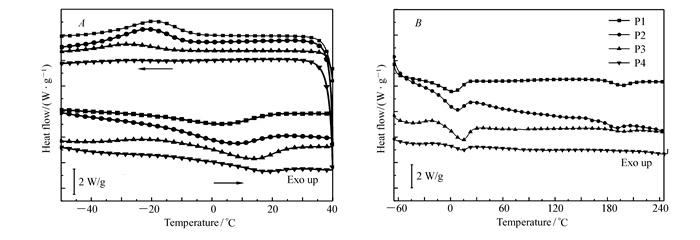
n(BDO):n(TMP):100:0(P1), 75:25(P2), 50:50(P3), 25:75(P4)
A.Corresponds to the temperature range of the soft segment crystallization-melting process; B.Contains the temperature range covering both the hard and soft segment melting process
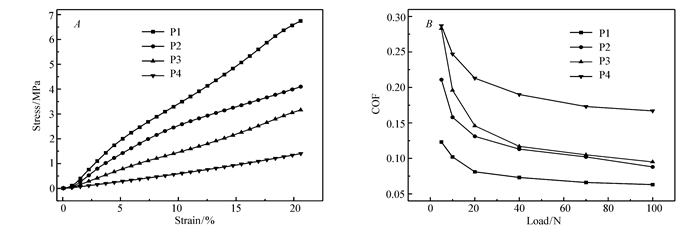
n(BDO):n(TMP):100:0(P1), 75:25(P2), 50:50(P3), 25:75(P4)
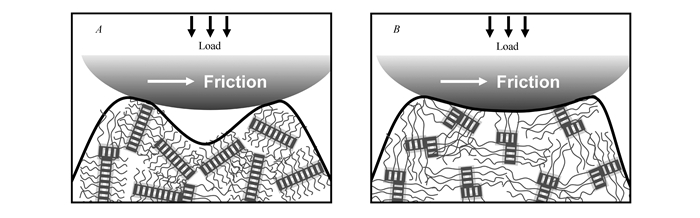
n(BDO):n(TMP):100:0(P1), 75:25(P2), 50:50(P3), 25:75(P4)
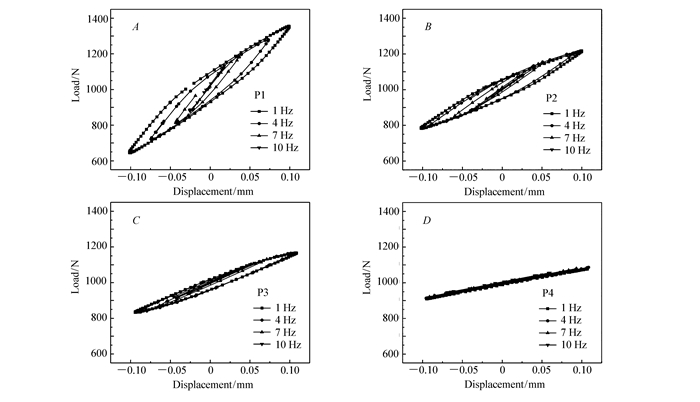
n(BDO):n(TMP):100:0(A), 75:25(B), 50:50(C), 25:75(D)
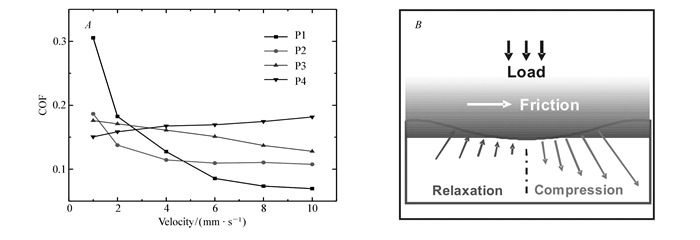
n(BDO):n(TMP): 100:0(P1), 75:25(P2), 50:50(P3) and 25:75(P4)
 DownLoad: