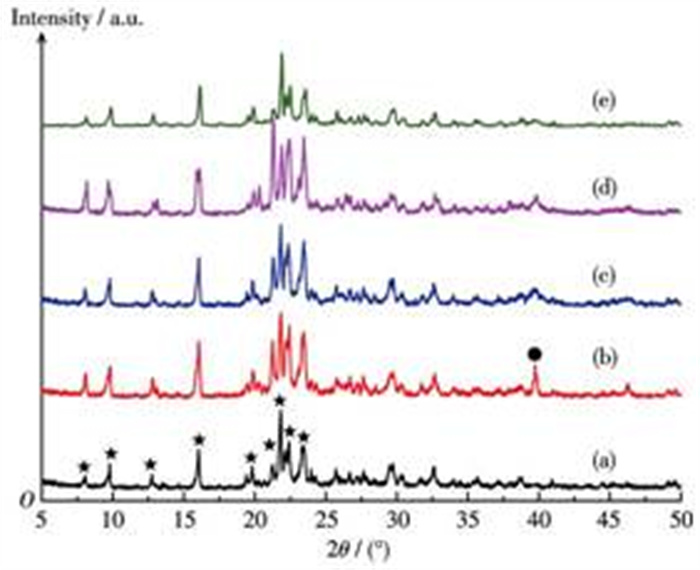
Figure 1.
XRD patterns of (a) SAPO-11, (b) Pt/SAPO-11,
(c) Pt/SAPO - 11 - PVP, (d) Pt/SAPO - 11 - PEG, and (e) Pt/SAPO-11-PVA

Influence of various polymer dispersants on the performance of Pt/SAPO-11 catalysts
Ai-Min ZHANG , Qiang LIU , Hui YIN , Jian-Guo HUANG , Zheng-Yuan AN , Li CHEN


Bio-aviation kerosene, derived from biomass, such as animal and vegetable oils, has chemical constituents and physicochemical properties which is similar to conventional aviation kerosene. As a result, this makes bio-aviation kerosene a promising alternative that can be directly used. The development of bio - aviation kero- sene is of great interest and significance due to its potential for significant carbon dioxide reduction benefits[1]. The production technology of bio - aviation kero- sene is based on second-generation biodiesel, use a two- step process that includes hydrodeoxygenation and hydroisomerization to produce a mixture of C11 -C 24 isoparaffins. The resulting bio - aviation kerosene offers several advantages, including a high cetane number, high fuel heating value, and a low freezing tempera- ture. UOP and Finland Neste have developed an indus- trial application for producing bio - aviation kerosene from animal and plant oils[2]. However, the two-step pro- cess is complicated and has high hydrogen consump- tion and high investment cost for production equip- ment[3]. Therefore, it is necessary to develop an effi- cient and cost-effective method to produce bio-aviation kerosene, such as a one - step process that obtains the desired isoparaffins from animal and vegetable oils. Nevertheless, the catalytic performance of catalysts is crucial for the one-step process[4].
Previous studies have shown that precious metals Pt and Pd have better hydrogenation/dehydrogenation performance and cracking selectivity than non- precious metals such as Co, Mo, Ni, etc. [5-6], and can reduce carbon deposit amounts while ensuring a high reaction rate and long catalyst life. Moreover, the acidi- ty and pore structure of supports also influence the cat- alyst performance. Medium-strong and weak acid sites are favorable for alkane cracking and hydroisomeriza- tion reactions, respectively, while the pore structure affects the distribution of products[7-8]. Loading Pt or Pd on supports, such as SAPO-11 and ZSM-22, especially the Pt/SAPO - 11 catalyst has been reported to exhibit excellent hydrodeoxygenation/isomerization perfor- mance[9-12]. Hancsók et al. reported that the yield of bio- aviation kerosene produced from sunflower oil using the Pt/SAPO -11 catalyst was as high as 88%. In addi- tion, the fuel had a higher cetane number of more than 80, good cold flow properties, and was almost free of sulfur, nitrogen, and aromatics[13]. Rabaev et al. investi- gated the catalytic activity of the Pt/Al2O3/SAPO - 11 catalyst in treating Jatropha oil via a one-step process and reported that the yield of qualified bio -aviation ker- osene components in the products ranged from 42% to 48%[14].
To the best of our knowledge, previous studies have concentrated on the effects of active species and support materials on catalyst activity[15-18]. However, the effect of dispersants is rarely mentioned. The disper- sant can improve the particle size distribution of pre- cious metals, thus promoting the hydro - dehydrogena- tion performance of catalysts[15]. In this study, industrial- grade SAPO-11 molecular sieves were used as catalyst support materials and various polymer dispersants were used to control Pt dispersion as well as the acidity and acid amount of SAPO - 11. The catalytic perfor- mance of resulting catalysts for producing bio -aviation kerosene from Jatropha oil was evaluated in a fixed - bed reactor. Systematic characterizations of the catalysts were carried out to facilitate the interpretation of the effects of various dispersants on catalytic performance.
The catalysts were prepared by the impregna- tion method. The precursor of the active platinum component was Pt(NO2)2(NH3)2 solution (AR, Kunming Institute of Precious Metals). The SAPO-11 powder (industrial-grade, Nankai University Catalyst Factory, China) was used as the support material. Three different dispersants, polyvinylpyrrolidone (PVP) powder (PVP - k30, AR, Sinopharm Group Chemical Reagent Co., Ltd.), polyethylene glycol (PEG, AR, Sinopharm Group Chemical Reagent Co., Ltd.), and polyvinyl alcohol (PVA, AR, Sinopharm Group Chemical Reagent Co., Ltd.), were used in catalyst preparation, corre- spondingly, and the catalysts were denoted as Pt/ SAPO-11-PVP, Pt/SAPO-11-PEG, and Pt/SAPO- 11-PVA, respectively.
The preparation procedure of the Pt - PVP/ SAPO-11 catalyst was as follows. To eliminate the template, the SAPO - 11 powder was first calcined in air at 550 ℃ for 4 h, with a heating rate of 5 ℃• min–1 from room temperature. Secondly, the calcined SAPO-11 powder was then impregnated with a certain amount of Pt(NO2)2(NH3)2 solution and stirred for about 2 h. A certain amount of PVP powder was added to the solution and stirred for 6 h. The solution was then dried in a water bath at 80 ℃ to remove the solvent. The obtained sample was dried at 110 ℃ for 12 h before being calcined in a muffle furnace at 550 ℃ for 4 h at a heating rate of 2 ℃•min–1 from room temperature. Finally, the calcined powder was crushed into particles with 40-60 mesh size. The preparation processes of Pt/SAPO-11- PEG and Pt/SAPO-11-PVA were simi- lar to that of Pt-PVP/SAPO-11. The masses of the active component and the dispersant were 1% and 5% of the mass of the SAPO-11, respectively.
X- ray diffraction (XRD), measurement was carried out on a Rigaku X′pert pro diffractometer operated at 30 kV and 30 mA, with Cu Kα radiation (λ =0.154 nm). The diffraction patterns were collected with a 2 θ range from 5° to 50° with a resolution of 0.02°, and a scanning speed of 10 (°) •min-1. Nitrogen adsorption desorption isotherms were obtained with a Quanta- chrome Autosorb-iQ2 instrument at liquid temperature. The samples were degassed in a vacuum for 3 h at 300 ℃ before analysis. The surface area of the samples was calculated by the Brunauer - Emmett - Teller (BET) method. The micropore volume and micropore area were evaluated by the t-plot method. The pore size dis- tribution was calculated by density functional theory (DFT). Scanning electron microscopy (SEM) images were obtained using an FEI HELIOS NanoLab 600i instrument operating at 2 kV. Transmission electron microscopy (TEM) was taken using an FEI Tecnai F30 electron microscope with a field emission gun and operated at 300 kV. The diameter of each particle was determined from the enlarged photographs. The parti- cle size distribution and average diameter were calcu- lated using measurements of about 300 particles.
The actual Pt loading amount in the catalyst was determined using Perkin Elmer Optima-5300DV Inductively Coupled Plasma Atomic Emission Spec- trometer (ICP - AES), while the dispersion of Pt was determined using the CO pulse adsorption method. CO pulse adsorption was collected using CHEMBET 3000 Chemical Adsorption Instrument. All samples were reduced in H2/He (1∶3, V/V) at 300 ℃ for 2 h with a flow of 75 cm3•min-1, then pure He was fed to purify the hydrogen left on the catalyst surface for 30 min. After the temperature of the reactor was cooled down to 80 ℃, a pulse injection of high-purity CO was provided using a pulse quantification tube of 64 µL. The adsorp- tion process of CO was monitored by Thermal Conductivity Detector until the shape of the adsorption curve became stable. Assuming monomolecular adsorption of CO on Pt, the degree of dispersion of the Pt on the cata- lyst was calculated as a CO/Pt atomic ratio of 1∶1.
NH3 temperature-programmed desorption (NH3- TPD) was performed on a Quantachrome CHEMBET Pulsar TPR/TPD Instrument. The samples were first pre- treated in Ar flow at 500 ℃ for 1 h, then NH3 adsorp- tion was carried out in NH3/Ar mixture (1∶4, V/V) with a flow rate of 75 cm3•min–1 at 80 ℃ for 1 h. Subse- quently, Ar was supplied again to purge to baseline, and the signal of NH3 desorption was recorded in a range of 80-550 ℃ with a heating rate of 10 ℃•min–1.
Jatropha oil was selected as the reaction raw mate- rial. The saturated fatty acid in Jatropha oil mainly comprises C16∶0 and C18∶0, while unsaturated fatty acid primarily consists of C16∶1, C18∶1, and C18∶2. The Jatropha oil was hydrotreated in a stainless - steel continuous flow fixed-bed reactor with an inner diameter of 5 mm. The catalytic performance of catalysts was evaluated at 5.0 MPa and 397 ℃. The volumetric ratio of hydrogen to Jatropha oil was set to 1 000. Typically, a 6.0 g catalyst was placed into the middle of the reactor, then both sides of the reactor were filled with quartz sand of the same size as the catalysts. The catalysts were reduced in situ for 6 h at 400 ℃ in an H2 atmosphere. After the temperature cooled down to the desired reaction temperatures, then Jatropha oil was fed into the reactor via a metering pump. The products were condensed by a condenser and analyzed by PerkinElmer Clarus 680 - Clarus SQ8T Gas Chromatography - Mass Spectrometer (GC-MS) to provide a detailed distribution of the chemical components.
The relative mass fraction of various substances inthe liquid product was calculated by the area normalization method.
Hydrodeoxygenation rate = ∑M0 × 100% (1)
Cracking rate = ∑M1 × 100% (2)
Bio-jet fuel component yield = ∑M2 × 100% (3)
Isoparaffin selectivity rate = ∑M3 × 100% (4)
Aromatic hydrocarbons yield = ∑M4 × 100% (5)
Where M0 is the relative mass fraction of oxygen - free compounds converted from Jatropha oil; M1 is the rela- tive mass fraction of C7 -C14 components; M2 is the relative mass fraction of C8 - C16 component in liquid products; M3 is the relative mass fraction of isoparaffin in C8 - C16; M4 is the relative mass fraction of aromatic hydrocarbon components in the liquid product[16].
XRD patterns for the calcined catalysts were shown in Fig. 1. All samples presented characteris- tic peaks for SAPO - 11 with AEL structure (2θ = 8.1°, 9.4°, 13.1°, 15.6°, 20.3°, 21.0°, 22.1°- 23.2°)[19]. The results indicated that the structure of SAPO-11 was not destroyed, as the positions of the characteristic peaks remained almost unchanged after impregnation with precious metal on SPAO - 11 or treatment with various dispersants. However, the intensities of the characteristic peaks became weak after treatment with dispersants. The peak at 2θ =39.9° corresponds to the active component Pt(111) crystal face. It can be seen that the Pt(111) diffraction peak weakened while the half - peak width increased after the addition of dispersant, suggesting that the active component Pt grain size decreased.
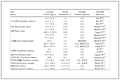
Table 1 lists the loading amounts and dispersion of Pt over various catalysts, with Pt/SAPO - 11 serving as a benchmark catalyst. The actual Pt loading amounts of four catalysts were comparative and ranged from 0.79% to 0.85%, indicating that the addition of dispersant did not affect the Pt loading amount of Pt in the catalysts. The dispersion of active components is an important factor affecting a catalyst′s activity[20]. Gener- ally, increasing catalyst - specific surface area and the interaction strength between the active component and support material promotes precious metal dispersion[21]. After the addition of different dispersants, the disper- sion of Pt particles on the catalyst increased while the size decreased, indicating that more active component active sites can be provided.
 下载:
导出CSV
下载:
导出CSV
| Catalyst | Loading amount of Pta / % | Dispersion of Ptb / % |
| Pt/SAPO-11 | 0.82 | 15.31 |
| Pt/SAPO-11-PVP | 0.83 | 22.40 |
| Pt/SAPO-11-PEG | 0.85 | 18.21 |
| Pt/SAPO-11-PVA | 0.79 | 20.56 |
| a Loading amount of Pt determined by ICP⁃AES; b Dispersion of Pt measured by CO pulse adsorption. | ||
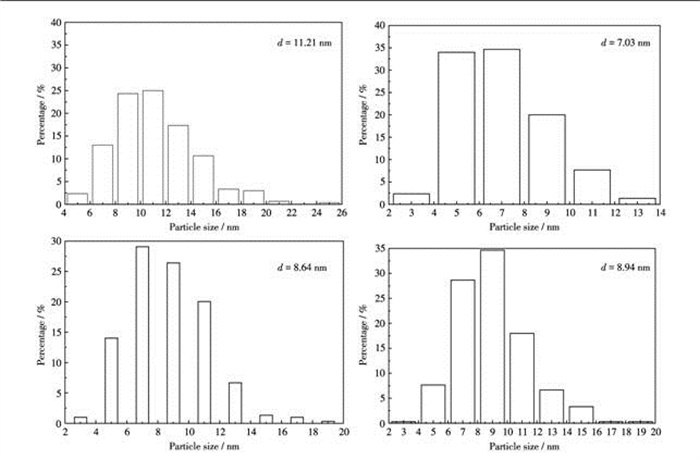
Fig. 2 shows the particle distributions of the samples. It can be seen that after the introduction of the dispersant, the size of the loaded Pt particles was reduced to varying degrees, and the introduction of PVP had the most obvious effect. As given in Table 2, SAPO - 11 had the highest surface area, pore volume, and average pore size. After impregnating the Pt com- ponent on the SAPO - 11, taking Pt/SAPO - 11 as an example, the surface area, pore volume, and average pore size all decreased noticeably due to the loading of the Pt active component. Nevertheless, the treatment of the dispersants increased the surface area, pore volume, and average pore size of the catalysts, indicating that the dispersant not only benefits the active component dispersion but also enriches the pore structure. The reason is that the decompositions of PVP, PEG, and PVA release gas at high temperatures, resulting in forming new pores when the gas inside the SAPO - 11 pore escapes. The increased pore volume and pore size allow reactants to enter the catalyst pores for reaction and prevent carbon deposition on the catalyst surface. In addition, the increase in the specific surface area of the catalyst provides more active sites, allowing the reactants to easily contact the active site. The increase in secondary pores, micropores, and average pore size reduces diffusion resistance in the pores, the reactant molecules are more likely to penetrate the pores, and the active sites in the pores are fully utilized to improve the catalyst′s activity[24-25].
 下载:
导出CSV
下载:
导出CSV
| Sample | Surface area / (m2·g-1) | Pore volume / (cm3·g-1) | Average pore size / nm | Micropore volume / (cm3·g-1) | Micropore area / (m2·g-1) | External surface area / (m2·g-1) |
| SAPO-11 | 260 | 0.26 | 4.1 | 0.085 | 212 | 47 |
| Pt/SAPO-11 | 195 | 0.15 | 3.1 | 0.063 | 154 | 41 |
| Pt/SAPO-11-PVP | 230 | 0.18 | 3.5 | 0.069 | 1 689 | 61 |
| Pt/SAPO-11-PEG | 223 | 0.17 | 3.3 | 0.066 | 162 | 61 |
| Pt/SAPO-11-PAV | 238 | 0.17 | 2.9 | 0.071 | 178 | 60 |
Fig. 3 shows SEM images of four catalysts. It can be seen that Pt/SAPO - 11 exhibited spherical aggregates composed of slab - like crystallites. The catalysts with various dispersant additions had spherical aggregates and rougher surfaces that are similar to Pt/SAPO- 11, but they had highly mesoporous as shown in Table 2.
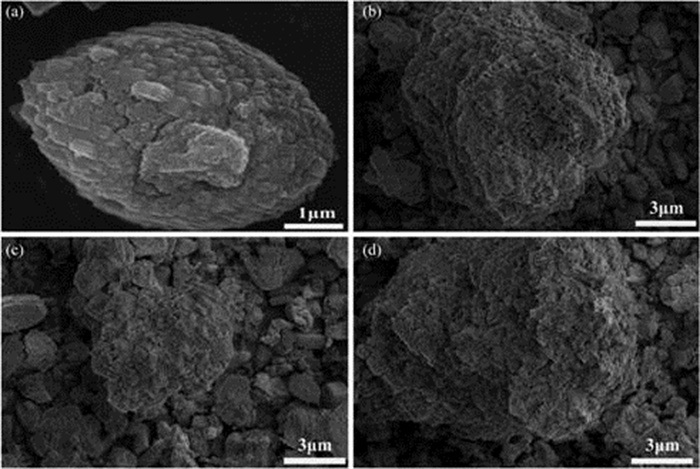
Fig. 4 shows the TEM images. Compared with Pt/ SAPO-11 catalyst, the active component Pt particles in catalysts with dispersant additives were more uniformly dispersed on the SAPO - 11, and their average particle size was also reduced. PVP, PEG, and PVA are nonionic polymer compounds, the dispersion mechanism is to form a steric hindrance to achieve stable dispersion[26-27]. For example, in the PVP molecule, the amine nitrogen atom and the carbonyl oxygen atom have a mediating effect and can form a coordination ion with Pt2+ in Pt(NO 2)2(NH3)2 to form steric hindrance and pre- vent further agglomeration of Pt particles[28-29]. Therefore, the added dispersant acts as a protective agent for the Pt particles, inhibiting particle growth and agglomeration during the impregnation and calcination process, ensuring particle size and dispersion uniformity[30].
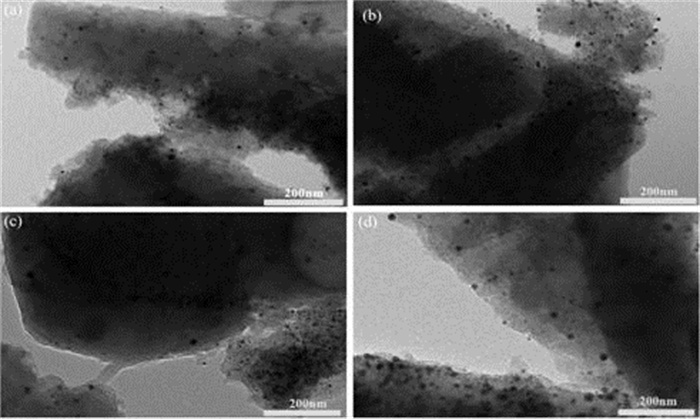
Fig. 5 shows the NH3-TPD profiles of the catalysts. All of the catalysts exhibited two NH3 desorption peaks in the temperature range from 100 to 700 ℃. The peaks below 300 ℃ belonged to weak acid sites, while the shoulder peak above 300 ℃ was attributed to the medium-strong acid sites. Although the fact that the ac- id distributions of the catalysts were similar, the NH3 desorption peaks tended to shift to higher temperatures with the addition of dispersants, indicating that some acid sites might be present due to the increase in the surface area of the catalyst.
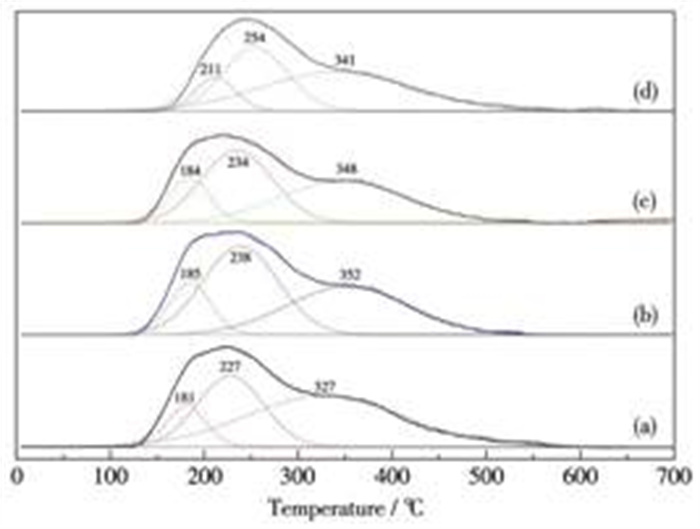
The amounts of acid sites are listed in Table 3. Due to the increase in the dispersion of the active components and the effect of newly created pores, the acid amounts of the catalysts varied after the introduction of the three dispersants. The introduction of PVP increased the catalyst′s weak acidity and medium - strong acidity. However, the amounts of weak acidity and medium - strong acidity were reduced in Pt/SAPO - 11 - PEG and Pt/SAPO - 11 - PVA catalysts, more likely due to fewer newly developed pore channels and more acid sites covered by active components.
下载:
导出CSV
| Sample | Weak acid | Medium⁃strong acid | Total acidity / (mmolNH 3 ·g-1) | |||
| T / ℃ | Acidity / (mmolNH 3 ·g-1) | T / ℃ | Acidity / (mmolNH 3 ·g-1) | |||
| Pt/SAPO-11 | 181 | 0.031 | 327 | 0.153 | 0.273 | |
| 227 | 0.090 | |||||
| Pt/SAPO-11-PVP | 185 | 0.042 | 352 | 0.129 | 0.284 | |
| 238 | 0.113 | |||||
| Pt/SAPO-11-PEG | 184 | 0.035 | 348 | 0.102 | 0.237 | |
| 234 | 0.100 | |||||
| Pt/SAPO-11-PVA | 211 | 0.026 | 341 | 0.114 | 0.220 | |
| 254 | 0.080 | |||||
To investigate the influence of different dispersants on the hydrodeoxygenation performance of Pt/ SAPO - 11 catalyst, one - step hydrotreating of Jatropha oil was carried out at 397 ℃, 5 MPa, 1.2 h-1 liquid space velocity, and hydrogen oil ratio of 1 000. The results are listed in Table 4. Since the dispersant improves the dispersion of the active component of the catalyst, these three dispersant -modified catalysts out- perform Pt/SAPO - 11 catalyst in hydrodeoxygenation. The hydrodeoxygenation rate of Pt/SAPO - 11-PVP and Pt/SAPO - 11 - PVA to Jatropha oil was 99.45% and 99.47%, respectively. The cracking rate of the catalyst (C7 - C14) is closely related to its acidity. Among the three dispersant - modified catalysts, the one treated with PVP increased the acid amount of the catalyst and strengthens its acidity, thus promoting its cracking per- formance[31-32]. As a result, the cracking rate of C7 - C14 components in the Pt/SAPO - 11 - PVP catalyst was 17.86%, which was 10.12% higher than that of the Pt/ SAPO - 11 catalyst. In terms of the bio - aviation kerosenebio -jet fuel component (C8-C16) selectivity, the proportion of bio- aviation kerosenebio-jet fuel components over Pt/SAPO - 11 catalytic hydrogenation of Jatropha oil products was 24.22%, and those over Pt/SAPO- 11- PEG, Pt/SAPO - 11 - PVA are almost comparable to Pt/ SAPO - 11, while the bio - aviation kerosenebio - jet fuel component in the catalytic products of Pt/SAPO - 11 - PVP was as high as 44.67%, approximately 20% higher than the benchmark catalyst. For the isomeric alkanes (C8 -C16) selection rate, the introduction of PVP and PEG affected the catalyst′s isoparaffins selectivity, while the isoparaffins selectivity of Pt/SAPO - 11 - PAV decreased from 57.22% to 29.57%, indicating that the addition of PVA reduces the catalyst isoparaffins selectivity. Based on the above finding, it can be concluded that Pt/SAPO- 11 -PVP has the highest catalytic activity and selectivity to isoparaffins.
下载:
导出CSV
| Sample | Hydrodeoxygenation rate / % | Cracking rate / % | Bio⁃jet fuel component yield / % | Isoparaffins selectivity / % | Aromatic hydrocarbons yield / % |
| Pt/SAPO-11 | 91.25 | 7.74 | 24.22 | 57.22 | 0.92 |
| Pt/SAPO-11-PVP | 99.45 | 17.86 | 44.67 | 56.37 | 0 |
| Pt/SAPO-11-PEG | 91.75 | 9.12 | 29.15 | 51.22 | 0 |
| Pt/SAPO-11-PVA | 99.47 | 7.34 | 26.31 | 29.57 | 0 |
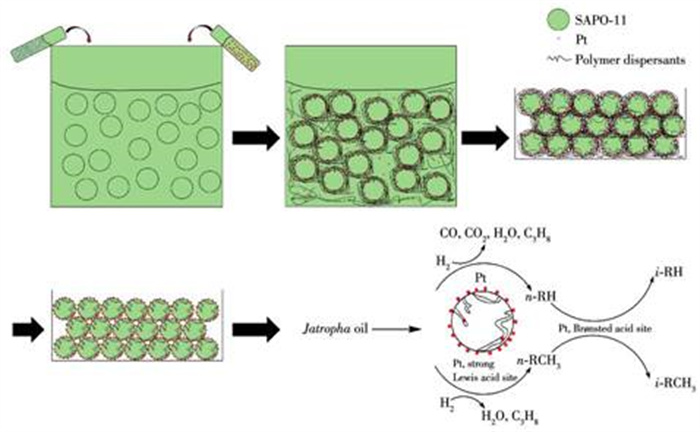
Pt/SAPO -11 is a bifunctional metal/acid catalyst, the active component Pt provides a hydrogenation/ dehydrogenation reaction site, while the acid sites of the support provide the acid position function of isom-erization/cracking of normal kinds of paraffin[33]. The process of one - step hydrogenation of fats and oils to form isoparaffins is proposed as follows (Fig. 6). Firstly, the oil is hydrodeoxygenated to form saturated normal paraffin via the interaction of the catalyst′s medium - strong acid site, and the active component Pt. Secondly, the obtained n-alkanes are adsorbed on Pt and dehydro-genation to form olefins, which obtain protons and form positive carbon ions at the acid centers. Subsequently, the carbon ions undergo skeletal isomerization at the weak acid centers and lose proteinogenic isomers, or crack into a new normal carbon ion and a small molecular olefin at the medium - strong acid centers. Finally, the hydrogenated isomeric olefins and small molecular olefins are desorbed at the metal centers to form isopar- affins and small molecular alkanes[34]. It can be seen that the Pt/SAPO - 11 catalyst′s acid centers and metal centers complete the oil′s hydrodeoxygenation and hydroisomerization reactions. Under the same loading amount, the greater the dispersion of the active component Pt on the catalyst, the smaller the particle size, and the greater the hydrogenation/dehydrogenation activity of the catalyst. An increase in the number of acid sites facilitates the transfer of positive carbon ions between the active components and acidic sites. Thus, plausible pathways involve alkanes adsorbed on Pt, then dehydrogenation to form olefins, which obtain protons and form positive carbon ions at the acid centers. Finally, the hydrogenated isomeric olefins and small molecular olefins are desorbed at the metal centers to form isoparaffins and small molecular alkanes[34]. It can be seen that the Pt/SAPO - 11 catalyst′s acid centers and metal centers complete the oil′s hydrodeoxygen- ation and hydroisomerization reactions. Under the same loading amount, the greater the dispersion of the active component Pt on the catalyst, the smaller the particle size, and the greater the hydrogenation/ dehydrogenation activity of the catalyst. Since Pt(NO 2)2 (NH3)2 is easier to combine with PVP, the dispersion of the active components of the catalyst is more uniform. In addition, the removal of PVP during the sintering process changes the pore structure of the support. The combination of the two leads to the improvement of the catalytic activity of the catalyst. An increase in the number of acid sites facilitates the transfer of positive carbon ions between the active components and acidic sites. Thus, plausible pathways involve adsorption on Pt, then dehydrogenation to form olefins, which obtain protons and form positive carbon ions at the acid venters.
The introduction of dispersants does not affect the skeleton structure of the SAPO -11 molecular sieve but alters the distribution of active components and physicochemical properties of the catalysts, such as pore volume, pore size, and specific surface area. Three dispersants were used to improve the dispersion of Pt particles on the molecular sieve and reduce their particle size. The introduction of dispersants altered the active component distribution and physical properties of catalysts, such as pore volume, pore size, and specific surface area. Compared to the benchmark Pt/SAPO-11 catalyst, the three dispersant-modified catalysts exhibited enhanced weak acidity and medium - acid acidity. The total acidity of the Pt/SAPO-11-PVP catalyst increased, while those of the Pt/SAPO-11-PEG and Pt/SAPO-11- PVA catalysts decreased. Among these modified cata- lysts, the Pt/SAPO -11 treated with PVP exhibited excellent catalytic performance in the one-step hydrotreatment process of Jatropha oil, owing to its appropriate pore volume, pore size, and acidity distri- bution. The hydrodeoxygenation rate was up to 99.45%, and the bio -aviation kerosene bio-jet fuel component yield and the isoparaffin selectivity were 44.67% and 56.37%, respectively.
Hu X T, Qi P L, Fu X. Technology development background and application status on aviation biofuel[J]. Chem. Ind. Eng. Prog., 2012, 31(7): 1625-1630.
Lestari S, Mäki-Arvela P, Beltramini J, Lu G Q M, Dmitry Y M. Trans-forming triglycerides and fatty acids into biofuels[J]. ChemSusChem, 2009, 2: 1109-1119.
Fei L, Reddy H K, Hill J, Lin Q L, Yuan B, Xu Y, Dailey P, Deng S G, Luo H M. Preparation of mesoporous silica - supported palladium catalysts for biofuel upgrade[J]. Nanotechnology, 2012, 2012: 937-946.
Kandaramath H T, Yaakob Z, Binitha N N. Aviation biofuel from renewable resources: Routes, opportunities and challenges[J]. Renew.Sustain. Energy Rev., 2015, 42: 1234-1244. doi: 10.1016/j.rser.2014.10.095
Mehla S, Krishnamurthy K R, Viswanathan B, John M, Niwate Y, Kumar K, Pai S M, Newalkar B L. n-Hexadecane hydroisomerization over Pt/ZSM-12: Role of Si/Al ratio on product distribution[J]. J. Porous Mat., 2013, 20(5): 1023-1029. doi: 10.1007/s10934-013-9682-6
Wang C X, Tian Z J, Wang L, Xu R S, Liu Q H, Qu W, Ma H J, Wang B C. One-step hydrotreatment of vegetable oil to produce high quality diesel-range alkanes[J]. ChemSusChem, 2012, 5: 1974-1983.
Santos R C R, Valentini A, Lima C L, Filho J M, Oliveira A C. Modifi- cations of an HY zeolite for n-octane hydroconversion[J]. Appl. Catal. A- Gen., 2011, 403: 65-74. doi: 10.1016/j.apcata.2011.06.011
Yadav R, Sakthivel A. Silicoaluminophosphate molecular sieves as potential catalysts for hydroisomerization of alkanes and alkenes[J]. Appl. Catal. A-Gen., 2014, 481: 143-160. doi: 10.1016/j.apcata.2014.05.010
Herskowitz M, Landau M V, Reizner Y, Berger D. A commercially - viable, one-step process for production of green diesel from soybean oil on Pt/SAPO-11[J]. Fuel, 2013, 111: 157-164. doi: 10.1016/j.fuel.2013.04.044
Liang J, Wang F P. Synthesis of four monodimentional medium-pore molecular sieves and their hydroisomerization performances of ndodecane[J]. Adv. Mat. Res., 2011, 236: 854-857.
Francis J, Guillon E, Bats N, Pichon C, Corma A, Simon L J. Design of improved hydrocracking catalysts by increasing the proximity between acid and metallic sites[J]. Appl. Catal. A-Gen., 2011, 409: 140-147.
Tao J L, Liu L J, Zhu P H, Zhai K, Ma Q, Zhang D N, Ma J, Zhai Y P, Liu Y G, Zhang R Q. Dual - template synthesis of cage -like Ni-based catalyst for hydrotreatment of bio-oil[J]. J. Porous Mat., 2019, 26(3): 819-828. doi: 10.1007/s10934-018-0683-3
Hancsók J, Krár M, Magyar S. Investigation of the production of high quality biogasoil from pre-hydrogenatedvegetable oils over Pt/ SAPO-11/Al 2O3[J]. Stud. Surf. Sci. Catal., 2007, 170: 1605-1610.
Rabaev M, Landau M V, Vidruk - Nehemya R, Koukouliev V, Zarchin R, Herskowitz M. Conversion of vegetable oils on Pt/Al2O3SAPO - 11 to diesel and jet fuels containing aromatics[J]. Fuel, 2015, 161: 287-294. doi: 10.1016/j.fuel.2015.08.063
Galadima A, Muraza O. In situ fast pyrolysis of biomass with zeolite catalysts for bioaromatics/gasoline production: A review[J]. J. Ind. Eng. Chem., 2015, 29: 12-23. doi: 10.1016/j.jiec.2015.03.030
Liu Q, Du J C, Zhang A M, Hao Y J, Zhang S P, Chen Y B, Zhao Y K. Study on the physicoche mical properties and catalytic performance of Pt/SAPO - 11 catalysts treated by acid and salt[J]. J. Fuel Chem. Technol., 2017, 45: 337-344.
Chen N, Ren Y X, Qian E W. Elucidation of the active phase in PtSn/SAPO - 11 for hydrodeoxygenation of methyl palmitate[J]. J. Catal., 2016, 334(3): 79-88.
Choi I H, Hwang K R, Han J S, Lee K H, Yun J S, Lee J S. The direct production of jet-fuel from non-edible oil in a single-step process[J]. Fuel, 2015, 158: 98-104. doi: 10.1016/j.fuel.2015.05.020
Dumitriu E, On D T, Kaliaguine S. Isoprene by prins condensation over acidic molecular sieves[J]. J. Catal., 1997, 170(1): 150-60. doi: 10.1006/jcat.1997.1745
Gosselink R W, Hollak S A, Chang S W, Haveren J, Jong K, Bitter J H, Daan E. Reaction pathways for the deoxygenation of vegetable oils and related model compounds[J]. ChemSusChem, 2013, 6: 1576-1594. doi: 10.1002/cssc.201300370
Pacheco-Sosa J G, Castillo-Escobedo A I, Chavarria-Harnandez J C, Díaz - Félix M C, Pérez - Vidal H, Ordóñez L C, García - Dávila J, Morales - Ortuño J C, Escobar B. Catalytic deoxygenation of stearic acid and waste cooking oil over Pd/SBA- 15 for obtaining hydrocar-bons with potential as renewable liquid fuels[J]. J. Porous Mat., 2019, 26: 1541-155. doi: 10.1007/s10934-019-00749-3
Yang Z C, Liu Y Q, Liu D D, Meng X T, Liu C G. Hydroisomeriza-tion of n - octane over bimetallic Ni - Cu/SAPO - 11 catalysts[J]. Appl. Catal. A-Gen., 2017, 543: 274-282. doi: 10.1016/j.apcata.2017.06.028
Yadav R, Singh A K, Sakthivel A. Synergistic catalysis over bimetal-lic alloy nanoparticles[J]. ChemCatChem, 2013, 42: 1160-1162.
Verma D, Kumar R, Rana B S. Aviation fuel production from lipids by a single-step route using hierarchical mesoporous zeolites[J]. Energy Environ. Sci., 2011, 4: 1667-1671. doi: 10.1039/c0ee00744g
Verma D, Rana B S, Kumar R, Sibi M G, Sinha A K. Diesel and avia-tion kerosene with desired aromatics from hydroprocessing of jatropha oil over hydrogenation catalysts supported on hierarchical mesoporous SAPO-11[J]. Appl. Catal. A-Gen., 2015, 490: 108-116. doi: 10.1016/j.apcata.2014.11.007
Ghavami R K, Rafiei Z. Performance improvements of alkaline batteries by studying the effects of different kinds of surfactant and dif-ferent derivatives of benzene on the electrochemical properties of electrolytic zinc[J]. J. Power Sources, 2006, 162(2): 893-899. doi: 10.1016/j.jpowsour.2005.07.010
Wang Y, Xie S, Liu J, Park J, Huang Z C, Xia Y. Shape-controlled synthesis of palladium nanocrystals: A mechanistic understanding of the evolution from octahedrons to tetrahedrons[J]. Nano Lett., 2013, 13: 2276-2281. doi: 10.1021/nl400893p
Zhang H, Zhang G X, Wu X W, Wen Z Y. Synthesis of Na-β-Al2O3 nanopowders by PVP sol - gel process[J]. Inorg. Chem., 2013, 28: 916-920.
Zhen X L, Han J R, Kang R H. Hydrogen transfer dehalogenation of organic halides catalyzed by PVP-mont dually supported Pd-Sn catalyst in aqueous system[J]. J. Mol. Catal., 2000, 14: 388-391.
Wang C X, Feng F, Du J C, Zheng T, Pan Z, Zhao Y. Activation of surface lattice oxygen in ceria supported Pt/Al2O3 catalyst for low -temperature propane oxidation[J]. ChemCatChem, 2019, 11(8): 2054-205. doi: 10.1002/cctc.201900190
Myoung Y, Kim K L, Minkee C. Cooperative effects of secondary mesoporosity and acid site location in Pt/SAPO - 11 on n - dodecane hydroisomerization selectivity[J]. J. Catal., 2014, 319: 232-238. doi: 10.1016/j.jcat.2014.09.001
Liu W, Shang T, Zhou Q, Ren J, Sun Y. Physicochemical and isomer-ization property of Pt/SAPO-11 catalysts promoted by rare earths[J]. J. Rare Earths, 2009, 27: 937-942. doi: 10.1016/S1002-0721(08)60366-X
Calemma V, Peratello S, Perego C. Hydroisomerization and hydro-cracking of long chain nalkanes on Pt/amorphous SiO2-Al2O3 catalyst[J]. Appl. Catal. A-Gen., 2000, 190: 207-218. doi: 10.1016/S0926-860X(99)00292-6
Wei X, Kikhtyanin O V, Parmon V N, Wu W, Bai X F, Zhang J W, Xiao L F, Su X F, Zhang Y. Synergetic effect between the metal and acid sites of Pd/SAPO-41 bifunctional catalysts in n-hexadecane hydroisomerization[J]. J. Porous Mat., 2018, 25(1): 235-247. doi: 10.1007/s10934-017-0437-7

Figure 1 XRD patterns of (a) SAPO-11, (b) Pt/SAPO-11, (c) Pt/SAPO - 11 - PVP, (d) Pt/SAPO - 11 - PEG, and (e) Pt/SAPO-11-PVA

Figure 2 Particle distributions of (a) Pt/SAPO-11, (b) Pt/SAPO-11-PVP, (c) Pt/SAPO-11-PEG, and (d) Pt/SAPO-11-PVA

Figure 3 SEM images of (a) Pt/SAPO-11, (b) Pt/SAPO-11-PVP, (c) Pt/SAPO-11-PEG, and (d) Pt/SAPO-11-PVA

Figure 4 TEM images of (a) Pt/SAPO-11, (b) Pt/SAPO-11-PVP, (c) Pt/SAPO-11-PEG, and (d) Pt/SAPO-11-PVA

Figure 5 NH3-TPD profiles of (a) Pt/SAPO-11, (b) Pt/SAPO- 11-PVP, (c) Pt/SAPO-11-PEG, and (d) Pt/SAPO- 11-PVA

Figure 6 Plausible pathways involved in the dispersant modification and one-step hydrotreatment of Jatropha oil
Table 1. Loading amounts (mass fraction) and dispersion of Pt over different catalysts
| Catalyst | Loading amount of Pta / % | Dispersion of Ptb / % |
| Pt/SAPO-11 | 0.82 | 15.31 |
| Pt/SAPO-11-PVP | 0.83 | 22.40 |
| Pt/SAPO-11-PEG | 0.85 | 18.21 |
| Pt/SAPO-11-PVA | 0.79 | 20.56 |
| a Loading amount of Pt determined by ICP⁃AES; b Dispersion of Pt measured by CO pulse adsorption. | ||
 下载: 导出CSV
Table 2. Texture parameters of the catalysts
| Sample | Surface area / (m2·g-1) | Pore volume / (cm3·g-1) | Average pore size / nm | Micropore volume / (cm3·g-1) | Micropore area / (m2·g-1) | External surface area / (m2·g-1) |
| SAPO-11 | 260 | 0.26 | 4.1 | 0.085 | 212 | 47 |
| Pt/SAPO-11 | 195 | 0.15 | 3.1 | 0.063 | 154 | 41 |
| Pt/SAPO-11-PVP | 230 | 0.18 | 3.5 | 0.069 | 1 689 | 61 |
| Pt/SAPO-11-PEG | 223 | 0.17 | 3.3 | 0.066 | 162 | 61 |
| Pt/SAPO-11-PAV | 238 | 0.17 | 2.9 | 0.071 | 178 | 60 |
下载: 导出CSV
Table 3. Acid amounts of different catalysts
| Sample | Weak acid | Medium⁃strong acid | Total acidity / (mmolNH 3 ·g-1) | |||
| T / ℃ | Acidity / (mmolNH 3 ·g-1) | T / ℃ | Acidity / (mmolNH 3 ·g-1) | |||
| Pt/SAPO-11 | 181 | 0.031 | 327 | 0.153 | 0.273 | |
| 227 | 0.090 | |||||
| Pt/SAPO-11-PVP | 185 | 0.042 | 352 | 0.129 | 0.284 | |
| 238 | 0.113 | |||||
| Pt/SAPO-11-PEG | 184 | 0.035 | 348 | 0.102 | 0.237 | |
| 234 | 0.100 | |||||
| Pt/SAPO-11-PVA | 211 | 0.026 | 341 | 0.114 | 0.220 | |
| 254 | 0.080 | |||||
下载: 导出CSV
Table 4. Catalytic performance of different catalysts
| Sample | Hydrodeoxygenation rate / % | Cracking rate / % | Bio⁃jet fuel component yield / % | Isoparaffins selectivity / % | Aromatic hydrocarbons yield / % |
| Pt/SAPO-11 | 91.25 | 7.74 | 24.22 | 57.22 | 0.92 |
| Pt/SAPO-11-PVP | 99.45 | 17.86 | 44.67 | 56.37 | 0 |
| Pt/SAPO-11-PEG | 91.75 | 9.12 | 29.15 | 51.22 | 0 |
| Pt/SAPO-11-PVA | 99.47 | 7.34 | 26.31 | 29.57 | 0 |
下载: 导出CSV

 扫一扫看文章


扫一扫关注我们