

 Table4.
Density, dielectric properties, water absorption and water contact angles (θw) of FPI-xx hybrid polymers and pure FPI
Table4.
Density, dielectric properties, water absorption and water contact angles (θw) of FPI-xx hybrid polymers and pure FPI
Citation:
Chen-yi Wang, Wen-tao Chen, Chang Xu, Xiao-yan Zhao, Jian Li. Fluorinated Polyimide/POSS Hybrid Polymers with High Solubility and Low Dielectric Constant[J]. Chinese Journal of Polymer Science,
2016, 34(11): 1363-1372.
doi:
10.1007/s10118-016-1845-x

Fluorinated Polyimide/POSS Hybrid Polymers with High Solubility and Low Dielectric Constant
English
Fluorinated Polyimide/POSS Hybrid Polymers with High Solubility and Low Dielectric Constant
Abstract:
A series of fluorinated polyimide/POSS hybrid polymers (FPI-4-FPI-16) were prepared via a facile synthetic route using 2,2'-bis(trifluoromethyl)benzidine, 4,4'-oxydiphthalic dianhydride and monofunctional POSS as starting materials. The hybrid polymers showed excellent solubility and film formation ability. Flexible and robust hybrid films could be conveniently obtained via solution-casting. The hybrid films demonstrated low dielectric constants and high thermal stability. Their dielectric constants were in the range of 2.47-2.92 at 1 MHz measured for their capacitance, and were tunable and decreased with an increase of POSS content. Their 10% weight loss temperatures were in the range of 539-591℃ and the weight residual at 800℃ ranged from 48% to 53% in nitrogen atmosphere. These hybrid films also possessed good mechanical properties and hydrophobic characteristics. This work could provide a potential strategy for the preparation of fluorinated polyimide/POSS hybrid polymers.
-
Key words:
- Polyimide
- / Hybrid polymers
- / Solubility
- / Dielectric properties
-
INTRODUCTION
As continuous efforts to gain highly soluble PIs with eminentcombination of properties for microelectronic applications[31-33], this paper proposes a series of fluorinated polyimide/POSS hybrid polymers via a facile synthetic route. First, dianhydride terminated polyimides with pendant trifluoromethyl groups are synthesized and used as polymer matrix. Subsequently, the dianhydride terminated polyimides are reacted with monofunctional POSS to obtain hybrid polymers. These hybrid polymers are expected to possess good solubility and low dielectric constant, due to the cooperative effects by incorporation of the bulky trifluoromethyl groups and POSS moieties. To the best of our knowledge, there have been very few reports about soluble fluorinated polyimides/POSS hybrid polymers. Morphological structures, solubility, dielectric constant, water absorption, surface property and thermal/mechanical properties of the obtained hybrid polymers are investigated and discussed in details.
Polyhedral oligomeric silsesquioxane (POSS) is featured with a cube octameric structure with an inner inorganic silicon and oxygen framework. It has a nanometer-sized cage structure and can be functionalized with various organic groups. Due to its porous nature, incorporation of POSS into some polymers has offered opportunity to develop high performance materials that combine many desirable properties of conventional organic and inorganic components[23, 24]. Recently, various polymer hybrid materials with low dielectric constant are developed by incorporating POSS units into polyimide matrix[25-30]. For examples, Wahab reported a series of polyimide/POSS hybrid polymers based on pyromellitic dianhydride, 4, 4'-oxydianiline and multi-functional hydroxyl terminated-POSS[26]. The dielectric constant was decreased from 3.36 to 2.53 by incorporation 10 wt% of POSS moieties. Kakimoto developed a series of semiaromatic polyimides containing POSS in the main chain from a double-decker-shaped silsesquioxane diamine with various aromatic tetracarboxylic dianhydrides[27]. The dielectric constant for one sample measured by precision impedance method was 2.36. In comparison with the PIs obtained by molecular-modification, polyimide/POSS hybrid polymers exhibit enhanced performance for microelectric applications. However, the preparation for these polyimide/POSS hybrid polymers is usually very complicated. It is difficult to obtain highly pure POSS monomers with two or more functional groups, due to the complex processes for their purification and very low yield. In addition, most of these hybrid polymers are insoluble even in their full imidation formation.
Aromatic polyimides (PIs) are a class of important high-performance materials originally developed for the aerospace industry[1]. High thermal stability combined with good mechanical and electrical properties also makes them attractive as interlayer dielectrics, flexible circuitry substrates, stress buffers, and passivation layers in microelectronics and photoelectric industry[2-6]. However, technological and industrial applications of PIs are often constrained by processing obstacles owing to their high melting temperature and lack of solubility in most organic solvents. These challenges arise primarily from their rigid macromolecular chains and high crystalline structures. In addition, commercial polyimide films possess relatively high dielectric constant (about 3.4-4.0 at 1 MHz). With microelectronic devices becoming smaller and lighter since the past few decades, a low dielectric constant has become one of the critical factors for minimizing electrical power loss and delay in signal transmission in microelectronic applications. Therefore, great efforts have been expanded to develop advanced polyimide materials with good solubility and dielectric properties[7, 8]. A variety of approaches have been investigated through molecular-modification by incorporation of flexible linkages, bulky pendant groups and noncoplanar biphenylene moieties into the backbones of PI polymers[9-15]. Recently, considerable attentions have been devoted to trifluoromethyl-substituted polyimides (FPIs) [16-22]. Because of the bulky free volume of trifluoromethyl group and the low polarizability and hydrophobicity of fluorine, these fluorinated FPIs demonstrate enhanced solubility, lower dielectric constant, refractive index and moisture absorption, in comparison with their non-fluorinated counterparts. However, the decrease of dielectric constant is still minimal and the preparation of monomers and polymers is not cost effective.
EXPERIMENTAL
Preparation of Fluorinated Polyimide/POSS Hybrid Polymers and Pure Polyimide
Fluorinated polyimide/POSS hybrid polymers (FPI-4-FPI-16) were prepared by a typical polymerization procedure. Taking FPI-16 as an example, a typical process was as follows. A mixture of 2.357 g (7.36 mmol) of BTFB, 2.482 g (8 mmol) of ODPA and 40 mL of m-cresol were first placed in a 100 mL round-bottomed flask equipped with a Dean-Stark trap, a condenser, a mechanical stirrer, and a gas adapter. The mixture was stirred at room temperature for 30 min and 5 drops of isoquinoline were added as catalyst. With dry nitrogen introduced into the flask, the resulting homogeneous solution was held at 190 ℃ with stirring for 8 h, the mixture was cooled to room temperature and 1.119 g (1.28 mmol) of POSS-NH2 was added. Then the system was heated to 190 ℃ and stirred for another 8 h. In the process of the polycondensation, water formed during the imidization reaction was continuously removed with a stream of nitrogen. At the end of the reaction, the system was precipitated into 300 mL of ethanol. The white polyimide/POSS hybrid polymer was obtained, washed with ethanol and hot water for several times, and dried at 100 ℃ under vacuum for 10 h.
Fluorinated polyimide (FPI) was prepared conveniently by a one-step polycondensation between BTFB and ODPA at equal mole according to a reported procedure[32, 33].
Measurements
NMR spectra were measured on a Bruker AV400 instrument. FTIR spectra were recorded on a Nicolet NEXUS 670 spectrometer. Gel permeation chromatography (GPC) of soluble polymers was obtained with Waters 1515 systemequipped with a triple detector array and a packing column (Styragel HT4 WAT044210, 7.8 × 300 mm) using tetrahydrofuran (THF) as an eluent at 25 ℃ and a flow rate of 1 mL/min. X-ray diffraction (XRD) for all samples were determined with D/max 2500 PC XRD system using CuKα radiation as the X-ray source at room temperature. The dispersion and microstructure of the hybrid films were observed under scanning electron microscope (SEM, SUPRA55) equipped with energy dispersive X-ray. Thermogravimetric analysis (TGA) of the polymer samples was measured on a Netzsch TG 209F1 instrument at a heating rate of 10 K/min in nitrogen atmosphere. Dielectric property of the polymer films was determined by parallel-plate capacitor method with an TH2826 LCR Meters. Prior to test, gold electrodes were vacuum-deposited on both surfaces of dried films. The experiments were performed in a dry chamber. The tensile properties were performed on an Instron 5565 Tensile Apparatus with a 5kg load cell at a crosshead speed of 5 mm/min on strips approximately of 60-80 μm in thickness and 0.5 cm in width with a gauge length of 2.0 cm. Water absorption at equilibrium was determined by weighing the changes in vacuum-dried film specimens before and after their immersion in deionized water at 25 ℃ for 3 days. Contact angle of water on the surface of the films was measured on an OCA40 Micro dynamic contact angle analysis system.
Materials
2, 2'-Bis (trifluoromethyl) benzidine (BTFB) and 4, 4'-oxydiphthalic dianhydride (ODPA) were purchased from TCI Company and used as received. Aminopropylisobutyl polyhedral oligomeric silsesquioxane (POSS-NH2) was purchased from Hybrid Plastics Company and used without further purification. Commercially available N-methyl-2-pyrrolidinone (NMP), m-cresol, N, N-dimethylacetamide (DMAc), N, N-dimethylformamide (DMF), dimethyl sulfoxide (DMSO), tetrahydrofuran (THF) and other reagents were all used as received.
RESULTS AND DISCUSSION
Dielectric Properties, Water Absorption and Contact Angles
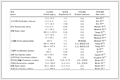
Dielectric properties of polymer films are vital to their application in microelectronics. These properties of FPI-xx hybrid films and pure FPI were studied via a parallel plate capacitor configuration, and characteristic data are presented in Table 4. Figure 6 presents the dielectric constants (k) in the frequency range from 1 kHz to 1 MHz. From Fig. 6 and Table 1, it was concluded that the dielectric constants of FPI-xx hybrids films (k = 2.47-2.92 at 1 MHz) were remarkably lower than that of pure FPI (k = 3.10 at 1 MHz) under identical test conditions. The dielectric constants of the FPI-xx hybrid films demonstrated a distinct decrease with an increase in the POSS content in the hybrid films and an extreme decrease in k (at 1 MHz), specifically, from 3.10 for pure FPI to 2.47 for the hybrid film with 16 wt% of POSS. The reduction is most likely due to the nanoporous structure in the core of the POSS molecules and the external porosity introduced by tethering POSS to the polyimide, as evidenced by the decreased density of the hybrid films with increased amount of POSS in the film (Table 4). From Table 4, it is found that the dielectric loss factors (at 1 MHz) for these hybrid films are in the range of 0.012-0.014, lower than that of pure FPI. The results could be ascribed to the low polarity of the POSS structures, which could help to reduce their dielectric constant and dielectric loss factors.
One of the key requirements for microelectric materials is low water absorption, which ensures that the film maintains a stable dielectric performance. Water absorption of FPI-xx hybrid films and pure FPI are listed in Table 4. Water absorption of FPI is 0.96%, much lower than that of the standard Kapton film (2.1%) due to the high content of trifluoromethyl groups of FPI. Compared with FPI, water absorption of FPI-xx hybrid films showed a further decrease and the values are at 0.69%-0.95%, which can be attributed to the incorporation of hydrophobic POSS moieties. The contact angles of water (θw) on the films for FPI-xx hybrid films and pure FPI were also tested (Table 4). It is clearly shown that all films possess relative high contact angles (> 90°). θw values for FPI-xx films are in the range of 98°-108°, which are higher than that of pure FPI, and show an increasing trend with increase in POSS content, that correlates well with their water absorption behavior.
Table4.
Density, dielectric properties, water absorption and water contact angles (θw) of FPI-xx hybrid polymers and pure FPI
Sample Density (g/cm3) Dielectric constant (1 MHz) Dielectric loss (1 MHz) Water absorption (%) θw (°) FPI-4 1.36 3.01 0.014 0.95 98 FPI-8 1.34 2.90 0.013 0.89 102 FPI-12 1.30 2.72 0.013 0.76 106 FPI-16 1.28 2.58 0.012 0.69 108 FPI 1.39 3.21 0.016 0.96 95 Table4. Density, dielectric properties, water absorption and water contact angles (θw) of FPI-xx hybrid polymers and pure FPI
Figure 6. Dielectric constants of FPI-xx hybrid polymers and pure FPI at different electric frequency
Preparation of Fluorinated Polyimide/POSS Hybrid Polymers
Table1.
Feed ratios, intrinsic viscosities and GPC molecular weights of FPI-xx hybrid polymers
Sample BTFB/ODPA/POSS-NH2 (molar ratio) GPC data Intrinsic viscosity a (dL/g) Mn × 10-4 (g/mol) Mw × 10-4 (g/mol) PDI FPI-4 98/100/4 4.1 6.7 1.64 0.72 FPI-8 96/100/8 2.8 4.7 1.69 0.53 FPI-12 94/100/12 2.1 3.6 1.74 0.44 FPI-16 92/100/16 1.6 2.7 1.68 0.37 a Measured at concentration of 0.5 g/dL in DMAc at room temperature Table1. Feed ratios, intrinsic viscosities and GPC molecular weights of FPI-xx hybrid polymersChemical structures of the prepared hybrid polymers were analyzed by FTIR and 1H-NMR spectroscopy. Figure 1 illustrates the FTIR spectra of FPI-16 and pure FPI: characteristic imide absorption bands around 1784 and 1740 cm-1 (imide carbonyl asymmetrical and symmetrical stretching), 1374 cm-1 (C―N stretching), and 1040 and 740 cm-1 (imide ring deformation). The primary difference between hybrid polymer and pure FPI is that FPI-16 demonstrates a characteristic broad peak around 1000-1120 cm-1, which is responsible for Si―O―Si bond stretching of POSS structure. Figure 2 displays 1H-NMR spectra of FPI-16 and pure FPI. The assignments of each proton designated in 1H-NMR spectra are in complete agreement with the proposed polymer structures. Spectra show similar peaks from chemical shift 7.4 to 8.1, which are assigned to the aromatic protons in dianhydrideand diamine units. In comparison with 1H-NMR spectrum of FPI, FPI-16 displays new peaks at chemical shift 0.59, 0.94, 1.65 and 3.68 due to the incorporation of POSS moieties. The signals of H7 show an obvious shift to lower downfield region relative to the other protons in POSS, indicating the successful imidization reaction between POSS-NH2 and the end diahydride groups.

Figure 2. Comparison of 1H-NMR spectra for FPI-16 and pure FPI

Figure 1. Comparison of FTIR spectra for FPI-16 and pure FPI

Figure Scheme 1. Synthesis of fluorinated polyimides/POSS hybrid polymers
A series of fluorinated polyimide/POSS hybrid polymers were prepared by a facile synthetic route using BTFB, ODPA and POSS-NH2 as starting materials (Scheme 1). Dianhydride terminated polyimide with pendant trifluoromethyl groups was first synthesized by polymerization of BTFB and ODPA in excess. The resulting polymer was copolymerized with POSS-NH2 at equal mole to get the hybrid polymer. All polymerization reactions were carried out in a homogeneous solution with m-cresol as the solvent and isoquinoline as the catalyst. The content of POSS was controlled by adjusting the ratio of BTFB/POSS-NH2. The hybrid polymers were denoted as FPI-xx, where “xx” was the content of POSS-NH2 (Table 1). The feed ratio, inherent viscosities and molecular weight of the hybrid polymers (FPI-4-FPI-16) are given in Table 1. The inherent viscosities are in the range 0.37-0.72 dL/g. The number molecular weight (Mn) is in the range of 1.6 × 10⁴-4.1 × 10⁴ g/mol and polydispersities (Mw/Mn) are in the range of 1.64-1.74, indicating formation of the polymers with medium to reasonably high molecular weight.
Solubility
Table2.
Solubility behavior of FPI-xx hybrid polymers and pure FPI a
Sample NMP DMAc DMF CHCl3 THF Acetone Ethanol FPI-4 +++ ++ ++ + + - - FPI-8 +++ ++ ++ ++ ++ S - FPI-12 ○ +++ ++ ++ ++ S - FPI-16 ○ ○ +++ +++ +++ S - FPI ++ + + + + - - a ○, 250 mg sample dissolved in 1 mL solvent (25 wt%); +++, soluble at 20 wt%; ++, soluble at 10 wt%; +, soluble at 5 wt%; S, swelling; -, insoluble Table2. Solubility behavior of FPI-xx hybrid polymers and pure FPI aIt is well known that aromatic PIs generally show rather poor solubility in organic solvents due to their rigid macromolecular chains and high crystallinity. Therefore, most hybrid polymers are prepared from poly (amido acid) /POSS hybrid films, followed by imidation at high temperature curing[26, 28, 29]. The resultant hybrid polymers are insoluble and cannot be cast in full imidation formation. Contrary to the properties of these films, FPI-xx hybrid polymers, prepared by a facile solution polycondensation using a “one-pot” method, are soluble. The solubility of FPI-xx hybrid polymers and pure FPI were tested in various solvents at room temperature and the results are summarized in Table 2. They all were soluble in most tested solvents such as NMP, DMAc, DMF, CHCl3 and THF. Good solubility is attributed to their amorphous structures, owing to the introduction of pendant trifluoromethyl groups on the polymer backbone. Compared with pure FPI, FPI-xx polymers showed improved solubility, and their solubility increased with increasing POSS content. Their maximal solubility reached 20 wt% in CHCl3 and THF for the polymer with 16% of POSS. Flexible and strong films were easily obtained from their solution by casting. T he significantly enhanced solubility is ascribed to the fact that the incorporation of bulky POSS moieties could further decrease the intermolecular force and packing ability of the resulting hybrid polymers. It should be noted that good solubility in low-boiling-point solvents is critical for preparing films or coatings at a relatively low processing temperature, which is desirable for advanced microelectronics manufacturing applications.
Thermal Stability and Mechanical Properties

Figure 5. TGA curves of FPI-xx hybrid polymers and pure FPI at a heating rate of 10 K/min
Mechanical properties of FPI-xx hybrid films and pure FPI are also summarized in Table 3. These hybrid films demonstrated a tensile strength of 62-98 MPa with Young’s modulus of 1.8-2.1 GPa and elongation at break of 3.6%-8.0%. The elongation at break for these hybrids films was lower than that of pure FPI polymer and decreased with increasing molar loading ratio of POSS moieties, but the lowest elongation at break was above 3.0% for FPI-16, with POSS content of 16%. Therefore, the reduction of the elongation at break in these systems was acceptable and these hybrid films still possessed relatively good mechanical properties.
Thermal stability was investigated by TGA analysis under nitrogen atmosphere at a heating rate of 10 K/min. TGA curves of the hybrid films and pure FPI are shown in Fig. 5, and the characteristic data are listed in Table 3. All the hybrid films exhibited good thermal stability without significant weight loss up to 500 ℃ and the temperature (T10) of 10% weight loss was in the range of 539-591 ℃, depending on the composition of the hybrid polymer. A slight decrease was found for FPI-xx hybrid polymers relative to the pure PI due to a lower degradation temperature of isobutyl groups on POSS segments. More than 48% of char yield remained at 800 ℃ for FPI-xx hybrid polymers. The char yields remain essentially identical relative to the pure FPI due to the component of the POSS and the polyimide in the hybrid materials.
Table3.
Thermal stability and mechanical properties of FPI-xx hybrid polymers and pure FPI
Samples T10 (℃) Char yield a (%) Tensile strength (MPa) Elongation at break (%) Young’s modulus (GPa) FPI-4 591 53 98 8.0 2.1 FPI-8 566 51 83 6.2 1.9 FPI-12 547 49 75 4.5 1.9 FPI-16 539 48 62 3.6 1.8 FPI 605 55 115 9.7 2.0 a Residual weight retention at 800 ℃ Table3. Thermal stability and mechanical properties of FPI-xx hybrid polymers and pure FPIXRD and SEM Analyses

Figure 3. XRD diffraction patterns of POSS-NH2, pure FPI and hybrid polymers
The distribution of POSS moieties in the polymer matrix is an important factor that affects the properties of the resultant hybrid films. For the physical blending of polymers with POSS particles without covalent bonding, the aggregation and crystallization of POSS moieties usually occurs within the polymer matrix due to its poor compatibility. Figure 3 shows the XRD diffraction spectra of POSS-NH2, FPI and the hybrid films. POSS-NH2 exhibited multiple sharp diffraction peaks due to the presence of a crystalline structure. Pure polyimides and hybrid polymers all showed a similar diffuse peak at 2q = 23°, indicating the formation of an amorphous structure. After hybridization, the sharp diffraction peaks of the crystalline structure of POSS-NH2 were no longer detected. A small yet broad peak at about 2q = 8° was observed in the diffraction spectra of the hybrid polymers, which indicated that the POSS molecules still retained their nanoscaled dimensions and was homogeneously dispersedin the polymer matrix. A similar phenomenon was observed for hybrid films in other matrix-like polymer systems[29, 30].

Figure 4. SEM photographs of the fracture surfaces of pure FPI (a), FPI-4 (b) and FPI-16 (c)
SEM is an intuitive and convenient method to observe the microstructure of the hybrid films. Figure 4 shows the SEM photographs of the fractured surfaces of pure FPI and the hybrid films FPI-4 and FPI-16. It was seen that the hybrid materials with different POSS contents displayed similar morphology to that in pure FPI. The results indicated that POSS moieties had been molecularly distributed in the polymer matrix and no individual particles was found in the hybrid films. These observations agree with the XRD results. Good compatibility between the two components was mainly attributed to the effective reaction of POSS-NH2 with the end diahydride groups. In addition, the multi isobutyl groups on POSS also promoted the compatibility of inorganic/organic components.
CONCLUSIONS
A series of fluorinated polyimide/POSS hybrid polymers (FPI-4-FPI-16) were prepared via homogenerous solution polycondensation using a “one-pot” method. Incorporation of pendant trifluoromethyl substituents and bulky POSS moieties brought about substantial improvement to the film properties. In comparison with pure FPI, the hybrid polymers showed enhanced solubility and lower dielectric constants (2.47-2.92 at 1 MHz). They also demonstrated adequate thermal stability and mechanical properties, low water absorption, and high contact angles for water. Considering the facile synthetic route and the resultantproperties, the fluorinated polyimides/POSS hybrid polymers are promising materials for microelectronic applications. This work provides a potential strategy for the preparation of fluorinated polyimides/POSS hybrid polymers.
-
-
[1]
Ding, M.X., Prog. Polym. Sci., 2007, 32:623 doi: 10.1016/j.progpolymsci.2007.01.007
-
[2]
Kim, K.H. and Jang, S.Y., Macromolecules, 2001, 34:8925 doi: 10.1021/ma011072t
-
[3]
Watanabe, Y., Shibasaki, Y., Ando, S. and Ueda, M., Polymer, 2005, 47:5903
-
[4]
Ling, Q.D., Chang, F.C., Song, Y., Zhu, C.X., Liaw, D.J., Chan, D.S., Kang, E. and Neoh, K., J. Am. Chem. Soc., 2006, 128:8732 doi: 10.1021/ja062489n
-
[5]
Dang, Z.M., Zhou, T., Yao, S.H., Yuan, J.K., Zha, J.W., Song, H.T., Li, J.Y., Chen, Q., Yang, W.T. and Bai, J., Adv. Mater., 2009, 21:2077 doi: 10.1002/adma.v21:20
-
[6]
Yang, F.C., Wang, J., Chen, L., Wang, X., Chen, X.Y. and Zhang, X., Chinese J. Polym. Sci., 2015, 33:481 doi: 10.1007/s10118-015-1602-6
-
[7]
Maier, G., Prog. Polym. Sci., 2001, 26:3 doi: 10.1016/S0079-6700(00)00043-5
-
[8]
Liaw, D.J., Wang, K.L., Huang, Y.C., Lee, K.R., Lai, J.Y. and Ha, C.S., Prog. Polym. Sci., 2012, 37:907 doi: 10.1016/j.progpolymsci.2012.02.005
-
[9]
Kwak, S.M., Yeon, J.H. and Yoon, T.H., J. Polym. Sci., Part A:Polym. Chem., 2006, 44:2567 doi: 10.1002/(ISSN)1099-0518
-
[10]
Zhang, S.J., Li, Y.F., Ma, T., Zhao, J.J., Xu, X.Y., Yang, F.C. and Xiang, X.Y., Polym. Chem., 2010, 1:485 doi: 10.1039/b9py00339h
-
[11]
Huang, X.H., Huang, W., Zhou, Y.F. and Yan, D.Y., Chinese J. Polym. Sci., 2011, 29:506 doi: 10.1007/s10118-011-1058-2
-
[12]
Sydlik, S.A., Chen, Z. and Swager, T.M., Macromolecules, 2011, 44:976 doi: 10.1021/ma101333p
-
[13]
Lin, C.H., Chang, S.L. and Cheng, P.W., J. Polym. Sci., Part A:Polym. Chem., 2011, 49:1331 doi: 10.1002/pola.24552
-
[14]
Li, Y., Xu, H., Tao, X., Qian, K., Fu, S., Shen, Y. and Ding, S., J. Mater. Chem., 2011, 21:1810 doi: 10.1039/C0JM02547J
-
[15]
Liu, Y., Zhang, Y., Lan, Q., Liu, S., Qin, Z., Chen, L., Zhao, C., Chi, Z., Xu, J. and Economy, J., Chem. Mater., 2012, 24:1212 doi: 10.1021/cm3003172
-
[16]
Dhara, M.G. and Banerjee, S., Prog. Polym. Sci., 2010, 35:1022 doi: 10.1016/j.progpolymsci.2010.04.003
-
[17]
Xie, K., Zhang, S.Y., Liu, J.G., He, M. and Yang, S.Y., J. Polym. Sci., Part A:Polym. Chem., 2001, 39:2581 doi: 10.1002/(ISSN)1099-0518
-
[18]
Chung, C.L., Lee, W.F., Lin, C.H. and Hsiao, S.H., J. Polym. Sci., Part A:Polym. Chem., 2009, 47:1756 doi: 10.1002/pola.v47:7
-
[19]
Qiu, Z.Q., Wang, J.H., Zhang, Q.Y., Zhang, S.B., Ding, M.X. and Gao, L.X., Polymer, 2006, 47:8444 doi: 10.1016/j.polymer.2006.10.031
-
[20]
Tao, L., Yang, H., Liu, J., Fan, L. and Yang, S., Polymer, 2009, 50:6009 doi: 10.1016/j.polymer.2009.10.022
-
[21]
Liu, Y., Xing, Y., Zhang, Y.H., Guan, S.W., Zhang, H.B., Wang, Y., Wang, Y.P. and Jiang, Z.H., J. Polym. Sci., Part A:Polym. Chem., 2010, 48:3281 doi: 10.1002/pola.24111
-
[22]
Kim, S.D., Lee, S., Heo, J. and Kim, S.Y., Polymer, 2013, 54:5648 doi: 10.1016/j.polymer.2013.08.057
-
[23]
Kuo, S.W. and Chang, F.C., Prog. Polym. Sci., 2011, 36:1649 doi: 10.1016/j.progpolymsci.2011.05.002
-
[24]
Zhang, W. and Muller, A.H.E., Prog. Polym. Sci., 2013, 38:1121 doi: 10.1016/j.progpolymsci.2013.03.002
-
[25]
Choi, J., Tamaki, R., Kim, S.G. and Laine, R.M., Chem. Mater., 2003, 15:3365 doi: 10.1021/cm030286h
-
[26]
Wahab, M.A., Mya, K.Y. and He, C., J. Polym. Sci., Part A:Polym. Chem., 2008, 46:5887 doi: 10.1002/pola.v46:17
-
[27]
Wu, S., Hayakawa, T., Kikuchi, R., Grunzinger, S.J. and Kakimoto, M., Macromolecules, 2007, 40:5698 doi: 10.1021/ma070547z
-
[28]
Ye, Y.S., Yen, Y.C., Chen, W.Y., Cheng, C.C. and Chang, F.C., J. Polym. Sci., Part A:Polym. Chem., 2008, 46:6296 doi: 10.1002/pola.v46:18
-
[29]
Leu, C.M., Chang, Y.T. and Wei, K.H., Macromolecules, 2003, 36:9122 doi: 10.1021/ma034743r
-
[30]
Geng, Z., Ba, J., Zhang, S., Luan, J., Jiang, X., Huo, P. and Wang, G., J. Mater. Chem., 2012, 22:23534 doi: 10.1039/c2jm35040h
-
[31]
Wang, C.Y., Zhao, X.Y., Li, G. and Jiang, J.M., Polym. Degrad. Stab., 2009, 94:1746 doi: 10.1016/j.polymdegradstab.2009.06.013
-
[32]
Wang, C.Y., Chen, W.T., Chen, Y.Y., Zhao, X.Y., Li, J. and Ren, Q., Mater. Chem. Phys., 2014, 143:773 doi: 10.1016/j.matchemphys.2013.10.012
-
[33]
Wang, C.Y., Chen, W.T., Chen, Y.Y., Zhao, X.Y., Li, J. and Ren, Q., Mater. Chem. Phys., 2014, 144:553 doi: 10.1016/j.matchemphys.2014.01.039
-
[1]
-

 扫一扫看文章
计量
- PDF下载量: 0
- 文章访问数: 2191
- HTML全文浏览量: 86
 下载:
下载: