Table 1.
Reported representative CO-releasing molecules with different CO-releasing rates

Preventing CO-Releasing Systems from Forming Precipitates and Tuning CO-Releasing Rate via Ligand Exchange Reaction
Jun-Die ZHANG , Xiu-Juan JIANG , Zhi-Yin XIAO , Li-Mei CHEN , Xue-Mei WANG , Xiao-Ming LIU


Carbon monoxide (CO) is widely known as a silent killer. On the other hand, it has been recognized as a major gaseous signaling molecule like nitric oxide (NO) and hydrogen sulfide (H2S)[1-3]. Studies reveal that CO is an important regulator and can play significant physiological and pathophysiological roles in biological systems[4-5]. It has been revealed that inhalation of CO under controlled conditions can alleviate human pulmonary hypertension[6] and protect vital organs under ischemia/hypoxia conditions and in organ transplantations[7-8]. However, safety concern raised from direct inhalation of CO from gas cylinders in clinical applications is a serious issue due to the intrinsic toxicity of CO. To fully exploit the medicinal potentials of CO under the strictest safety regulations, controllable CO delivery from a CO-carrier is highly desired rather than direct inhalation of cylinder-CO. Such CO-carriers are possible to release controllably CO on-site and on request.
Carbonyl complexes of transition metals may be the desired CO-carriers to achieve controllable CO-release since CO bound to the metals can dissociate as a free CO molecule under appropriate external stimulation. Therefore, they represent a category of CO-releasing molecules (CORMs) that are promising candidates for the medicinal applications of CO[9-14]. As ideal CORMs, they should have good water solubility and biocompatibility, as well as suitable CO-releasing rate. Water solubility and biocompatibility can be obtained by selecting suitable compounds. The CO-release rate determines the degree of tissue specificity for potential therapeutic application[15] (Table 1), so it is the key parameter for examining the stability and sustainability of the CORMs[9, 16-23]. Too fast or too slow is not suitable for clinical application. Therefore, controlling the CO-releasing rate is an important goal in designing appropriate CORMs.
 下载:
导出CSV
下载:
导出CSV
| Complex | t1/2/min | Solvent* | Ref. |
| CORM-1 [Mn2(CO)10] | < 1 | DMSO | [9] |
| CORM-2 [Ru(CO)3Cl2]2 | ca. 1 | DMSO | [9] |
| CORM-3 [Ru(CO)3Cl(glycinate)] | ca. 1 | H2O | [16] |
| CORM-A1 [Na2H3BCO2] | 27 | H2O | [17] |
| CORM-S1 [Fe(CO)2(SCH2CH2NH2)2] | 25 | H2O | [18] |
| CORM-401 [Mn(CO)4(S2CNMeCH2CO2H)] | 20 | H2O | [19] |
| CORM-F3 [Fe(CO)3(6-Me-4-Br-2-pyrone)] | 55 | DMSO | [20] |
| ALF-062 [Mo(CO)5Br][NEt4] | < 30 | DMSO | [21] |
| ALF-186 Na[Mo(CO)3(histidinato)] | < 30 | H2O | [22] |
| B12-Re-CORM-2 [Re(CO)2(H2O)Br(CNCo)] | ca. 30 | H2O | [23] |
| *DMSO=dimethyl sulfoxide. | |||
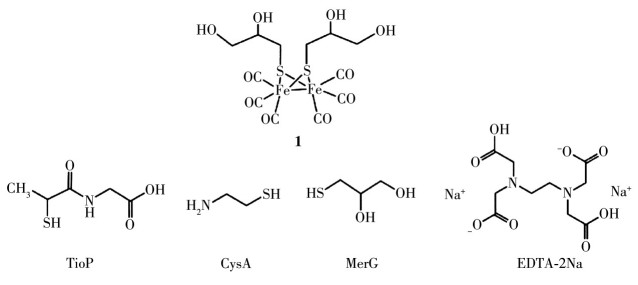
There are a variety of approaches to trigger a metal carbonyl complex to release its bound CO. For example, photoinduced reaction, ligand exchange reaction, enzymolysis, and magnetic and thermal initiation are practical methods to weaken the metal-CO bond and then release CO[11, 24-27]. Among these methods, photo-induction and ligand substitution are highly favorable due to their excellent controllability on CO-release[28-35]. However, for photoCORMs (photo-activated CORMs), and photo-inductive CORMs, the most reported complexes are UV-Vis sensitive. As widely known, due to its high energy, a short wavelength of light is not only potentially harmful but also cannot penetrate deeply into the tissues of a human body, which severely hampers their potential to be developed into clinic drugs. Although CO-release induced by near-infrared light through the up-conversion process is an approach to solving the problem of light penetration into the tissues[36-37], constructing such photoCORMs has not been a nontrivial task. However, ligand substitution possesses its own advantage in terms of controllability. On the one hand, applying an appropriate ligand to initiate CO-release is more convenient than other approaches such as photoinduction. In addition, one's body fluids are full of molecules ranging from simple inorganic ions such as chloride to relatively large biomolecules including proteins, for instance, glutathione, and these molecules are good initiators to promote CO-release from transition metals carbonyl complexes. In the past decade, we have focused on iron carbonyl complexes as CO carriers. In our previous report, we have reported a water-soluble diiron carboxyl complex [Fe2(μ-SCH2CH(OH)CH2(OH))2(CO)6] (1), which can decompose under the initiation of cysteamine and diverse amino acids[29-31]. The CO-releasing rate varies with the employed ligands and therefore, it is possible to achieve the desired CO-release controllability via choosing an appropriate reagent.
But one of the problems encountered in CO-release is forming precipitates, which can detrimentally block capillaries and thus, pose severe threats[38]. Therefore, the prevention of precipitate formation is an important issue in fabricating a CO-releasing system. Ethylenediaminetetraacetic acid (EDTA), a widely known universal chelating agent, forms stable and watersoluble chelating complexes with a variety of metal ions, particularly transition metal ions[39]. The agent is also of the potential to initiate ligand exchange reaction to promote CO-release due to its amine and carboxylic groups. Therefore, EDTA would be an ideal compound for both prevention of precipitate formation and CO-release promotion, an effect of'kill two birds with one stone'. Herein, we report the application of EDTA to prevent the formation of precipitates and its promotion in CO-release. By using those water-soluble compounds containing —SH group, such as tiopronin (TioP), cysteamine (CysA), and mercaptoglycerol (MerG), as the main CO-release promotors (Scheme 1), the diiron carbonyl complex (1, Scheme 1) with water solubility was used as the CO-carrier and reacted with these nucleophilic agents to initiate CO release while ethylenediaminetetraacetic acid disodium salt (EDTA-2Na) was introduced to prevent precipitation formation for its being easily converted to EDTA. Our results show that the ligands undergo substitution reactions with complex 1 to release CO with various releasing rates depending on the individual compound, and EDTA can successfully prevent the system from forming precipitates. Furthermore, the presence of EDTA synergistically promotes the CO-release.
TioP, CysA, MerG, and EDTA-2Na were purchased from Aladdin and used as supplied. Complex 1 was synthesized using the procedure we reported recently[29]. FT-IR spectra were recorded on an Agilent 640 using a CaF2-cell with a spacer of 0.1 mm in thickness. Mass spectral data (ESI, positive mode) were collected on an Agilent 1260 LC-MS spectrometry.
A typical procedure for the monitoring was as follows: to a solution of complex 1 (17 mg, 0.034 5 mmol) in DMSO (2.4 mL) was added an aqueous solution of TioP (0.1 mL, 1.035 mol·L-1) and 0.5 mL water. In the reaction mixture, the final concentrations of the two species were 0.011 5 and 0.034 5 mol·L-1, respectively. The ratio in volume of DMSO over water was 4∶1 at the end. The reaction was maintained at 37 ℃ and regularly monitored using infrared spectroscopy. The CO-release initiated by CysA and MerG, respectively, was analogously performed. The CO-releasing assessment carried out in physiological saline in D2O (0.9%, 0.15 mol·L-1) was completed using the same procedure as described above. But in the two media, a minimum DMSO (50 μL) was added to facilitate the dissolution of complex 1. The CO -release promoted by EDTA was monitored similarly to the above procedure except that additional EDTA-2Na (0.1 mL, 1.035 mol·L-1) was added, and 0.4 mL water was refilled to calibrate the solution to 3.0 mL.
Previously, we have reported a water-soluble diiron hexacarbonyl complex 1, which can release CO under the initiation of CysA and diverse amino acids[29-31]. To develop more water-soluble and biocompatible CO-releasing systems, water-soluble compounds such as TioP and MerG were chosen as the nucleophiles to initiate CO-release from complex 1. These nucleophiles contain functional groups, for example, amino, thiol, or carboxylic groups, that can undergo ligand exchange reaction with the diiron carbonyl complex which eventually leads to the decomposition of the entire complex. However, one of the problems encountered in the systems is the formation of precipitates. To overcome this obstacle, water-soluble EDTA, which has multiple carboxyl and amino groups and therefore, universal chelating capability, was used. In fact, EDTA has been used as an antidote to remove excessive heavy metal ions due to the toxification of heavy metals. Therefore, in this work, EDTA-2Na (abbreviated as EDTA thereafter) was introduced to the CO-releasing system to prevent precipitate formation while CysA was used as the chief ligand to initiate the CO-release from complex 1.
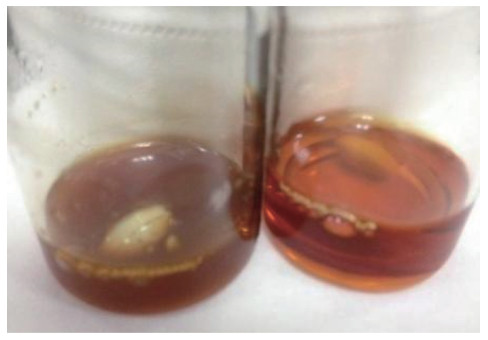
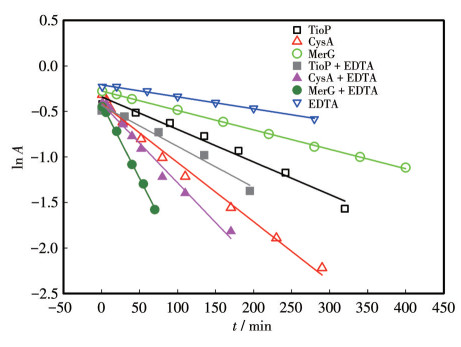
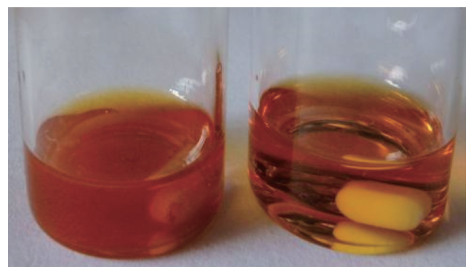
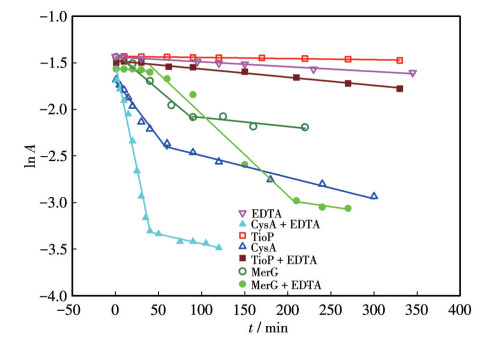
Fig. 1 shows the results of the final decomposition solution of complex 1 initiated by TioP with and without EDTA in the DMSO/H2O mixture, respectively. The difference in the transparency between the two solutions clearly indicates the successful prevention of precipitation formation. In the cases of other nucleophiles such as MerG and CysA, similar effects in precipitation formation prevention were also observed. By separately examining the CO-release initiated by CysA, EDTA, and their combination, the infrared spectroscopic monitoring and kinetic analysis were performed for these reactions. The characteristic infrared absorption peaks of complex 1 decreased continuously with the reaction time (Fig. S1-S3, Supporting information), which indicates that the reaction between them proceeded steadily to release CO. Kinetic analysis suggests that this CO-releasing progress is a first-order reaction for complex 1 (Fig. 2). Table 2 summarizes the kinetic data which show that the presence of EDTA could accelerate the CO-release rate by about 1.3-times, and EDTA also has the ability to initiate the slow decomposition of complex 1. However, when the concentration of EDTA was doubled, the reaction sped up significantly (Fig.S4, Table 2). A similar promoting effect caused by EDTA also existed for the substitution reactions of complex 1 induced by MerG and TioP, respectively (Fig. S5-S8, Fig. 2, and Table 1). For MerG, the acceleration effect by EDTA was the most significant one. These results indicate that EDTA can not only prevent the formation of precipitation but also synergistically promote the CO-release.
c1=0.011 5 mol·L-1, cligand=cEDTA=0.034 5 mol·L-1 in DMSO/H2O mixture (4∶1, V/V) at 37 ℃ under open atmosphere; The absorbance at 2 032 cm-1 was taken in the analysis
下载:
导出CSV
| Parameter | CysA | CysA+EDTAb | TioP | TioP+EDTAb | MerG | MerG+EDTAb | EDTA onlyc | EDTA onlyd |
| kobs/min-1 | 0.006 5 | 0.008 7 | 0.003 6 | 0.004 5 | 0.002 1 | 0.016 4 | 0.001 3 | 0.005 5 |
| t1/2/min | 107 | 80 | 192 | 154 | 330 | 42 | 533 | 125 |
| a c1=0.011 5 mol·L-1, cligand=0.034 5 mol·L-1, cEDTA=0.034 5 or 0.069 0 mol·L-1, DMSO/H2O (4∶1, V/V) at 37 ℃; b c1∶cligand∶cEDTA=1∶3∶3; c c1∶cEDTA=1∶3; d c1∶cEDTA=1∶6. | ||||||||
From the kinetic results, we can also see that the decomposition rate of complex 1 varied with the substitution compounds, which may be ascribed to the differences in their nucleophilicity and steric nature. CysA and TioP with more coordination sites (amino, thiol, or carboxyl) more likely chelate the iron center at a rate 2-3 times faster than that of monodentate MerG. For EDTA, although it has a strong chelating ability to the metal center, the weak coordination ability of—COOH/—COO- towards the iron center at a low oxidation state compared with —SH group still results in a slow reaction rate. However, it is the chelating capability that facilitates the CO-releasing process initiated by the co-added ligand by shifting the reaction equilibrium. Among the three ligands, the system with MerG was most efficiently affected. It may be due to that any products from this system lacking a chelating effect due to its monodentate nature are more vulnerable to the intervention of EDTA than the other two ligands which are of multidentate property to end up with EDTA-chelated final product.
As widely known, the oil/water partition coefficient (lg P) is important for studying the dissolution, absorption, distribution, and transport of drugs in the body. To explore the reaction rate difference of the CO-releasing system, we examined the correlation of lg P of different substitution reagents with their rate constants. By plotting the rate constant kobs against lg P of the substitution reagents, a linear correlation was established between them by excluding EDTA (Fig.S9). From the result we can see that the substitution reagents with larger lg P could exhibit faster reaction rate (lg P=0.1 (CysA), -0.49 (TioP), -0.63 (MerG)). CysA has the lipophilic ability, which may more easily react with complex 1 in DMSO/H 2O solvent. TioP and MerG are more hydrophilic than CysA resulting in a slower reaction rate. However, EDTA is abnormal, it may be attributed to the strong hydrophilic ability of EDTA (lg P = - 11.7). Additionally, the weaker coordination ability of the carboxyl group than the thiol group may also contribute to the slow reaction rate for EDTA.
One of the ultimate requirements for clinic application of CORMs is that CO-release can be achieved under physiological conditions. Therefore, an examination of CO-releasing kinetics under physiological conditions is desirable. For the convenience of applying the infrared spectroscopic technique to monitor the CO-releasing, deuterated water was used.
In physiological saline, compared to the cloudy solution of complex 1 induced by TioP, the participation of EDTA also led to a clear solution (Fig. 3) by effectively preventing the formation of precipitates. For those reactions initiated by CysA and MerG, respectively, the same effect was achieved due to the involvement of EDTA. As observed in DMSO, these substitution reactions were accelerated by EDTA. But the CO-releasing behavior was rather solvent-dependent as shown in Fig. 4, S10-S16, and Table 3. Unlike the simple kinetic mode in the organic solvent, the CO-releasing process is much more complicated in a saline medium. Except for the TioP ligand, the other two ligands initiate mechanisms of two-stage. With the involvement of EDTA, even a three-stage process was observed for MerG. What is interesting is that at the different stages, simple first-order kinetics were applied. This suggests that parallel reactions exist, and they compete with each other. But individually, these reactions abide by firstorder kinetics, and at a certain stage, only one of the reactions prevails. The existence of competing reactions may not be too surprising since the medium consists of various nucleophilic agents such as chloride, aqueous molecule plus deliberately added ligands.
c1=0.011 5 mol·L-1, cligand=cEDTA=0.034 5 mol·L-1 in physiological saline (D2O) at 37 ℃ under open atmosphere; The absorbance at 2 032 cm-1 was taken in the analysis
下载:
导出CSV
| Ligand | kobs, Lb/min-1 | kobs, L+EDTAc/min-1 |
| EDTA | — | 0.000 5d |
| TioP | 0.000 1 | 0.000 73 |
| CysA | 0.010 5, 0.002 5 | 0.044 8, 0.003 8 |
| MerG | 0.007 5, 0.000 8 | 0.000 8, 0.008 7, 0.001 4 |
| ac1=0.011 5 mol·L-1, cligand=cEDTA=0.034 5 mol·L-1 in physiological saline (D2O) at 37 ℃ under open atmosphere; b Without EDTA; c With EDTA; d Without the ligands. | ||
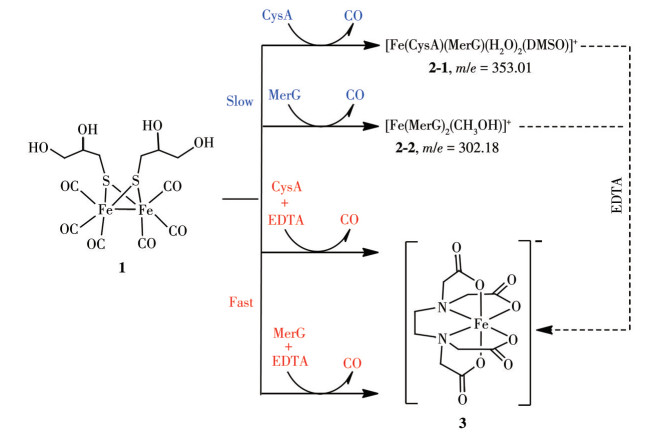
To further explore the possible CO-release and precipitation prevention mechanism of complex 1 under the initiation of the ligands, MS analysis was carried out to identify the decomposition products of complex 1 induced by CysA and MerG with and without EDTA, respectively (Fig.S17-S20). In the MS spectra of 1-CysA (MerG) systems, signals at 353.056 2 and 302.143 9 were observed, respectively, which may be assigned to the fragments of [Fe(CysA) (MerG) (H2O)2 (DMSO)]+ (fragment 2-1, m/e=353.01), [Fe(MerG)2 (CH 3OH)]+ (fragment 2-2, m/e=302.18), respectively. The methanol molecule involved in the fragment might come from the solvent used in the experiment. When EDTA was present in the systems, there were signals at 384.050 7 and 390.306 4, respectively. These signals correspond to the mass of the anion, [Fe(EDTA)]- (3), combining with relevant cations and proton, (3+H++K+, m/e=384.17) and (3+2Na+, m/e=390.04), respectively. The identification of this anion also assertively confirms the oxidation state of the iron after the CO-release, which suggests that during the process, oxidative ligand exchange occurs due to the involvement of the aerobic oxidation process. Based on the above observations, a mechanism of the substitution-initiated CO-release for complex 1 and precipitation prevention by EDTA is thus proposed (Scheme 2). It is worth noting that EDTA alone hardly initiates CO-release from the complex in saline (Fig. 4). Nevertheless, any decomposition leads to the formation of the anion 3. Forming the anion 3 also explain the synergistic effect between the ligands and EDTA, as the presence of EDTA can shift the reaction equilibria between complex 1 and the ligands. The formation of the anion is the root cause of precipitation prevention by EDTA in the CO-releasing process.
In summary, a water-soluble CO-releasing system has been established by using water-soluble compounds as nucleophiles (cysteamine, tiopronin, or mercaptoglycerol) to promote CO-release from complex 1. The introduction of EDTA into the CO-releasing system can not only effectively prevent the formation of precipitate in the CO-releasing progress, but also facilitate synergistically the CO release with the other ligands. The precipitation prevention of EDTA in both DMSO and physiological saline is effective, but its synergistic promotion for CO-release is solvent-dependent. Our results demonstrate that combining EDTA with an appropriate nucleophilic compound can be a strategy to achieve the purposes of both tuning the CO-releasing rate and preventing precipitate formation, which would be attractive in developing CORMs of potential in clinical applications.
Supporting information is available at http://www.wjhxxb.cn
Marks G S, Brien J F, Nakatsu K, McLaughlin B E. Does Carbon Monoxide Have a Physiological Function?[J]. Trends Pharmacol. Sci., 1991, 12: 185-188. doi: 10.1016/0165-6147(91)90544-3
Mann B E, Motterlini R. CO and NO in Medicine[J]. Chem. Commun., 2007, : 4197-4208.
Mann B E. Carbon Monoxide: An Essential Signalling Molecule[J]. Top. Organomet. Chem., 2010, 32: 247-285.
Johnson T R, Mann B E, Clark J E, Foresti R, Green C J, Motterlini R. Metal Carbonyls: A New Class of Pharmaceuticals?[J]. Angew. Chem. Int. Ed., 2003, 42(32): 3722-3729. doi: 10.1002/anie.200301634
Gonzales M A, Mascharak P K. Photoactive Metal Carbonyl Complexes as Potential Agents for Targeted CO Delivery[J]. J. Inorg. Biochem., 2014, 133: 127-135. doi: 10.1016/j.jinorgbio.2013.10.015
Motterlini R. Heme Oxygenase-1-Derived Carbon Monoxide Contributes to the Suppression of Acute Hypertensive Responses In Vivo[J]. Circ. Res., 1998, 83(5): 568-577. doi: 10.1161/01.RES.83.5.568
Kohmoto J, Nakao A, Kaizu T, Tsung A, Ikeda A, Tomiyama K, Bilhar T R, Choi A M K, Murase N, McCurry K R. Low-Dose Carbon Monoxide Inhalation Prevents Ischemia/Reperfusion Injury of Transplanted Rat Lung Grafts[J]. Surgery., 2006, 140(2): 179-185. doi: 10.1016/j.surg.2006.03.004
Li Volti G, Rodella L F, Di Giacomo C, Rezzani R, Bianchi R, Borsani E, Gazzolo D, Motterlini R. Role of Carbon Monoxide and Biliverdin in Renal Ischemia/Reperfusion Injury[J]. Nephron Exp. Nephrol., 2006, 104(4): E135-E139. doi: 10.1159/000094964
Motterlini R, Clark J E, Foresti R, Sarathchandra P, Mann B E, Green C J. Carbon Monoxide-Releasing Mole Cules-Characterization of Biochemical and Vascular Activities[J]. Circ. Res., 2002, 90(2): E17-E24.
Motterlini R, Otterbein L E. The Therapeutic Potential of Carbon Monoxide[J]. Nat. Rev. Drug Discov., 2010, 9(9): 728-743. doi: 10.1038/nrd3228
Romao C C, Blaettler W A, Seixas J D, Bernardes G J L. Developing Drug Molecules for Therapy with Carbon Monoxide[J]. Chem. Soc. Rev., 2012, 41(9): 3571-3583. doi: 10.1039/c2cs15317c
Schatzschneider U. Novel Lead Structures and Activation Mechanisms for CO-Releasing Molecules (CORMs)[J]. Brit. J. Pharmacol., 2015, 172(6): 1638-1650. doi: 10.1111/bph.12688
Fairlamb I J S, Lynam J M. Advances in Bioorganometallic Chemistry. Amsterdam: Elsevier, 2019: 137-154
李勇, 王栩, 解希雷, 张建, 唐波. 一氧化碳有机荧光探针和光控释放剂研究进展[J]. 化学学报, 2021,79,(1): 36-44. LI Y, WANG X, XIE X L, ZHANG J, TANG B. Progress in Organic Fluorescent Probes and Photocontrolled Releasers for Carbon Monoxide[J]. Acta Chim. Sinica, 2021, 79(1): 36-44.
Faizan M, Muhammad N, Niazi K U K, Hu Y X, Wang Y Y, Wu Y, Sun H M, Liu R X, Dong W S, Zhang W Q, Gao Z W. CO-Releasing Materials: An Emphasis on Therapeutic Implications, as Release and Subsequent Cytotoxicity are the Part of Therapy[J]. Materials, 2019, 12(10): 1643. doi: 10.3390/ma12101643
Ferrandiz M L, Maicas N, Garcia-Arnandis I, Terencio Mx C, Motterlini R, Devesa I, Joosten L A, van den Berg W B, Alcaraz M J. Treatment with a CO-Releasing Molecule (CORM-3) Reduces Joint Inflammation and Erosion in Murine Collagen-Induced Arthritis[J]. Ann. Rheum. Dis., 2008, 67(9): 1211-1217.
Zhang W Q, Atkin A J, Thatcher R J, Whitwood A C, Fairlamb I J, Lynam J M. Diversity and Design of Metal-Based Carbon MonoxideReleasing Molecules (CO -RMs) in Aqueous Systems: Revealing the Essential Trends[J]. Dalton Trans., 2009, 14(22): 4351-4358.
Kretschmer R, Gessner G, Gorls H, Heinemann S H, Westerhausen M. Dicarbonyl-bis(cysteamine)iron(Ⅱ): A Light Induced Carbon Monoxide Releasing Molecule Based on Iron (CORM-S1)[J]. J. Inorg. Biochem., 2011, 105(1): 6-9. doi: 10.1016/j.jinorgbio.2010.10.006
Crook S H, Mann B E, Meijer A J H M, Adams H, Sawle P, Scapens D, Motterlini R. [Mn(CO)4{S2CNMe(CH2CO2H)}], A New Water-Soluble CO-Releasing Molecule[J]. Dalton Trans., 2011, 40(16): 4230-235. doi: 10.1039/c1dt10125k
Gullotta F, Di Masi A, Ascenzi P. Carbon Monoxide: An Unusual Drug[J]. Iubmb Life, 2012, 64(5): 378-386. doi: 10.1002/iub.1015
Nobre L S, Seixas J D, Romao C C, Saraiva L M. Antimicrobial Action of Carbon Monoxide-Releasing Compounds.Antimicrob[J]. Agents Chemother., 2007, 51(12): 4303-4307. doi: 10.1128/AAC.00802-07
Bannenberg G L, Vieira H L A. Therapeutic Applications of the Gaseous Mediators Carbon Monoxide and Hydrogen Sulfide[J]. Expert Opin. Ther. Pat., 2009, 19(5): 663-682. doi: 10.1517/13543770902858824
Zobi F, Blacque O, Jacobs R A, Schaub M C, Bogdanova A Y. 17 e- Rhenium Dicarbonyl CO-Releasing Molecules on a Cobalamin Scaffold for Biological Application[J]. Dalton Trans., 2011, 41(2): 370-378.
Sitnikov N S, Malysheva Y B, Fedorov A Y, Schmalz H G. Design and Synthesis of New Protease-Triggered CO-Releasing Peptide-Metal-Complex Conjugates[J]. Eur. J. Org. Chem., 2019, (40): 6830-6837.
Kunz P C, Meyer H, Barthel J, Sollazzo S, Schmidt A M, Janiak C. Metal Carbonyls Supported on Iron Oxide Nanoparticles to Trigger the CO-Gasotransmitter Release by Magnetic Heating[J]. Chem. Commun., 2013, 49(43): 4896-4898. doi: 10.1039/c3cc41411f
Heinemann S H, Hoshi T, Westerhausen M, Schiller A. Carbon Monoxide-Physiology, Detection and Controlled Release[J]. Chem. Commun., 2014, 50(28): 3644-3660. doi: 10.1039/C3CC49196J
Ling K, Men F, Wang W C, Zhou Y Q, Zhang H W, Ye D W. Carbon Monoxide and Its Controlled Release: Therapeutic Application, Detection, and Development of Carbon Monoxide Releasing Molecules (CORMs)[J]. J. Med. Chem., 2018, 61(7): 2611-2635. doi: 10.1021/acs.jmedchem.6b01153
Hasegawa U, Van der Vlies A J, Simeoni E, Wandrey C, Hubbell J A. Carbon Monoxide-Releasing Micelles for Immunotherapy[J]. J. Am. Chem. Soc., 2010, 132(51): 18273-18280. doi: 10.1021/ja1075025
Long L, Jiang X J, Wang X, Xiao Z Y, Liu X M. Water -Soluble Diiron Hexacarbonyl Complex as a CO-RM: Controllable CO-Releasing, Releasing Mechanism and Biocompatibility[J]. Dalton Trans., 2013, 42: 15663-15669. doi: 10.1039/c3dt51281a
Chen L M, Jiang X U, Wang X L, Long L, Zhang J Y, Liu X M. A Kinetic Analysis of CO Release from a Diiron Hexacarbonyl Complex Promoted by Amino Acids[J]. New J. Chem., 2014, 38(12): 5957-5963. doi: 10.1039/C4NJ00661E
Jiang X J, Long L, Wang H L, Chen L M, Liu X M. Diiron Hexacarbonyl Complexes as Potential CO-RMs: CO -Releasing Initiated by a Substitution Reaction with Cysteamine and Structural Correlation to the Bridging Linkage[J]. Dalton Trans., 2014, 43(26): 9968-9975. doi: 10.1039/C3DT53620C
Jiang X J, Chen L M, Wang X, Long L, Xiao Z Y, Liu X M. Photoinduced Carbon Monoxide Release from Half-Sandwich Iron(Ⅱ) Carbonyl Complexes by Visible Irradiation: Kinetic Analysis and Mechanistic Investigation[J]. Chem. Eur. J., 2015, 21(37): 13065-13072. doi: 10.1002/chem.201501348
Guo Z M, Jin J, Xiao Z Y, Chen N W, Jiang X J, Liu X M, Wu L F, He Y, Zhang S H. Four Iron Carbonyl Complexes Containing both Pyridyl and Halide Ligands: Their Synthesis, Characterization, Stability, and Anticancer Activity[J]. Appl. Organomet. Chem., 2021, 35(1): e6045.
Yang X Q, Jin J, Guo Z M, Xiao Z Y, Chen N W, Jiang X J, He Y, Liu X M. The Monoiron Anion fac -Fe(CO)3I3- and Its Organic Aminium Salts: Their Preparation, CO-Release, and Cytotoxicity[J]. New J. Chem., 2020, 44(25): 10300-10308. doi: 10.1039/D0NJ01182G
Xiao Z Y, Jiang R, Jin J, Yang X Q, Xu B Y, Liu X M, He Y B, He Y. Diiron(Ⅱ) Pentacarbonyl Complexes as CO-Releasing Molecules: Their Synthesis, Characterization, CO-Releasing Behaviour and Biocompatibility[J]. Dalton Trans., 2019, 48(2): 468-477. doi: 10.1039/C8DT03982H
Pierri A E, Huang P J, Garcia J V, Stanfill J G, Chui M, Wu G, Zheng N, Ford P C. A PhotoCORM Nanocarrier for CO Release Using NIR Light[J]. Chem. Commun., 2015, 51(11): 2072-2075.
Ou J, Zheng W H, Xiao Z Y, Yan Y P, Jiang X J, Dou Y, Jiang R, Liu X M. Core-Shell Materials Bearing Iron(Ⅱ) Carbonyl Units and Their CO-Release via an Upconversion Process[J]. J. Mater. Chem. B, 2017, 5(41): 8161-8168. doi: 10.1039/C7TB01434A
Scapens D, Adams H, Johnson T R, Mann B E, Sawle P, Aqil R, Perrior T, Motterlini R. [(η-C5H 4R)Fe(CO) 2X], X=Cl, Br, I, NO3, CO2Me and[(η-C5 H 4R)Fe(CO) 3]+, R= (CH2)nCO2Me (n=0-2), and CO2CH 2CH2OH: A New Group of CO-Releasing Molecules[J]. Dalton Trans., 2007, 43: 4962-4973.
Holleman A F, Wiberg E. Inorganic Chemistry. San Diego: Academic Press, 2001: 136-140

Figure 1 Solution of complex 1 when the decomposition was completed under the initiation of TioP in the absence (left) and presence (right) of EDTA

Figure 2 Plots of natural logarithmic IR absorbance of complex 1 against reaction time in the presence of different ligands in the absence and presence of EDTA
c1=0.011 5 mol·L-1, cligand=cEDTA=0.034 5 mol·L-1 in DMSO/H2O mixture (4∶1, V/V) at 37 ℃ under open atmosphere; The absorbance at 2 032 cm-1 was taken in the analysis

Figure 3 Solution of complex 1 when the decomposition was completed under the initiation of TioP in the absence (left) and presence (right) of EDTA in physiological saline

Figure 4 Plots of natural logarithmic IR absorbance of complex 1 against reaction time in the presence of different ligands with and without EDTA
c1=0.011 5 mol·L-1, cligand=cEDTA=0.034 5 mol·L-1 in physiological saline (D2O) at 37 ℃ under open atmosphere; The absorbance at 2 032 cm-1 was taken in the analysis

Scheme 2 Possible mechanism of the substitution-initiated CO-release from complex 1 by different nucleophiles and the prevention of the precipitation by EDTA
Table 1. Reported representative CO-releasing molecules with different CO-releasing rates
| Complex | t1/2/min | Solvent* | Ref. |
| CORM-1 [Mn2(CO)10] | < 1 | DMSO | [9] |
| CORM-2 [Ru(CO)3Cl2]2 | ca. 1 | DMSO | [9] |
| CORM-3 [Ru(CO)3Cl(glycinate)] | ca. 1 | H2O | [16] |
| CORM-A1 [Na2H3BCO2] | 27 | H2O | [17] |
| CORM-S1 [Fe(CO)2(SCH2CH2NH2)2] | 25 | H2O | [18] |
| CORM-401 [Mn(CO)4(S2CNMeCH2CO2H)] | 20 | H2O | [19] |
| CORM-F3 [Fe(CO)3(6-Me-4-Br-2-pyrone)] | 55 | DMSO | [20] |
| ALF-062 [Mo(CO)5Br][NEt4] | < 30 | DMSO | [21] |
| ALF-186 Na[Mo(CO)3(histidinato)] | < 30 | H2O | [22] |
| B12-Re-CORM-2 [Re(CO)2(H2O)Br(CNCo)] | ca. 30 | H2O | [23] |
| *DMSO=dimethyl sulfoxide. | |||
 下载: 导出CSV
Table 2. Kinetic data of the decomposition of complex 1 in DMSO/H2O and the synergistic effect of EDTAa
| Parameter | CysA | CysA+EDTAb | TioP | TioP+EDTAb | MerG | MerG+EDTAb | EDTA onlyc | EDTA onlyd |
| kobs/min-1 | 0.006 5 | 0.008 7 | 0.003 6 | 0.004 5 | 0.002 1 | 0.016 4 | 0.001 3 | 0.005 5 |
| t1/2/min | 107 | 80 | 192 | 154 | 330 | 42 | 533 | 125 |
| a c1=0.011 5 mol·L-1, cligand=0.034 5 mol·L-1, cEDTA=0.034 5 or 0.069 0 mol·L-1, DMSO/H2O (4∶1, V/V) at 37 ℃; b c1∶cligand∶cEDTA=1∶3∶3; c c1∶cEDTA=1∶3; d c1∶cEDTA=1∶6. | ||||||||
下载: 导出CSV
Table 3. Kinetic data of the decomposition of complex 1 in physiological saline (D2O) at 37 ℃ and the synergistic effect of EDTAa
| Ligand | kobs, Lb/min-1 | kobs, L+EDTAc/min-1 |
| EDTA | — | 0.000 5d |
| TioP | 0.000 1 | 0.000 73 |
| CysA | 0.010 5, 0.002 5 | 0.044 8, 0.003 8 |
| MerG | 0.007 5, 0.000 8 | 0.000 8, 0.008 7, 0.001 4 |
| ac1=0.011 5 mol·L-1, cligand=cEDTA=0.034 5 mol·L-1 in physiological saline (D2O) at 37 ℃ under open atmosphere; b Without EDTA; c With EDTA; d Without the ligands. | ||
下载: 导出CSV

 扫一扫看文章


扫一扫关注我们