
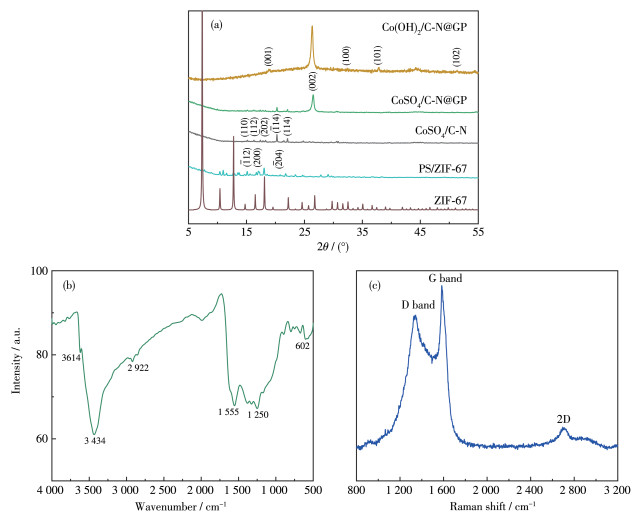
Figure 1.
(a) XRD patterns of as-prepared samples; (b) FTIR spectra of Co(OH)2/C-N@GP; (c) Raman spectra of Co(OH)2/C-N@GP


With the rapid development of electronic products and transportation, energy-storage devices have attracted increasing attention over recent decades[1]. Supercapacitors are among the most promising energy-storage devices for their advantages, including high power output, high charge-discharge rates, safety, and long lifespan[2-9]. Co(OH)2 has received particular attention as a promising candidate owing to its diverse merits, such as high theoretical specific capacitance (ca. 2 200 F· g-1), high surface area, fast ion-insertion/desertion rate, facile preparation, and low cost[10-12].
However, its poor conductivity and easy agglomeration severely limit its practical applications. To address these issues, researchers have continuously worked to implement suitable electrode materials. One approach is to combine Co(OH)2 with conductive materials, such as graphene (GP) or carbon nanotubes, to obtain comprehensive electrochemical performance[13-14]. Another way to improve the capacitance of Co(OH)2 is composition with other nanomaterials. As exemplified by MnO2@NiCoZn - OH, MoO2@Co(OH)2, nanomaterials can modulate the exposed active sites and aggregation of hydroxide composites[15].
Metal- organic frameworks (MOFs) are a fascinating type of porous material and have been applicated in gas storage, separation, sensing, and catalysis for their high specific surface area, abundant active sites, tunable pore structure, controllable morphology, and multifunctionality[16]. The poor conductivity of most MOFs during the electrochemical charge - discharge process limits their application in supercapacitors; however, MOF derivatives show a homogeneous distribution of metal atoms or oxides within the nanostructure, which could reduce the aggregation of active nanoparticles and further enhance their electrochemical performance. Derivatives such as C, Co/C, α-Fe2O3, CoN/N - C@SiO2, MnOx - CS, NiS2/CoS2/N - C, MnNi2O4 microflowers, Cu∶CoP nanosheet arrays have been fabricated from MOF precursors for energy-storage applications[17-27].
In this work, we successfully synthesized β - Co(OH)2/nitrogen - doped carbon GP (Co(OH)2/C - N@GP) using ZIF - 67 as a precursor and polystyrene (PS) as a template. In Co(OH)2/C-N@GP nanocomposites. ZIF - 67 effectively prevents the accumulation of Co(OH)2, PS provides a larger surface area, and GP enhances the conductivity of nanocomposites. As expected, Co(OH)2/C-N@GP presented excellent electrochemical properties for supercapacitors and thus has potential applications in high-performance supercapacitors.
All chemicals used in the syntheses were commercially available reagents of analytical grade and were used without further purification, including styrene (Maya-Reagent, 99%), acrylic acid (Aladdin reagent, 99%), ammonium persulfate (APS, Maya - Reagent, 98.5%), Co(NO3)2·6H2O (Zhengzhou alpha Chemical Co., Ltd., 99%). thioacetamide (Zhengzhou alpha Chemical Co., Ltd., 99%), 2-methylimidazole (Zhengzhou alpha Chemical Co., Ltd., 99%), KOH (Aladdin reagent, 99%) and Graphene power (Morch).
The X-ray diffraction (XRD) patterns of the samples were characterized by a Bruker D8 Advance using Mo Kα radiation (λ =0.071 073 nm, U=100 kV, I=40 mA) at a scanning rate of 5 (°) ·min-1 and a scanning angle (2θ) of 5° - 60°. Scanning electron microscopy (SEM) micrographs were obtained using a Gemini SEM 300, and the elements in the material were identified by the attached energy- dispersive X-ray spectrography (EDS). Transmission electron microscopy (TEM) was carried out using JEM-2100 (JEOL, Japan, 200 kV). The chemical composition of each element was analyzed via X - ray photoelectron spectroscopy (XPS, LabRAM HR800, internal standard C1s peak at 284.8 eV). Raman spectra were collected on the Thermo Scientific DXR. Fourier transform infrared spectra were recorded by IR-PRESTIGE in a range of 400-4 000 cm-1.
Under Ar flow (50 mL·min-1), 6.08 g (0.058 mol) of styrene, 0.5 g (0.007 mol) of acrylic acid, and 95 mL of deionized water were mechanically stirred in a 250 mL three - necked flask to produce a milky white suspension. After 30 min of stirring, the reaction solution was heated to 70 ℃ and 10 mL of aqueous solution containing 0.25 g APS was added. Polymerization was initiated after stirring for 1 h, and the reaction continued for another 6 h. After the reaction was complete, the solution was cooled to room temperature and the white solid was collected by centrifugation at 8 000 r·min-1 for 4 min followed three washes with deionized water. The collected solid was dried in a vacuum at 60 ℃ for 5 h for a 61% yield of the target products.
To prepare the PS ethanol dispersion, 1 g PS and 9 mL absolute ethanol were ultrasonically dispersed in a beaker for 10 min. The result was poured into 200 mL deionized water and ultrasonic dispersion continued for 10 min. Then, 4.8 g (20 mmol) Co(NO3)2·6H2O was added to the reaction solution. After stirring for 1 h, 10 mL deionized water containing 4.25 g 2-methylimidazole was added, and the solution immediately turned purple. After stirring for 1 h, the purple solid was collected by centrifugation at 8 000 r·min-1 for 4 min, followed by three washes with absolute ethanol. The collected solid was dried in a vacuum at 60 ℃ for 2 h to yield 3.2 g of ZIF-67/PS.
Carbonization of 3 g ZIF-67/PS was performed in a tubular furnace under Ar flow at 800 ℃ with a heating rate of 5 ℃ ·min-1 for 2 h, followed by cooling to room temperature to obtain 1.72 g black powder. Then, 0.09 g powder and 0.08 g thioacetamide were added to 15 mL of 3 mg·mL-1 GP ethanol solution. The above solution was stirred ultrasonically and then magnetically for 5 min until homogeneity was obtained, then placed in a hydrothermal reactor at 180 ℃ for 24 h. After the reaction was completed, the solution was cooled and filtered to obtain CoSO4/C - N@GP composites, which were converted to Co(OH)2/C - N@GP composites by immersion in 3 mol·L-1 KOH solution for 24 h. For comparison, Co(OH)2/C-N without GP was also prepared.
The prepared materials, acetylene black, and PTFE solution with a mass fraction of 10% were mixed and ground according to a mass ratio of 80∶15∶5. After obtaining a uniform film thickness, the film was cut into 5 mm×5 mm sheets, placed in a pre - cut stencil, and pressed for 5 min at a pressure of 10 MPa using a press. The supercapacitor characteristics of Co(OH)2/C-N@GP were investigated by electrochemical experiments on a Shanghai CH CHI - 66D workstation in 3 mol·L-1 KOH electrolyte utilizing three electrode cells (as-synthesized material as the working electrode, Pt as the counter electrode, Ag/AgCl as reference electrode). The electrochemical behavior of the samples was studied via cyclic voltammetry (CV) and galvanostatic charge/discharge (GCD).
The specific capacitance (C, F·g-1) of each active material was calculated as
|
|
(1) |
where I is the discharge current (A), Δt is the discharge time (s), m is the mass of the active electrode material (mg), and ΔV is the working potential window (V).
The XRD patterns of the as-prepared samples are presented in Fig. 1a. The ZIF - 67/PS patterns exactly match the corresponding simulated patterns of ZIF-67. The ZIF-67 diffraction peak disappeared when ZIF-67/ PS was pyrolyzed and reacted with thioacetamide. However, some new diffraction peaks appeared at 15.1°, 16.3°, 17.4°, 17.8°, 18.3°, 20.3°, 21.4°, and 22.1° and are consistent with the (110), (112), (112), (200), (202), (114), (204), and (114) crystal faces of CoSO4 (PDF No.16-0304), respectively. This indicates that ZIF-67/ PS was completely transformed into CoSO4/C-N. Compared with CoSO4/C-N, CoSO4/C-N@GP had a diffraction peak at 2θ≈26° corresponding to the (002) planes of GP. In the Co(OH)2/C-N@GP XRD pattern, the main diffraction peaks identified at 19.1° (001), 37.9° (101), 51.4° (102), and 57.9° (110) are associated with the (100), (002), (101), (102), (110), and (103) crystal faces of β - Co(OH)2 (PDF No. 30 - 0443), demonstrating the successful conversion of CoSO4 to β-Co(OH)2[28].
To investigate the chemical functional groups and graphitization degree of Co(OH)2/C - N@GP, FTIR and Raman spectra were used to characterize the samples. In the FTIR spectra (Fig. 1b), the Co(OH)2/C - N@GP showed two peaks at ~3 434 and ~3 675 cm-1 associated with stretching vibrations of —OH from Co(OH)2 and free Co(OH)2[29]. The absorption peak at ~2 922 cm-1 is the symmetrical vibration peak of CH2 from GP. The absorption peak at 1 250 cm-1 corresponds to C— O bond vibration in Co(OH)2, whereas the absorption peak at 602 cm-1 is caused by tensile vibration of Co— O and bending vibration Co—OH. In the Raman spectra (Fig. 1c), two obvious characteristic peaks at 1 345 and 1 590 cm-1 correspond to the D and G bands of Co(OH)2/C-N@GP, respectively, and the 2D band emerged at 2 705 cm-1. The integral intensity ratio R= ID /IG=0.799 indicates fewer sp3 carbon defects and more sp2 carbon in Co(OH)2/C-N@GP.
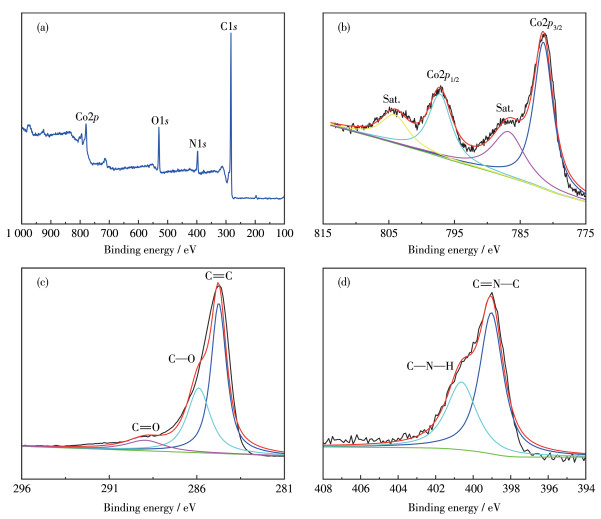
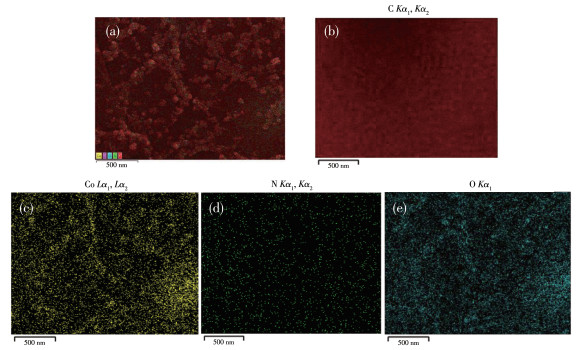
XPS was performed to determine the elemental composition and chemical valence of the Co(OH)2/C-N@GP surface. The full scan pattern for Co(OH)2/C-N@GP in Fig. 2a suggests that the nanocomposite material mainly comprises Co, N, C, and O, which is consistent with our experiment results. In the spectrum of Co2p (Fig. 2b), the peaks at 780.7 and 797.1 eV correspond to Co2p1/2 and Co2p3/2, respectively, indicate the presence of Co2+. The peaks at 786.5 and 804.6 eV are considered satellite peaks[30]. As shown in Fig. 2c, the C1s spectra of Co(OH)2/C - N@GP can be fitted into three peaks corresponding to C=C (284.5 eV), C—O (286.3 eV), and C=O (288.7 eV). In the N1s spectrum of Co(OH)2/C-N@GP (Fig. 2d), the peaks at 398.4 and 400.9 eV correspond to pyridinic C=N—C and graphitic C—N—H, respectively[31]. Pyridine nitrogen can significantly improve the conductivity of carbon electrode materials and provide active centers and external defects for carbon electrodes. Graphitic nitrogen is also beneficial to electron transfer. To further verify the composition of the as - synthesized samples, EDS and elemental mapping images were obtained. The elemental mapping results of the Co(OH)2/C-N@GP in Fig. 3a-3e show that Co, C, O, and N are uniformly distributed in space.
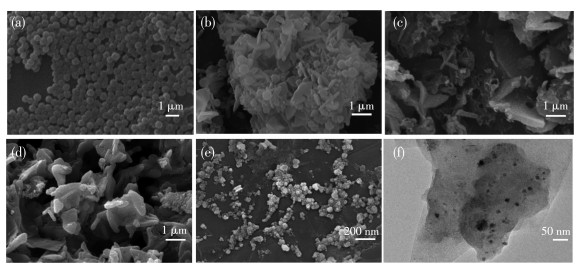
The morphology of the samples was investigated using SEM. Fig. 4a shows the PS-COOH morphology of uniform microspheres with an average diameter of 300-500 nm, and Fig. 4b shows the uniform distribution of conformal ZIF-67 and PS in the ZIF-67/PS composite. The conformal ZIF-67 was approximately 100 nm thick and the polyhedral particle size was roughly 2 μm. According to Fig. 4c, the basic morphology of Co/C-N was maintained with ZIF-67, but the surface was rougher and the PS microspheres disappeared. This is attributed to the carbonization of PS microspheres. In addition, 300-nm-diameter pores were formed on Co/C-N during carbonization, which increased the specific surface areas of Co/C-N. CoSO4/C-N@GP was formed by Co/C-N reaction with thiourea and GP under hydrothermal conditions. The morphology of CoSO4/C-N@GP is shown in Fig. 4d to comprise stacked rough, irregular polyhedra and GP. The polyhedra were approximately 2 μm, which is nearly the same as ZIF - 67. Furthermore, Co(OH)2/C - N@GP was formed via CoSO4/C-N@GP reaction with KOH. Fig. 4e shows that in Co (OH)2/C - N @GP, Co(OH)2 was well dispersed on the GP, and the hydrated particle size of Co(OH)2/C-N was ~80 nm. Fig. 4f is the TEM image of the Co(OH)2/C-N@GP nanocomposite. A large number of Co(OH)2 NPs with an average diameter of 10 - 20 nm adhered to C without serious aggregation.
To study the energy-storage characteristics of the as-obtained samples, their CV and GCD were tested in a three-electrode system with 3 mol·L-1 KOH electrolyte. Fig. 5a shows the CV curves of Co(OH)2/C-N@GP with a potential window of -1.1-0.5 V at different scan rates. The obvious redox peaks in CV curves indicate that the capacitance arises from the redox reaction, and the material exhibits typical Faraday charge - transfer behavior. With increasing scanning rate, the CV curves′ areas increased while maintaining their shape, thus indicating the good rate performance. As the scan rate increased, the oxidation peaks shifted to more positive values while the reduction peaks shifted to more negative values; this helps increase the internal diffusion resistance of the electrode material. Fig. 5b compares the CV curves of Co(OH)2/C- N and Co(OH)2/CN@GP at 5 mV·s-1 with a potential window of -1.1-0.5 V. The integral area of the CV curve of Co(OH)2/C- N was related to the GP content. This may be caused by GP increasing the conductivity of Co(OH)2/C-N in the electrochemical reaction process, eventually resulting in a higher specific capacity[31]. It is noteworthy that an obvious oxidation peak appeared at 0.2 V for Co(OH)2/ C-N, attributed to the Co(OH)2 oxidation peak[32].
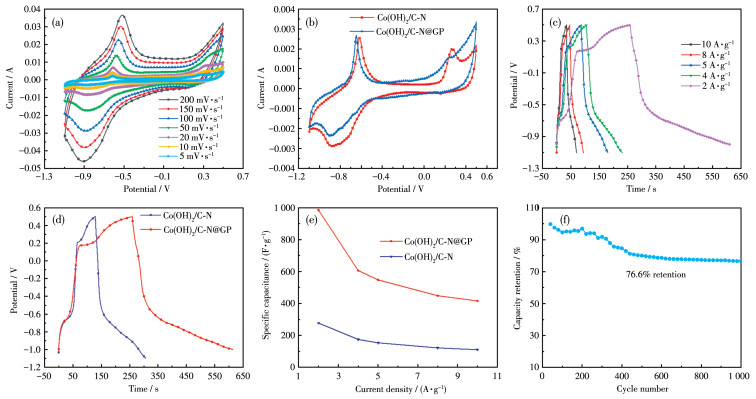
The GCD curves (Fig. 5c) of Co(OH)2/C - N@GP measured at different current densities showed a distinct potential plateau region for all electrodes, also confirming the Faradic reaction mechanism. Consistent with the CV results, Co(OH)2/C-N@GP showed a much longer discharge time than the other electrodes, indicating its excellent specific capacitance (Fig. 5d). The specific capacitances of Co(OH)2/C-N@GP were calculated as 985.4, 606.1, 547.8, 448.5, and 415.8 F·g-1 at 2, 4, 5, 8, and 10 A·g-1, respectively, and those of Co(OH)2/C - N were 277.4, 174.3, 153.4, 121.6 and 110.1 F·g-1. The results for all electrodes are shown in Fig. 5e, where the specific capacitance was found to decrease gradually with increasing current density, which can be attributed to an increase in the potential drop of the electrode materials at higher current densities.
Long-term cycling stability is also a critical factor for energy - storage materials. Fig. 5f shows the cyclic stability test curve of Co(OH)2/C-N@GP at a scan rate of 200 mV·s-1. After 400 cycles, the specific capacitance obviously decreased. This phenomenon can be explained by the poor cyclic stability of the nitrogen and oxygen functional groups, which leads to decreasing pseudocapacitance and deterioration of the cyclic stability. After 1 000 cycles, the capacitance retention of Co(OH)2/C - N@GP was 76.6%, which demonstrates ordinary cyclic stability.
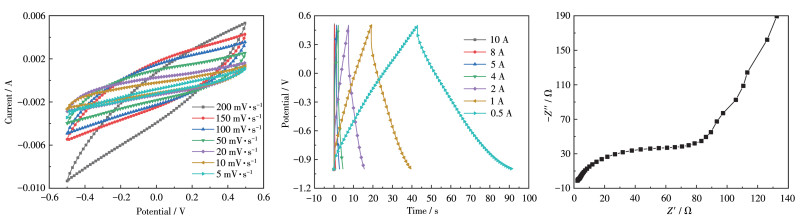
Considering its good electrochemical performance, the Co(OH)2/C-N@GP was chosen as the electrode to assemble the symmetric supercapacitor in a 3 mol·L-1 KOH electrolyte. The mass ratio of the positive and negative electrode materials was 1∶1, and the total mass is 2.2 mg. Fig. 6a displays the CV curves of SC at 10 mV·s-1, which shows a non-overlapping curves and potential windows, suggesting the good match with symmetric supercapacitor. The GCD curves also demonstrate the same capacitive behaviors, but the calculated specific capacitance achieved only 7.3 F·g-1 at a current rate of 0.5 A·g-1 (Fig. 6b). The electrical conductivity and reaction kinetics of Co(OH)2/C-N@GP was further explored by EIS at an AC voltage of 0.5 mV between 10 mHz and 100 kHz. As displayed in Fig. 6c, the straight lines of Co(OH)2/C-N@GP was steep in the low frequency region indicating a low intrinsic resistance, and the small diameter of the semicircle indicates a fast charge transfer kinetics.
In summary, a novel Co(OH)2/C-N@GP nanocomposite material was prepared using a MOF precursor and PS template. This synthesis strategy is proven an effective method to convert ZIF-67 into Co(OH)2/C-N. Co(OH)2/C - N@GP contains 80 nm Co(OH)2/C - N well dispersed on GP and Co(OH)2 with an average diameter of 10-20 nm adhered to C. The nanostructure of Co(OH)2 is beneficial to the electrochemical storage of the supercapacitor. Electrochemical analysis indicates that Co(OH)2/C-N@GP exhibit typical Faraday chargetransfer behavior, and the specific capacitance of Co(OH)2/C-N@GP depends on the GP content. Co(OH)2/C - N@GP exhibited a high specific capacitance of 985.4 F·g-1 at 2 A·g-1 in 3 mol·L-1 KOH.
Zhao Y, Zhang L, Liu J, Adair K, Zhao F, Sun Y, Wu T, Bi X, Amine K, Lu J, Sun X. Atomic/molecular layer deposition for energy storage and conversion[J]. Chem. Soc. Rev., 2021, 50(6): 3889-3956. doi: 10.1039/D0CS00156B
Miao L, Song Z, Zhu D, Li L, Gan L, Liu M. Ionic liquids for supercapacitive energy storage: A mini - review[J]. Energy Fuels, 2021, 35(10): 8443-8455. doi: 10.1021/acs.energyfuels.1c00321
Chatterjee D P, Nandi A K. A review on the recent advances in hybrid supercapacitors[J]. J. Mater. Chem. A, 2021, 9(29): 15880-15918. doi: 10.1039/D1TA02505H
Xu B, Zhang H, Mei H, Sun D. Recent progress in metal - organic framework - based supercapacitor electrode materials[J]. Coord. Chem. Rev., 2020, 420: 213438. doi: 10.1016/j.ccr.2020.213438
Wang R, Yao M, Niu Z. Smart supercapacitors from materials to devices[J]. InfoMat, 2020, 2(1): 113-125. doi: 10.1002/inf2.12037
Wang Y, Zhang L, Hou H, Xu W, Duan G, He S, Liu K, Jiang S. Recent progress in carbon - based materials for supercapacitor electrodes: A review[J]. J. Mater. Sci., 2021, 56(1): 173-200. doi: 10.1007/s10853-020-05157-6
Naskar P, Maiti A, Chakraborty P, Kundu D, Biswas B, Banerjee A. Chemical supercapacitors: A review focusing on metallic compounds and conducting polymers[J]. J. Mater. Chem. A, 2021, 9(4): 1970-2017. doi: 10.1039/D0TA09655E
Yin J, Zhang W, Alhebshi N A, Salah N, Alshareef H N. Synthesis strategies of porous carbon for supercapacitor applications[J]. Small Methods, 2020, 4(3): 1900853. doi: 10.1002/smtd.201900853
Zhang Y, Mei H, Cao Y, Yan X, Yan J, Gao H, Luo H, Wang S, Jia X, Kachalova L, Yang J, Xue S, Zhou C, Wang L, Gui Y. Recent advances and challenges of electrode materials for flexible supercapacitors[J]. Coord. Chem. Rev., 2021, 438: 213910. doi: 10.1016/j.ccr.2021.213910
Zhang P, Mu J, Kong X, Wang X, Wong S I, Sunarso J, Xing W, Zhou J, Zhao Y, Zhuo S. Novel electrode materials and redox-active electrolyte for high- performance supercapacitor[J]. ChemElectroChem, 2022, 9(2): e202101646. doi: 10.1002/celc.202101646
Xu H, Wang C, He G, Chen H, Du Y. Hierarchical hollow CoWO4-Co(OH)2 heterostructured nanoboxes enabling efficient water oxidation electrocatalysis[J]. Inorg. Chem., 2022, 61(35): 14224-14232. doi: 10.1021/acs.inorgchem.2c02666
Yang Y, Zhu P, Zhang L, Zhou F, Li T, Bai R, Sun R, Wong C. Electrodeposition of Co(OH)2 improving carbonized melamine foam performance for compressible supercapacitor application[J]. ACS Sustain. Chem. Eng., 2019, 7(19): 16803-16813. doi: 10.1021/acssuschemeng.9b04321
Shang Y, Ma S, Wei Y, Yang H, Xu Z. Flower-like ternary metal of Ni-Co-Mn hydroxide combined with carbon nanotube for supercapacitor[J]. Ionics, 2020, 26(7): 3609-3619. doi: 10.1007/s11581-020-03496-7
Bai X, Liu J, Liu Q, Chen R, Jing X, Li B, Wang J. In-situ fabrication of MOF-derived Co-Co layered double hydroxide hollow nanocages/graphene composite: A novel electrode material with superior electrochemical performance[J]. Chem. - Eur. J., 2017, 23(59): 14839. doi: 10.1002/chem.201702676
Du Y, Li G, Zhao L, Ye L, Che C, Liu X, Liu H, Yang X. Core-shell MnO2 nanotubes@nickel-cobalt-zinc hydroxide nanosheets for supercapacitive energy storage[J]. ACS Appl. Nano Mater., 2020, 3(8): 74627473.
Qian J, Hu C, Kong Z, Xu J, Wang Y. Novel core-shell-structured zeolitic imidazolate framework (ZIF) - 90@ZIF- 67 applied for highperformance all-solid-state asymmetric supercapacitor[J]. Energy Technol., 2022, 10(10): 2200652. doi: 10.1002/ente.202200652
Li J, Wu Q, Wang X, Wang B, Liu T. Metal - organic framework-derived Co/CoO nanoparticles with tunable particle size for strong low-frequency microwave absorption in the S and C bands[J]. J. Colloid Interface Sci., 2022, 628(Pt A): 10-21.
Xiong S, Lin X, Liu S, Weng S, Jiang S, Jiao Y, Xu Y, Cheng J. Metalorganic framework derived α - Fe2O3 nano - octahedron with oxygen vacancies for realizing outstanding energy storage performance[J]. Vacuum, 2020, 182: 109692. doi: 10.1016/j.vacuum.2020.109692
Wang K, Wang H, Bi R, Chu Y, Wang Z, Wu H, Pang H. Controllable synthesis and electrochemical capacitor performance of MOF-derived MnOx/N - doped Carbon/MnO2 composites[J]. Inorg. Chem. Front., 2019, 6(10): 2873-2884. doi: 10.1039/C9QI00596J
Lan M, Wang X, Zhao R, Dong M, Fang L, Wang L. Metal-organic framework - derived porous MnNi2O4 microflower as an advanced electrode material for high - performance supercapacitors[J]. J. Alloy. Compd., 2020, 821: 153546. doi: 10.1016/j.jallcom.2019.153546
Liu X, Yin Z, Cui M, Gao L, Liu A, Su W N, Chen S, Ma T, Li Y. Double shelled hollow CoS2@MoS2@NiS2 polyhedron as advanced trifunctional electrocatalyst for zinc - air battery and self - powered overall water splitting[J]. J. Colloid Interface Sci, 2021, S0021-9797(21): 02025-7.
Sundriyal S, Kaur H, Bhardwaj S K, Mishra S, Kim K H, Deep A. Metal - organic frameworks and their composites as efficient electrodes for supercapacitor applications[J]. Coord. Chem. Rev., 2018, 369: 15-38. doi: 10.1016/j.ccr.2018.04.018
Salunkhe R R, Kaneti Y V, Yamauchi Y. Metal-organic frameworkderived nanoporous metal oxides toward supercapacitor applications: progress and prospects[J]. ACS Nano, 2017, 11(6): 5293-5308. doi: 10.1021/acsnano.7b02796
Salunkhe R R, Kaneti Y V, Kim J, Kim J H, Yamauchi Y. Nanoarchitectures for metal-organic framework-derived nanoporous carbons toward supercapacitor applications[J]. Acc. Chem. Res., 2016, 49(12): 2796-2806. doi: 10.1021/acs.accounts.6b00460
Cao X, Tan C, Sindoro M, Zhang H. Hybrid micro-/nano-structures derived from metal - organic frameworks: Preparation and applications in energy storage and conversion[J]. Chem. Soc. Rev., 2017, 46(10): 2660-2677. doi: 10.1039/C6CS00426A
Wang K, Bi R, Huang M, Lv B, Wang H, Li C, Wu H, Zhang Q. Porous cobalt metal-organic frameworks as active elements in battery-supercapacitor hybrid devices[J]. Inorg. Chem., 2020, 59(10): 6808-6814. doi: 10.1021/acs.inorgchem.0c00060
Wang K, Li Q, Ren Z, Li C, Chu Y, Wang Z, Zhang M, Wu H, Zhang Q. 2D metal-organic frameworks (MOFs) for high-performance batcap hybrid devices[J]. Small, 2020, 16(30): 2001987. doi: 10.1002/smll.202001987
Liu X, Feng C, Xiao F, Or S W, Sun Y, Jin C, Xia A. Giant reversible magnetocaloric effect in flower - like β - Co(OH)2 hierarchical superstructures self-assembled by nanosheets[J]. Mater. Res., 2013, 17(1): 186-189. doi: 10.1590/S1516-14392013005000171
Deng T, Zhang W, Arcelus O, Kim J G, Carrasco J, Yoo S J, Zheng W, Wang J, Tian H, Zhang H, Cui X, Rojo T. Atomic-level energy storage mechanism of cobalt hydroxide electrode for pseudocapacitors[J]. Nat. Commun., 2017, 8: 15194.
Cao J, Mei Q, Wu R, Wang W. Flower - like nickel - cobalt layered hydroxide nanostructures for super long-life asymmetrical supercapacitors[J]. Electrochim. Acta, 2019, 321: 134711.
Jayaramulu K, Horn M, Schneemann A, Saini H, Bakandritsos A, Ranc V, Petr M, Stavila V, Narayana C, Scheibe B, Kment Š, Otyepka M, Motta N, Dubal D, Zbořil R, Fischer R A. Covalent graphene MOF hybrids for high-performance asymmetric supercapacitors[J]. Adv. Mater., 2021, 33(4): e2004560.
Pillai A S, Rajagopalan R, Amruthalakshmi A, Joseph J, Ajay A, Shakir I, Nair S V, Balakrishnan A. Mesoscopic architectures of Co(OH)2 Spheres with an extended array of microporous threads as pseudocapacitor electrode materials[J]. Colloid Surf. A - Physicochem. Eng. Asp., 2015, 470: 280-289.

Figure 1 (a) XRD patterns of as-prepared samples; (b) FTIR spectra of Co(OH)2/C-N@GP; (c) Raman spectra of Co(OH)2/C-N@GP

Figure 4 SEM images of (a) PS-COOH, (b) ZIF-67/PS, (c) Co@C-N, (d) CoSO4/C-N@GP, (e) Co(OH)2/C-N@GP; (f)TEM image of Co(OH)2/C-N@GP

Figure 5 (a) CV curves of Co(OH)2/C-N@GP at different scan rates; (b) CV curves of Co(OH)2/C-N and Co(OH)2/C-N@GP at scan rate of 5 mV·s-1; (c) GCD curves of Co(OH)2/C-N@GP at different current densities; (d) GCD curves of Co(OH)2/C-N and Co(OH)2/C-N@GP at 2 A·g-1; (e) Capacitance performances of the Co(OH)2/C-N and Co(OH)2/C-N@GP at different current densities; (f) Cycling performance of Co(OH)2/C-N@GP at 200 mV·s-1

 扫一扫看文章


扫一扫关注我们
 下载:
下载:
 下载:
下载:


