
 图1
鲜参总离子色谱图(A)、生晒参总离子色谱图(B)和红参总离子色谱图(C)
Figure1.
The total ion chromatography of the fresh ginseng(A), the sun-dry(B) and the red ginseng(C)
引用本文:
王微, 郑飞, 葛岩, 乔梦丹, 越皓, 刘淑莹. 气相色谱-三重四极杆质谱分析人参炮制品中的挥发性成分[J]. 应用化学,
2017, 34(8): 965-970.
doi:
10.11944/j.issn.1000-0518.2017.08.160481

Citation: WANG Wei, ZHENG Fei, GE Yan, QIAO Mengdan, YUE Hao, LIU Shuying. Analysis of Volatile Components in Processed Ginseng by GC-MS/MS[J]. Chinese Journal of Applied Chemistry, 2017, 34(8): 965-970. doi: 10.11944/j.issn.1000-0518.2017.08.160481
Citation: WANG Wei, ZHENG Fei, GE Yan, QIAO Mengdan, YUE Hao, LIU Shuying. Analysis of Volatile Components in Processed Ginseng by GC-MS/MS[J]. Chinese Journal of Applied Chemistry, 2017, 34(8): 965-970. doi: 10.11944/j.issn.1000-0518.2017.08.160481
气相色谱-三重四极杆质谱分析人参炮制品中的挥发性成分
摘要:
人参炮制的化学成分变化研究主要集中在皂苷和糖类,本文首次从挥发性成分角度阐释了人参不同炮制品的物质基础。利用气相色谱-质谱联用(GC-MS/MS)方法,对鲜参、生晒参和红参中挥发性成分及其衍生规律进行研究。采用TG-5SILMS非极性气相色谱柱,以He为载气,通过NIST MS Spectral Database对挥发性成分进行检测并鉴定。鲜参、生晒参、红参中分别检出30、33和34种挥发性成分,其中生晒参中(-)-斯巴醇含量为鲜参含量的31.98倍,辛醛等8种挥发性成分为鲜参中含量的3倍以上,红参中有环癸等10种挥发性成分为鲜参中含量的3倍以上。生晒参和红参中各有4种挥发性成分在鲜参中未检出。
-
关键词:
- 气相色谱-三重四极杆质谱
- / 鲜参
- / 生晒参
- / 红参
- / 挥发性成分
English
Analysis of Volatile Components in Processed Ginseng by GC-MS/MS
Abstract:
The research of chemical changes in ginseng processing has been focusing on saponins and sugars. In this paper, volatile components in ginseng were studied for the first time, which provide a substance basis for different processed ginseng. The volatile components and their derivative paths of fresh ginseng, sun-dry ginseng and red ginseng were studied by gas chromatography-mass spectrometry(GC-MS/MS). The volatile components were detected and analyzed using TG-5SILMS nonpolar GC column, with He as the carrier gas through the NIST MS Spectral Database. Thirty, thirty-three and thirty-four species of volatile compounds in fresh ginseng, sun-dry ginseng and red ginseng were detected, respectively. The content of (-)-spartak alcohol in sun-dry ginseng is 31.98 times higher than that in the fresh ginseng, while the levels of eight volatile components such as octanal in sun-dry ginseng is three times higher than those in the fresh ginseng. The contents of ten volatile components such as cyclodecanone in red ginseng are 3 times higher than those in the fresh ginseng. Four volatile compounds in sun-dry ginseng and in red ginseng are not detected in fresh ginseng.
-
Key words:
- gas chromatography-mass spectrometry
- / fresh ginseng
- / sun-dry ginseng
- / red ginseng
- / volatile compound
-
人参是多年生五加科草本植物人参(Panax Ginseng C.A. Mey.)的干燥根和根茎,具有生津养血、安神益智和抑制肿瘤等功效[1]。人参中活性成分主要包括人参皂苷、人参多糖、氨基酸、挥发性成分等[2],其中人参皂苷与人参糖类的研究较多[3-5]。人参挥发性成分气味独特,抗疲劳等功能性产品已上市。人参中的挥发性成分质量分数仅为0.1%~0.5%,但其消炎、镇咳、抗疲劳、使神经中枢兴奋等作用明显,还能够通过抑制癌细胞的核酸代谢、糖代谢达到抑制癌细胞生长的作用[6],其中β-榄香烯在抗癌方面得到了较多的研究和关注[7-8]。人参有生晒参和红参等不同炮制品,功效不同,气味也不同,生晒参中炔醇类物质较蒸制过的炮制品中含量高,其对革兰阳性金黄色葡萄球菌、枯草芽孢杆菌、肺炎双球菌等抑菌作用更强[9],同时其抗肿瘤和神经保护等活性更强[10-11]。气相色谱-质谱联用(GC-MS/MS)技术与NIST MS Spectral Database结合使用,常用作脂肪酸和挥发性成分的测定[12-13]。本研究采用水蒸气回流提取法结合气相色谱-三重四极杆质谱联用检测技术[14-15],建立了GC-MS/MS测定人参挥发性成分的方法,应用于对鲜参、生晒参和红参中挥发性成分的比较,明确鲜参及其炮制品挥发性成分的组成,推断生晒参和红参中的挥发性成分衍生路径,为人参炮制机理的研究提供挥发性成分的化学数据。
1 实验部分
1.1 仪器和试剂、药材
TRACE 1310 GC-Triple Quadrupole MS型气相色谱串联质谱仪(美国Thermo Science公司)。
正己烷(色谱纯,TEDIA公司),蒸馏水(实验室自制)。鲜参(5年生);生晒参(由同批次鲜参人参挖出洗净放置通风阴凉处阴干后的炮制品);红参(由同批次鲜参经过清洗、分选、蒸制5 h后、50 ℃烘干等工序加工而成)。
1.2 实验方法
1.2.1 样品提取
精密称取粉碎后过150 μm筛的样品100 g,加入600 mL水,水蒸气回流提取8 h,将提取到的挥发性转移至离心管中,并用2 mL正己烷冲洗容器内壁,涡旋3 min,取正己烷层,从中准确吸取20 μL于1 mL容量瓶中,用正己烷稀释并定容,即得供试品溶液。生晒参和红参按照炮制前后重量比例提取制备。
1.2.2 GC-MS操作条件
GC条件:TG-5SILMS非极性色谱柱(30 m×0.25 mm×0.25 μm)。进样口温度为250 ℃,初始温度50 ℃,保持3 min;升温程序,从50 ℃开始,先以5 ℃/min升至120 ℃,再以1 ℃/min升至125 ℃,保持3 min,再以1 ℃/min升至130 ℃,保持3 min,再以1 ℃/min升至135 ℃,保持3 min,再以1 ℃/min升至140 ℃,保持3 min,再以1 ℃/min升至145 ℃,保持3 min,再以1 ℃/min升至150 ℃,保持3 min;载气为He,载气流量为1.2 mL/min;分流比为35,进样量为1 μL。
MS条件:EI离子源,进样口温度270 ℃,离子源温度250 ℃,传输线温度250 ℃,扫描范围50~500m/z。
2 结果与讨论
2.1 挥发性成分的定性分析
从图 1可以看出,鲜参、生晒参和红参中的挥发性成分差异较大,在化合物数量和含量方面,炮制前后及不同方法炮制均对挥发性成分有显著的影响。
图1
鲜参总离子色谱图(A)、生晒参总离子色谱图(B)和红参总离子色谱图(C)
Figure1.
The total ion chromatography of the fresh ginseng(A), the sun-dry(B) and the red ginseng(C)
GC-MS由于具有恒定的70 eV电离能和标准数据库,因此能够不使用标准对照品,鉴定挥发性成分[16-17]。本研究通过GC-MS/MS一级质谱图分子量和二级串联质谱子离子信息,与NIST MS Spectral Database数据库比对,鉴定了40个人参中的挥发性化合物,具体如表 1所示。
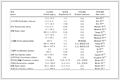 表 1
鲜参、生晒参、红参挥发性成分定性分析
Table 1.
The volatile components in qualitative analysis of fresh ginseng, sun-dry ginseng and red ginseng
No. Retention time/min Compounds Formula Molecular mass Relative peak area Fresh Sun-Dry Red ginseng ginseng ginseng 1 6.96 α-Pinene C10H16 136 1 0.24 0.77 2 7.43 Camphene C10H16 136 1 0.17 0.53 3 8.27 β-Pinene C10H16 136 1 0.24 0.38 4 8.66 Ningene C10H16 136 1 1.98 1.05 5 9.07 Octanal C8H10O 128 1 4.90 1.70 6 15.85 Benzene, 2-methoxy-4-methyl-1-(1-methyl)- C11H16O 164 1 0.48 - 7 16.78 Cyclodecanone C10H18O 154 - + + 8 17.31 6-(5-Methyl-furan-2-yl)-hexan-2-one C11H16O2 180 - ++ + 9 18.13 Cedrene C15H24 204 1 0.51 0.76 10 18.93 β-Elemene C15H24 204 1 0.71 0.61 11 19.14 4, 4, 6-Trimethyl-cyclohex-2-en-1-ol C9H16O 140 - + - 12 19.52 C14H20O 204 1 0.83 0.56 13 19.93 2-(3-Isopropyl-4-methyl-pent-3-en-1-ynyl)-2-methyl-cyclobutanone C14H20O 204 1 1.11 0.72 14 20.95 Ginsengene C15H24 204 1 1.29 0.67 15 21.24 Caryophyllene C15H24 204 1 0.77 0.70 16 21.76 Neoclovene C15H24 204 1 - 0.40 17 22.22 Aromadendrene C15H24 204 1 1.15 0.89 18 22.64 Aristolene C15H24 204 1 0.90 0.77 19 23.21 α-Elemene C15H24 204 1 1.52 0.89 20 23.65 Farnesene C15H24 204 - - ++ 21 24.50 Transcaryophyllene C15H24 204 1 0.88 0.68 22 24.76 Ai Li Mo phenol C15H24 204 1 1.09 1.04 23 25.22 β-Selinene C15H24 204 1 0.32 0.49 24 25.63 δ-Cadinene C15H24 204 1 1.05 0.58 25 26.47 á-Guaiene C15H24 204 - ++ - 26 26.63 1H-Cycloprop[e]azulene, 1a, 2, 3, 5, 6, 7, 7a, 7b-octahydro-1, 1, 4, 7-tetramethyl-, [1aR-(1aà, 7à, 7aá, 7bà)]- C15H24 204 1 1.21 2.97 27 26.87 Azulene, 1, 2, 3, 3a, 4, 5, 6, 7-octathydro-1, 4, dimethyl-7-(1-methylethenyl)-, [1R, (1à, 3aá, 4à, 7á)]- C15H24 204 1 0.16 0.27 28 27.56 Naphthalene, 1, 2, 3, 5, 6, 7, 8, 8a-octahydro-1, 8a-dimethyl-7-(1-methylthemyl)-, [1R-(1à, 7á, 8aà)]- C15H24 204 ++ - - 29 28.44 1-(1, 5-dimethylhexyl)-4-methylbenzene C15H24 204 1 0.93 1.10 30 30.26 C15H26O 222 1 1.86 1.66 31 32.04 New ginseng terpene alcohols C15H26O 222 - - ++ 32 32.61 (-)-Spathulenol C15H24O 220 1 31.98 5.47 33 33.24 β-Piperonyl butylene C15H24 204 1 1.86 - 34 33.35 Globulol C15H26O 222 - - ++ 35 33.94 ξ-EIMACHALENE C15H26O 222 1 1.42 4.32 35 34.83 7-epi-cis-Sesquisabinene C15H26O 222 - - ++ 37 35.02 à-Acorenol C15H26O 222 1 - 3.74 38 35.22 Caryophyllene oxide C15H24O 220 - ++ - 39 35.97 4-epi-Cubedol C15H26O 222 - ++ + 40 37.42 2H-3, 9a-Methanol-1-benzoxepin, octahydro-2, 2, 5a, 9-tetramethyl-, [3R-(3à, 5aà, 9à, 9aà)]- C15H26O 222 1 2.10 1.35 In the table:the peak area of compound in fresh ginseng was 1 and the relationship area of processed ginseng was calculated by ratio between the amount of processed ginseng and fresh ginseng. “-”:none of the components, “+”:indicates the peak area of 106, “++”:peak area is 107, “+++”:peak area of 108. 由表 1和图 2可知,鲜参、生晒参和红参中共检测出40种挥发性成分,其中烯类22种,醛类1种,酮类3种,醇类8种,杂环类6种。鲜参共中检测出烯类20种挥发性成分,醛类1种,酮类1种,醇类4种,杂环类4种,共30种挥发性成分;生晒参中检测出烯类20种,醛类1种,酮类3种,醇类4种,杂环类5种,共33种挥发性成分;红参中检测出烯类19种,醛类1种,酮类3种,醇类8种,杂环类3种,共34种挥发性成分。
 图2
鲜参、生晒参、红参挥发性成分定性分析比较
Figure2.
The comparison of the volatile compounds in fresh ginseng, sun-dry ginseng and red ginseng
2.2 炮制过程中挥发性成分的转化
由图 2中发性成分研究结果可知,生晒参在阴干或晾干过程中挥发性成分有部分损失,使含量降低或挥发性成分种类减少,有少数新挥发性成分生成;红参由于经过高温蒸制及低温烘干等热处理后,一部分挥发性成分含量明显增高,推测是由与其结构相似的挥发性成分转化而来,使其含量增加。推断炮制后部分发现的新挥发性成分的衍生途径如表 2。
表 2
挥发性成分存在的转化关系
Table 2.
Transformation relationship of volatile components
No. Raw material Transformation products Structural formula Compounds Structural formula Compounds 1 
α-Pinene 
4, 4, 6-Trimethyl-cyclohex-2-en-1-ol 2 
Aromandendrene 
(-)-Spathulenol 3 
α-Elemene 
Farnesene 4 
Ginsengene 
New ginseng terpene alcohols 5 
1H-Cycloprop[e]azulene, 1a, 2, 3, 5, 6, 7, 7a, 7b-octahydro-1, 1, 4, 7-tetramethyl-, [1aR-(1aà, 7à, 7aá, 7bà)]- 
Globulol 炮制过程中,鲜参中具有不饱和双键的挥发性成分,加热条件下,易发生加成反应,生成饱和的或部分饱和的加成产物。人参中化学成分含量较多且相互作用复杂,红参的炮制过程中化学成分之间相互作用,有大量酶参与反应,故一些含量较高的成分不能确定是由结构相似的化合物转化而得,其生成过程有待进一步研究和讨论。
生晒参中(-)-斯巴醇含量为鲜参含量的31.98倍,为红参含量的5.84倍,是生晒参中检测出最多的挥发性成分。研究表明,(-)-斯巴醇属聚炔醇类化合物,是五加科植物中较常见的成分,具有很强的抗肿瘤活性,可抑制血管紧张素Ⅱ诱导的血管收缩,降低自发性高血压大鼠平均动脉压,同时还具有抗炎及抗血小板凝集活性。人参脂溶性成分(含聚醇类)具明显促进神经细胞生长的活性,可降低血压、降血脂及对冠心病患者有食疗作用[18-21]。由于鲜参、生晒参和红参中艾里莫酚烯含量均相对较高,且可能转化为(-)-斯巴醇,由此可见鲜参在晾晒成生晒参时,一部分艾里莫酚烯转化为(-)-斯巴醇,使生晒参在抗肿瘤活性、降血压、降血脂方向的作用更加明显。
红参中金合欢烯是鲜参和生晒参中均不含有的特有成分,有报道[22]称金合欢醇具有消炎健胃作用,民间将金合欢醇用于治疗风湿扭伤等病,符合无梗五加在《中华本草》中传统药理的记载。由于鲜参中不含该成分,不具有该功效,但由于鲜参中含有的α-榄香烯含量较红参高,且在鲜参炮制成红参的过程中可能转化为金合欢烯,故红参较鲜参增加了消炎健胃的作用。
3 结论
本文通过气相色谱-质谱联用方法,检测了鲜参、生晒参、红参中的挥发性成分,并对炮制前后差异较大的化合物进行了衍生规律推测,结合已报道的化合物生物活性,从挥发性成分的角度阐释了人参炮制品的物质基础,为人参的临床应用和规范化炮制质量控制提供了化学数据支持。
-
-
[1]
戴雨霖, 越皓, 孙长江. 高分离度快速液相色谱-四极杆-飞行时间质谱法分析酒制和醋制人参的皂苷类成分[J]. 分析化学, 2015,43,(8): 1181-1186. doi: 10.11895/j.issn.0253-3820.150204DAI Yulin, YUE Hao, SUN Changjiang. Determination of Ginsenosides in Processed Ginseng by Rapid Resolution Liquid Chromatography Coupled with Quadrupole-Time-of-Flight Tandem Mass Spectrometry[J]. Chinese J Anal Chem, 2015, 43(8): 1181-1186. doi: 10.11895/j.issn.0253-3820.150204
-
[2]
徐静, 贾力, 赵余庆. 人参化学成分与人参产品的质量评价[J]. 药物评价研究, 2011,34,(3): 199-202. XU Jing, JIA Li, ZHAO Yuqing. Constituents of Ginseng and Quality Evaluation of Ginseng Products[J]. Drug Eval Res, 2011, 34(3): 199-202.
-
[3]
李晶, 戴雨霖, 郑飞. 人参皂苷的口服吸收及体内转化[J]. 中国生物制品学杂志, 2014,27,(12): 1633-1636. LI Jing, DAI Yulin, ZHENG Fei. Oral Absorption and in vivo Biotransformation of Ginsenosides[J]. Chinese J Biol, 2014, 27(12): 1633-1636.
-
[4]
韩冬, 张铁军, 唐铖. 人参皂苷的药动学研究进展[J]. 中草药, 2009,40,(2): 附1-附3. HAN Dong, ZHANG Tiejun, TANG Cheng. Research Progress on Pharmacokinetics of Panax Ginseng Saponins[J]. Chinese Tradit Herb Drugs, 2009, 40(2): 附1-附3.
-
[5]
任明, 郝筱诗, 叶伶艳. 人参多糖的提取分离及其体外抗肿瘤作用[J]. 吉林大学学报(医学版), 2014,40,(4): 812-815. REN Ming, HAO Xiaoshi, YE Lingyan. Extraction and Isolation of Polysaccharide from Ginseng and Its Anti-tumor Activity in vitro[J]. J Jilin Univ(Med Ed), 2014, 40(4): 812-815.
-
[6]
赵花, 魏建华, 徐涛. 人参挥发油成分的GC-MS分析[J]. 人参研究, 2014(3): 45-48. ZHAO Hua, WEI Jianhua, XU Tao. Analysis of Volatile Oil Components of Panax Ginseng by GC-MS[J]. Ginseng Res, 2014, (3): 45-48.
-
[7]
杨玲, 但丹, 朱锐. β-榄香烯抑制肝星状细胞表达ANGⅡ及RhoA/ROCK信号[J]. 中国中药杂志, 2009,34,(4): 458-462. YANG Ling, DAN Dan, ZHU Rui. β-Elemene Inhibits Expression of ANGⅡ and RhoA/ROCK Signaling in Hepatic Stellate Cells[J]. J Chinese Mater Med, 2009, 34(4): 458-462.
-
[8]
徐莉英, 张兴忠, 杜惠莲. β-榄香烯氨基酸衍生物的合成及抗肿瘤活性[J]. 中国药物化学杂志, 2013,23,(3): 169-175. XU Liying, ZHANG Xingzhong, DU Huilian. Synthesis and Antitumor Activity of β-Elemene Derivatives Bearing Amino Acid Moiety[J]. Chinese J Med Chem, 2013, 23(3): 169-175.
-
[9]
Kobaisy M, Abramowski Z, Lermer L. Antimycobacterial Polyynes of Devil's Club(Oplopanax horridus), a North American Native Medicinal Plant[J]. J Nat Prod, 1997, 60: 1210-1213. doi: 10.1021/np970182j
-
[10]
Sohn J, Lee C H, Chung D J. Effect of Petroleum Ether Extract of Panax Ginseng Roots on Proliferation and Cell Cycle Progression of Human Renal Cell Carcinoma Cells[J]. Exp Mol Med, 1998, 30(1): 47-51. doi: 10.1038/emm.1998.7
-
[11]
段贤春, 夏伦祝, 汪永忠. 人参炔醇对氧糖剥夺神经细胞损伤的保护作用[J]. 中国实验方剂学, 2011,17,(16): 180-183. doi: 10.3969/j.issn.1005-9903.2011.16.052DUAN Xianchun, XIA Lunzhu, WANG Yongzhong. Protective Effects of Panaxynol on Nerve Cells under Oxygen and Glucose Deprivation[J]. Chinese J Exp Tradit Med Formulae, 2011, 17(16): 180-183. doi: 10.3969/j.issn.1005-9903.2011.16.052
-
[12]
Xing J, Sun H M, Li Z Y. Comparison of Volatile Components Between Raw and Vinegar Baked Radix Bupleuri by GC-MS Based Metabolic Fingerprinting Approach[J]. Evid-Based Compl Alter Med, 2015, : 1-7.
-
[13]
Aranda-Rodriguez R, Cabecinha A, Harvie J. A Method for Quantification of Volatile Organic Compounds in Blood by SPME-GC-MS/MS with Broader Application; From Non-Occupational Exposure Population to Exposure Studies[J]. J Chromatogr B Anal Technol Biomed Life Sci, 2015, (992): 76-85.
-
[14]
Ma X Y, Zhang L H, Shao H B. Jerusalem Artichoke(Helianthus tuberosus L.), a Medicinal Salt-Resistant Plant has High Adaptability and Multiple-Use Values[J]. J Med Plants Res, 2011, 5(8): 1275-1282.
-
[15]
Zead H, Khaldun M Al A, Yuliya T. Analysis of Essential Oil in Jerusalem Artichoke(Helianthus tuberosus L.) Leaves and Tubers by Gas Chromatography-Mass Spectrometry[J]. Adv Pharm Bull, 2014, 4(Suppl 2): 521-526.
-
[16]
马合木提·买买提明, 米丽班·霍加, 玛尔哈巴·吾斯满. 柽柳实中挥发油和脂肪酸分析[J]. 应用化学, 2015,32,(2): 239-244. doi: 10.11944/j.issn.1000-0518.2015.02.140136MAHEMUTI Maimaitiming, MILIBAN Nuojia, MAERHABA Wusiman. Analysis of Volatile Oils and Fatty Acids in Tamarix Chinensis Fruit[J]. Chinese J Appl Chem, 2015, 32(2): 239-244. doi: 10.11944/j.issn.1000-0518.2015.02.140136
-
[17]
李小丽, 刘宝峰, 谢文兵. 内蒙和吉林产地马勃的对比分析[J]. 应用化学, 2012,29,(4): 477-482. LI Xiaoli, LIU Baofeng, XIE Wenbing. The Contrastive Analysis of Puffballs Produced from Inner Mongolia and Jilin[J]. Chinese J Appl Chem, 2012, 29(4): 477-482.
-
[18]
林朝展, 祝晨蔯, 张翠仙. 杜虹花叶挥发油化学成分及抗氧化活性研究[J]. 热带亚热带植物学报, 2009,17,(4): 401-405. LIN Zhaozhan, ZHU Chenchen, ZHANG Cuixian. Studies on Chemical Constituents and Antioxidant Activity of Essential Oil from Leaves of Eucommia[J]. J Trop Subtrop Botany, 2009, 17(4): 401-405.
-
[19]
Shinji T, Denan J, Kazuyoshi K. Effects of a Lipoxygenase Inhibitor, Panaxynol, on Vascular Contraction Induced by Angiotensin Ⅱ[J]. Jpn J Pharm, 1999, 80(1): 89-92. doi: 10.1254/jjp.80.89
-
[20]
Fujimoto Y, Sakuma S, Komatsu S. Inhibition of 15-Hydroxyprostahlandin Dehydrogenase Activity in Rabbit Gastricantral Mucosa by Panaxynol Isolated from Oriental Medicines[J]. J Pharm Pharmacol, 1998, 50(9): 1075-1078. doi: 10.1111/jphp.1998.50.issue-9
-
[21]
邹坤, 朱姝, 蔡少青. HPLC结合API-MS/MS研究扣子七的人参皂甙[J]. 三峡大学学报(自然科学版), 2002,24,(4): 155-160. ZOU Kun, ZHU Shu, CAI Shaoqing. HPLC/UV Analysjs of Lipid Extract from Panax Ginseng Roots with Neural Outgrowth Activity[J]. J China Three Gorges Univ(Nat Sci), 2002, 24(4): 155-160.
-
[22]
宋洋. 无梗五加根挥发油提取工艺的优化及其化学成分研究[J]. 山西医药杂志, 2014,43,(5): 487-489. SONG Yang. Optimization of Extraction Technology and Chemical Constituents of Volatile Oil from Root of the Root[J]. Shanxi Med J, 2014, 43(5): 487-489.
-
[1]
-

图 1 鲜参总离子色谱图(A)、生晒参总离子色谱图(B)和红参总离子色谱图(C)
Figure 1 The total ion chromatography of the fresh ginseng(A), the sun-dry(B) and the red ginseng(C)

图 2 鲜参、生晒参、红参挥发性成分定性分析比较
Figure 2 The comparison of the volatile compounds in fresh ginseng, sun-dry ginseng and red ginseng
表 1 鲜参、生晒参、红参挥发性成分定性分析
Table 1. The volatile components in qualitative analysis of fresh ginseng, sun-dry ginseng and red ginseng
No. Retention time/min Compounds Formula Molecular mass Relative peak area Fresh Sun-Dry Red ginseng ginseng ginseng 1 6.96 α-Pinene C10H16 136 1 0.24 0.77 2 7.43 Camphene C10H16 136 1 0.17 0.53 3 8.27 β-Pinene C10H16 136 1 0.24 0.38 4 8.66 Ningene C10H16 136 1 1.98 1.05 5 9.07 Octanal C8H10O 128 1 4.90 1.70 6 15.85 Benzene, 2-methoxy-4-methyl-1-(1-methyl)- C11H16O 164 1 0.48 - 7 16.78 Cyclodecanone C10H18O 154 - + + 8 17.31 6-(5-Methyl-furan-2-yl)-hexan-2-one C11H16O2 180 - ++ + 9 18.13 Cedrene C15H24 204 1 0.51 0.76 10 18.93 β-Elemene C15H24 204 1 0.71 0.61 11 19.14 4, 4, 6-Trimethyl-cyclohex-2-en-1-ol C9H16O 140 - + - 12 19.52 C14H20O 204 1 0.83 0.56 13 19.93 2-(3-Isopropyl-4-methyl-pent-3-en-1-ynyl)-2-methyl-cyclobutanone C14H20O 204 1 1.11 0.72 14 20.95 Ginsengene C15H24 204 1 1.29 0.67 15 21.24 Caryophyllene C15H24 204 1 0.77 0.70 16 21.76 Neoclovene C15H24 204 1 - 0.40 17 22.22 Aromadendrene C15H24 204 1 1.15 0.89 18 22.64 Aristolene C15H24 204 1 0.90 0.77 19 23.21 α-Elemene C15H24 204 1 1.52 0.89 20 23.65 Farnesene C15H24 204 - - ++ 21 24.50 Transcaryophyllene C15H24 204 1 0.88 0.68 22 24.76 Ai Li Mo phenol C15H24 204 1 1.09 1.04 23 25.22 β-Selinene C15H24 204 1 0.32 0.49 24 25.63 δ-Cadinene C15H24 204 1 1.05 0.58 25 26.47 á-Guaiene C15H24 204 - ++ - 26 26.63 1H-Cycloprop[e]azulene, 1a, 2, 3, 5, 6, 7, 7a, 7b-octahydro-1, 1, 4, 7-tetramethyl-, [1aR-(1aà, 7à, 7aá, 7bà)]- C15H24 204 1 1.21 2.97 27 26.87 Azulene, 1, 2, 3, 3a, 4, 5, 6, 7-octathydro-1, 4, dimethyl-7-(1-methylethenyl)-, [1R, (1à, 3aá, 4à, 7á)]- C15H24 204 1 0.16 0.27 28 27.56 Naphthalene, 1, 2, 3, 5, 6, 7, 8, 8a-octahydro-1, 8a-dimethyl-7-(1-methylthemyl)-, [1R-(1à, 7á, 8aà)]- C15H24 204 ++ - - 29 28.44 1-(1, 5-dimethylhexyl)-4-methylbenzene C15H24 204 1 0.93 1.10 30 30.26 C15H26O 222 1 1.86 1.66 31 32.04 New ginseng terpene alcohols C15H26O 222 - - ++ 32 32.61 (-)-Spathulenol C15H24O 220 1 31.98 5.47 33 33.24 β-Piperonyl butylene C15H24 204 1 1.86 - 34 33.35 Globulol C15H26O 222 - - ++ 35 33.94 ξ-EIMACHALENE C15H26O 222 1 1.42 4.32 35 34.83 7-epi-cis-Sesquisabinene C15H26O 222 - - ++ 37 35.02 à-Acorenol C15H26O 222 1 - 3.74 38 35.22 Caryophyllene oxide C15H24O 220 - ++ - 39 35.97 4-epi-Cubedol C15H26O 222 - ++ + 40 37.42 2H-3, 9a-Methanol-1-benzoxepin, octahydro-2, 2, 5a, 9-tetramethyl-, [3R-(3à, 5aà, 9à, 9aà)]- C15H26O 222 1 2.10 1.35 In the table:the peak area of compound in fresh ginseng was 1 and the relationship area of processed ginseng was calculated by ratio between the amount of processed ginseng and fresh ginseng. “-”:none of the components, “+”:indicates the peak area of 106, “++”:peak area is 107, “+++”:peak area of 108.  下载: 导出CSV
表 2 挥发性成分存在的转化关系
Table 2. Transformation relationship of volatile components
No. Raw material Transformation products Structural formula Compounds Structural formula Compounds 1 α-Pinene 4, 4, 6-Trimethyl-cyclohex-2-en-1-ol 2 Aromandendrene (-)-Spathulenol 3 α-Elemene Farnesene 4 Ginsengene New ginseng terpene alcohols 5 1H-Cycloprop[e]azulene, 1a, 2, 3, 5, 6, 7, 7a, 7b-octahydro-1, 1, 4, 7-tetramethyl-, [1aR-(1aà, 7à, 7aá, 7bà)]- Globulol
下载: 导出CSV
-


 扫一扫看文章
计量
- PDF下载量: 11
- 文章访问数: 1837
- HTML全文浏览量: 219
 下载: