Received Date:
18 October 2023 Revised Date:
20 December 2023 Available Online:
10 January 2024
Abstract:
Monodispersed MoS2 core-shell spheres were produced by annealing precursor MoS2 core-shell superspheres at 900 ℃ in Ar. Simultaneously, O-doping amount (atomic fraction) can be tuned from 23.1% of precursor to 17.6%, 10.8%, 5.5%, and 6.2% of as-prepared materials by regulating the heating rate of 20, 10, 5, and 2 ℃·min-1, respectively. The lower rate results in a lower amount of O doped onto MoS2 core-shell spheres. Based on the special quasi-molecular superlattices of precursors, an in-situ anion exchange reaction mechanism was proposed to understand the dynamical modulation of O-doping. The study on the electrochemical properties of the materials demonstrates that their electrochemical performance in splitting water can be improved by tuning the O-doping amount.
Molybdenum disulfide (MoS2) is one of the promising substitutions to Pt catalysts for electrochemically splitting water in hydrogen evolution reaction (HER)[1]. Because the HER activities of MoS2 nanosheets mainly originate from sulfide edges[2-3], their practical applications therefore depend not only on activating their surfaces mainly exposed in inert (002) facets[4-7] but also on improving the cycle stability of 2D MoS2 nanosheets of only one to several atomic layers in thickness[8]. Toward this end, scientists have strived to tailor the microstructures and composition of 2D MoS2 nanosheets to further boost their HER activities[9-15]. It is demonstrated that O-doping can activate inert basal (002) facets of semiconductor MoS2 nanosheets in the 2H phase[16]. 3D MoS2 nanoboxes showed enhanced HER activities after being modified with MS (M: Ni and Co) shells onto their surfaces to form M-MoS3 hybrids[17-18]. The HER performance of the basal plane of MoS2 can be highly improved by creating sulfur vacancies (MoS2-x)[19], which is attributed to the regulation of hydrogen adsorption-free energy (ΔGH) for strained surfaces[20]. Pető's group found that oxygen atoms spontaneously incorporate into the basal plane of MoS2 single layers during ambient exposure, which results in substantially increasing the catalytic activity of the entire MoS2 basal plane for HER[21]. The HER performance from multilayered MoS2 can be divided into two domains corresponding to "point defects" at low concentrations of surface sulfur vacancies and large regions under coordinated Mo atoms for high concentrations of surface sulfur vacancies[22]. The extensive research activities, however, have mainly concentrated on tailoring the microstructures and composition of 2D MoS2 nanosheets. To the best of our knowledge, there is no report in the literature on modulating the O-doping amount to activate 3D hierarchical MoS2 materials.
1.
Experimental
1.1
Materials
The main reagents included sodium molybdate dihydrate (Na2MO4·2H2O, 98.0%, AR, Aladdin), hexadecyl trimethyl ammonium bromide (CTAB, 98.0%, AR, Aladdin), n-butanol (C4H9OH, 98.0%, AR, Aladdin), ethylene glycol ((CH2OH)2, 98.0%, AR, Aladdin), hydrochloric acid (HCl, 36%-38%, AR), thiourea (CH4N2S, 99.8%, AR, Aladdin). The deionized water (18.25 MΩ) was utilized for the entire experiment. All reagents were used without further purification.
1.2
Synthesis of MoS2 core-shell spheres with different O-doping amounts
Precursors (MoS2 core-shell superspheres) composed of quasi-molecular superlattices were first synthesized by performing a one-pot approach developed in our lab[23-25]. Typically, 300 mL aqueous solution of Na2MoO4 (1 mmol, 0.242 0 g) was first added to 100 mL n-butanol solution of CTAB (15 mmol, 5.466 8 g) and stirred for 2 h. Ethylene glycol (50 mL) and concentrated hydrochloric acid (1.0 mL, 11.64 mol·L-1) were then introduced into the reactor in order and stirred for another 2 h. Thiourea (15 mmol, 1.141 8 g) was added into the solution and further stirred for 3 h. The milky white mixture was finally transferred into an autoclave with a polytetrafluoroethylene (PTFE) liner and kept at 220 ℃ for 24 h. The black precipitates were separated by filtration, washed with distilled water and absolute ethanol three times each, and dried at 60 ℃ for 24 h to obtain monodispersed MoS2 core-shell superspheres (0.127 5 g; yield: 85%). The precursor was subsequently annealed in Ar for 5 h by elevating the temperature to 900 ℃ at a heating rate of 20, 10, 5, and 2 ℃·min-1 to obtain MoS2 core-shell spheres assigned as MoS2-O-20, MoS2-O-10, MoS2-O-5, and MoS2-O-2, respectively.
1.3
Characterization
The structures of the materials were characterized by using transmission electron microscopy (TEM, JEM-2100 operated at 200 kV, Japan). The field emission scanning electron microscopy (FESEM) was completed on a JSM-7001F operated at 15 kV. The thermogravimetric-differential thermal analysis (TG-DTA) of the materials was performed with a TG/DTA instrument (SDTQ600, Delaware) working at a constant heating rate of 2 ℃·min-1 in Ar. To analyze the molecular structure and chemical composition of samples, FTIR spectra (Nicolet iS5, Thermo Fisher Scientific, USA) were collected in the range of 400-4 000 cm-1. The XPS spectra of the materials were collected on a Thermo Scientific Escalab (ESCALAB 250Xi, Massachusetts) with monochromatized Al Kα X-ray as the excitation source.
1.4
Assemblies of electrodes and electrochemical tests
All electrochemical measurements were carried out at a CHI660E electrochemical workstation (Shanghai Chenhua Company) at room temperature. The precursor and as-prepared MoS2 core-shell spheres were applied for assembling electrodes to investigate their HER performance in a standard three-electrode system with glassy carbon electrode coated with active materials as working electrode, Pt wire as counter- electrode, and Ag/AgCl electrode as reference electrode, respectively. The working electrodes were made by casting a colloid solution of active materials (1 mg·mL-1) to glassy carbon electrodes of 3 mm diameter, then evenly dispersing 10 μL Nafion-water solution (0.01%, w/w) and finally keeping at room temperature overnight to dry their surfaces. The loading amount of the materials was 0.32 mg·cm-2. All polarization curves were measured in 0.5 mol·L-1 H2SO4 (pH=0) solution at a scan rate of 5 mV·s-1 from -0.3 to 0.1 V (vs RHE). The closed cyclic voltammetry (CV) curves of the materials with different scanning rates from 20 to 200 mV·s-1 were performed to investigate their double-layer capacitance in acid media (0.5 mol·L-1 H2SO4). All electrochemical impedance spectroscopy (EIS) curves were measured in an acidic solution of 0.5 mol·L-1 H2SO4 with an initial potential of 0.1 V (vs RHE) and a frequency of 10-2-106 Hz. The measured Tafel slope of 28 mV·dec-1 for the Pt/C electrode agrees well with the values reported previously[26].
2.
Results and discussion
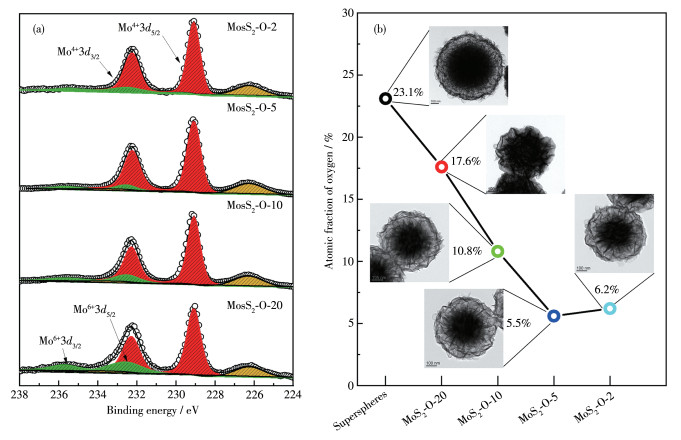
Our group has developed a one-pot technique for producing functional materials with well-controlled size and shape, such as MoS2 core-shell superspheres composed of quasi-molecular superlattices[23]. The special molecular superlattices assembled with surfactant molecules (CTAB)2Sy (y=1 or 2) and MoS2 atomic layers offer a unique platform for us to further tailor their microstructures and compositions. The MoS2 core-shell superspheres were therefore synthesized with the one-pot approach by simply enlarging the scale (Fig.S1, Supporting information) and applying it as precursors to produce MoS2 core-shell spheres. While the precursor superspheres produced at an enlarged scale maintained a similar size and morphology (Fig.S2) in comparison with those reported previously, the oxygen doped into the precursors dramatically increased to ca. 23.1% based on XPS analyses (Fig.S3). The MoS2 core-shell spheres with different O-doping amounts were produced by regulating the heating rates. The low- and high-magnification FESEM images (Fig.S4a-S4i) reveal that the as-prepared materials retained highly uniform spherical structures at the heating rate of 10, 5, and 2 ℃·min-1, in contrast to the collapsed spheres at the heating rate of 20 ℃·min-1 (Fig.S4j-S4l). The materials were further analyzed with XPS (Fig. 1a and Fig.S5-S7). Specifically, the Mo3d XPS spectra of MoS2-O-20, MoS2-O-10, MoS2-O-5, and MoS2-O-2 (Fig. 1a) mainly consist of two strong peaks at 229.08 and 232.28 eV, corresponding to Mo4+3d5/2 and Mo4+3d3/2 of 2H-MoS2, respectively. A couple of weak peaks at 232.52 and 235.72 eV ascribe to Mo6+3d5/2 and Mo6+3d3/2 of MoO3, indicating that oxygen atoms have incorporated into the lattices of 2H-MoS2 nanosheets. The dynamic evolution of the O-doping amount (Fig. 1b) in MoS2 core-shell spheres can be evaluated with the deconvolution of Mo element corresponding to MoO3 and 2H-MoS2 in Mo3d XPS spectra. It is interesting to find out that the O-doping amounts (Fig.S3) linearly declined from 23.1% of the precursors to 5.5% of MoS2-O-5, as regulating the heating rate from 20 to 5 ℃·min-1. The O-doping amount, however, approached a terrace at 5 ℃·min-1, and it maintained at a similar level of 6.2% further lowering the rate to 2 ℃·min-1. Compared to the precursors, the O-doping amount has been successfully modulated to a lowered level in all MoS2 core-shell spheres after annealing at 900 ℃. It is convenient and effective to tune the O-doping amount in MoS2 core-shell spheres by adjusting the heating rate. The lower rate results in a lower concentration of O doped in MoS2 core-shell spheres. The inset in Fig. 1b shows TEM images of precursors and as-prepared materials. All of the particles inherit the core-shell spherical structures of precursors (Fig.S8-S10), except MoS2-O-20 (Fig.S11) collapsed at a too-high heating rate. The EDS spectra of the materials also confirm the tuned O-doping amount and sulfur amount (Fig.S8e, S9e, S10e, S11e, and S12-S14). The results agree well with those from XPS. It is noteworthy that while all of the materials were annealed in Ar, the O-doping amount can be modulated without additional sulfur resources introduced into the processes. The decrease of the O-doping amount can be only attributed to the anion exchange reaction in situ taking place inside the precursors. Therefore, it is necessary to scrutinize the special microstructures of precursors to better understand the dynamic modulation of O-doping.
Figure 1
Figure 1.
(a) High-resolution Mo3d XPS spectra of MoS2 core-shell spheres; (b) O-doping amounts in MoS2 core-shell spheres evaluated with deconvolution of the XPS spectra
Inset: TEM images of precursor superspheres and 3D MoS2 core-shell spheres.
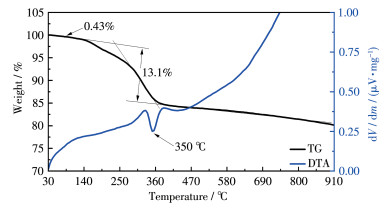
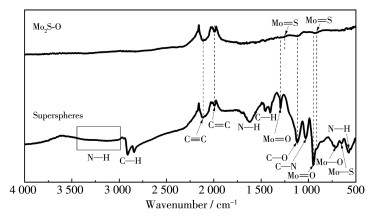
The TG-DTA profile (Fig. 2) of precursors revealed that they lost their weight by ca. 13.1% by elevating the temperature to 350 ℃, which can be attributed to the decomposition of organic surfactant molecules (CTAB)2Sy (y=1 or 2) incorporating between MoS2 atomic layers to form quasi-molecular superlattices. In addition, the characteristic absorptions ascribed to surfactant molecules also disappeared in the FTIR spectrum (Fig. 3) of MoS2-O-2. The results are consistent with our previous observation on the formation of quasi-molecular superlattices consisting of (CTAB)2Sy (y=1 or 2) and MoS2 atomic layers. Therefore, we suggest that anion exchange reaction directly takes place in the heating process, because sulfur-related species could be released by the decomposition of (CTAB)2Sy (y=1 or 2) and in-situ react with O-dopants. The higher the heating rate, the faster the decomposition of (CTAB)2Sy, which results in a lower chance for in-situ performing anion exchange reaction. The O-doping amounts therefore linearly declined from 23.7% of precursor to 5.5% of MoS2-O-5 with the decreasing of heating rate. Both the surfactant molecules incorporated into MoS2 atomic layers and the initial amount of O-doped onto precursors could dominate the final level of O-doping amount together in the annealing process. The O-doping amount finally approached a terrace to MoS2-O-5 and it cannot be further reduced, while the heating rate was lowered to 2 ℃·min-1. Based on the in-situ anion exchange reaction, the amount of O has been successfully modulated by simply adjusting the heating rate. The finding could open a new pathway for tailoring the microstructures and composition of 3D hierarchical MoS2 materials to further optimize their functionalities.
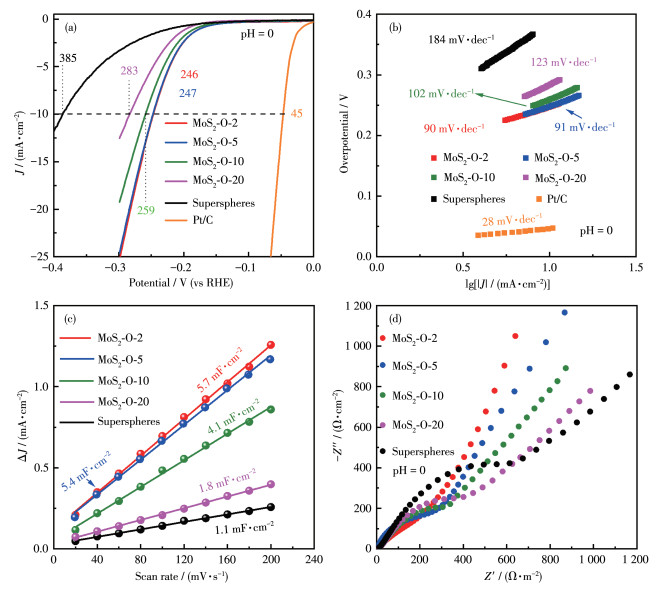
The electrochemical performance of materials was evaluated in acid media to investigate the effect of the O-doping amount on their HER activities. Fig. 4a shows the linear sweep voltammetry (LSV) curves of precursors, MoS2-O-2, MoS2-O-5, MoS2-O-10, and MoS2-O-20. Impressively, MoS2-O-2 and MoS2-O-5 electrodes had similar polarization profiles and both presented the highest current density in comparison with the precursors, MoS2-O-10, and MoS2-O-20 electrodes. The very close overpotentials of MoS2-O-2 (246 mV) and MoS2-O-5 (247 mV) at 10 mA·cm-2 were the lowest, compared to MoS2-O-10 (259 mV), MoS2-O-20 (283 mV), and precursors (385 mV). Fig. 4b shows the Tafel curves of the electrodes. Compared to precursor (184 mV·dec-1), MoS2-O-10 (102 mV·dec-1), and MoS2-O-20 (123 mV·dec-1), MoS2-O-2 and MoS2-O-5 also showed the lowest Tafel slopes (90 and 91 mV·dec-1, respectively). The TEM and HRTEM images (Fig.S15) showed the structural stability of MoS2-O-2 after the LSV tests. In addition, the MoS2-O-2 and MoS2-O-5 electrodes also exhibited superior catalysis activities in comparison with MoS2 micro boxes consisting of single crystalline- oriented MoS2 nanosheets with overpotential of 300 mV at 10 mA·cm-2 and Tafel slope of 134 mV·dec-1, as well as MoS2/C hollow spheres with overpotential of 479 mV at 10 mA·cm-2 and Tafel slope of 274 mV·dec-1 [27]. The double-layer capacitance (Cdl) (Fig. 4c) was also calculated from CV curves to estimate the electrochemically active surface area (ECSA) (Fig.S16) of the different electrodes. The MoS2-O-2 electrodes exhibited the largest Cdl (5.7 mF·cm-2), and MoS2-O-20 delivered the lowest Cdl value. The EIS spectra of the materials (Fig. 4d) can help to further understand the electrode kinetics over a frequency range from 100 kHz to 0.1 Hz at an amplitude of 5 mV. The spectra all consist of a depressed semicircle of charge transfer resistance (Rct) in the high-frequency region and a slope of Warburg impedance (Zw) in the low-frequency region. The MoS2-O-2 electrode exhibited the lowest Rct, compared to others with higher O-doping amounts, suggesting that a suitable O-doping amount can substantially boost the charge transfer from catalyst to electrode. The slope of the MoS2-O-2 electrode at the low-frequency region was higher than 45°, indicating that MoS2-O-2 can store charges efficiently. The cycle stabilities of MoS2-O-2 electrodes were also evaluated by continuously conducting linear CV. The potential and current density of the electrodes all remained unchanged before and after 2 000 cycles at a scan rate of 20 mV·s-1 (Fig.S17). The excellent long-term cycling stabilities of the electrodes can be attributed to the stable 3D hierarchical structures of the materials. The results indicate that the electrochemical performance of MoS2 core-shell spheres is closely related to the O-doping amount, and it can be optimized and highly improved by tuning the O-doping amount and tailoring their 3D hierarchical structures. O-doping can affect the electrochemical performance of MoS2 materials significantly.
Figure 4
Figure 4.
(a) LSV curves, (b) Tafel plots, (c) Cdl values, and (d) EIS spectra of materials
In summary, based on the in-situ anion exchange reaction, the O-doping amount of MoS2 core-shell spheres can be tuned dynamically by regulating the heating rate. The lower rates result in lower O-doping amounts. While it is still a challenge to thoroughly understand the mechanism of modulating the O-doping amount and further tune it to a lower level, this approach may open a novel pathway to modulate diverse dopants onto 3D hierarchical materials through creating molecular superlattices to perform in-situ reactions.
Supporting information is available at http://www.wjhxxb.cn
[1]
Zou X X, Zhang Y. Noble metal-free hydrogen evolution catalysts for water splitting[J]. Chem. Soc. Rev.,
2015, 44(15):
5148-5180.
doi: 10.1039/C4CS00448E
[2]
Jaramillo T F, Jorgensen K P, Bonde J, Nielsen J H, Horch S, Chorkendorff I. Identification of active edge sites for electrochemical H2 evolution from MoS2 nanocatalysts[J]. Science,
2007, 317(5834):
100-102.
doi: 10.1126/science.1141483
[3]
Chen J, Liu G, Zhu Y Z, Su M, Yin P F, Wu X J, Lu Q P, Tan C L, Zhao M T, Liu Z Q, Yang W M, Li H, Nam G H, Zhang L P, Chen Z H, Huang X, Radjenovic P M, Huang W, Tian Z Q, Li J F, Zhang H. Ag@MoS2 core-shell heterostructure as SERS platform to reveal the hydrogen evolution active sites of single-layer MoS2[J]. J. Am. Chem. Soc.,
2020, 142(15):
7161-7167.
doi: 10.1021/jacs.0c01649
[4]
Han J H, Kim H K, Baek B, Han J, Ahn H S, Baik M H, Cheon J. Activation of the basal plane in two-dimensional transition metal chalcogenide nanostructures[J]. J. Am. Chem. Soc.,
2018, 140(42):
13663-13671.
doi: 10.1021/jacs.8b05477
[5]
Xiao W, Liu P T, Zhang J Y, Song W D, Feng Y P, Gao D Q, Ding J. Dual‑functional N dopants in edges and basal plane of MoS2 nanosheets toward efficient and durable hydrogen evolution[J]. Adv. Energy Mater.,
2017, 7(7):
1602086.
[6]
Kim M, Anjum M A R, Lee M, Lee B J, Lee J S. Activating MoS2 basal plane with Ni2P nanoparticles for Pt-like hydrogen evolution reaction in acidic media[J]. Adv. Funct. Mater.,
2019, 29(10):
1809151.
doi: 10.1002/adfm.201809151
[7]
Li G, Zhang D, Yu Y F, Huang S Y, Yang W T, Cao L Y. Activating MoS2 for pH-universal hydrogen evolution catalysis[J]. J. Am. Chem. Soc.,
2017, 139(45):
16194-16200.
doi: 10.1021/jacs.7b07450
[8]
Zhang Y C, Yang T R, Li J, Zhang Q, Li B Z, Gao M. Construction of Ru, O co-doping MoS2 for hydrogen evolution reaction electrocatalyst and surface-enhanced Raman scattering substrate: High-performance, recyclable, and durability improvement[J]. Adv. Funct. Mater.,
2022, 33(3):
2210939.
[9]
Pető J, Ollár T, Vancsó P, Popov Z I, Magda G Z, Dobrik G, Hwang C, Sorokin P B, Tapasztó L. Spontaneous doping of the basal plane of MoS2 single layers through oxygen substitution under ambient conditions[J]. Nat. Chem.,
2018, 10:
1246-1251.
doi: 10.1038/s41557-018-0136-2
[10]
Deng J, Li H B, Xiao J P, Tu Y C, Deng D H, Yang H X, Tian H F, Li J Q, Ren P J, Bao X H. Triggering the electrocatalytic hydrogen evolution activity of the inert two-dimensional MoS2 surface via single-atom metal doping[J]. Energy Environ. Sci.,
2015, 8(5):
1594-1601.
doi: 10.1039/C5EE00751H
[11]
Wu W Z, Niu C Y, Wei C, Jia Y, Li C, Xu Q. Activation of MoS2 basal planes for hydrogen evolution by zinc[J]. Angew. Chem. Int. Ed.,
2019, 131(7):
2051-2055.
doi: 10.1002/ange.201812475
[12]
Yang W W, Zhang S Q, Chen Q, Zhang C, Wei Y, Jiang H, Lin Y X, Zhao M T, He Q Q, Wang X G, Du Yi, Song L, Yang S B, Nie A M, Zou X L, Gong Y J. Conversion of intercalated MoO3 to multi-heteroatoms-doped MoS2 with high hydrogen evolution activity[J]. Adv. Mater.,
2020, 32(30):
e2001167.
doi: 10.1002/adma.202001167
[13]
Cao D F, Ye K, Moses O A, Xu W J, Liu D B, Song P, Wu C Q, Wang C D, Ding S Q, Chen S M, Ge B H, Jiang J, Song L. Engineering the in-plane structure of metallic phase molybdenum disulfide via Co and O dopants toward efficient alkaline hydrogen evolution[J]. ACS Nano,
2019, 13(10):
11733-11740.
doi: 10.1021/acsnano.9b05714
[14]
Shi Y, Zhou Y, Yang D R, Xu W X, Wang C, Wang F B, Xu J J, Xia X H, Chen H Y. Energy level engineering of MoS2 by transition- metal doping for accelerating hydrogen evolution reaction[J]. J. Am. Chem. Soc.,
2017, 139(43):
15479-15485.
doi: 10.1021/jacs.7b08881
[15]
Chen Z X, Leng K, Zhao X X, Malkhandi S, Tang W, Tian B B, Dong L, Zheng L R, Lin M, Yeo B S, Loh K P. Interface confined hydrogen evolution reaction in zero valent metal nanoparticles-intercalated molybdenum disulfide[J]. Nat. Commun.,
2017, 8:
14548.
doi: 10.1038/ncomms14548
[16]
Xie J F, Zhang J J, Li S, Grote F, Zhang X D, Zhang H, Wang R X, Lei Y, Pan B C, Xie Y. Controllable disorder engineering in oxygen- incorporated MoS2 ultrathin nanosheets for efficient hydrogen evolution[J]. J. Am. Chem. Soc.,
2013, 135(47):
17881-17888.
doi: 10.1021/ja408329q
[17]
Yu L, Xia B Y, Wang X, Lou X W. General formation of M-MoS3 (M=Co, Ni) hollow structures with enhanced electrocatalytic activity for hydrogen evolution[J]. Adv. Mater.,
2016, 28(1):
92-97.
doi: 10.1002/adma.201504024
[18]
Zhang L, Wu H B, Yan Y, Wang X, Lou X W. Hierarchical MoS2 microboxes constructed by nanosheets with enhanced electrochemical properties for lithium storage and water splitting[J]. Energy Environ. Sci.,
2014, 7(10):
3302-3306.
doi: 10.1039/C4EE01932F
[19]
Park S, Park J, Abroshan H, Zhang L, Kim J K, Zhang J, Guo J, Siahrostami S, Zheng X. Enhancing catalytic activity of MoS2 basal plane S-vacancy by Co cluster addition[J]. ACS Energy Lett.,
2018, 3(11):
2685-2693.
doi: 10.1021/acsenergylett.8b01567
[20]
Li H, Tsai C, Koh A L, Cai L, Contryman A W, Fragapane A H, Zhao J, Han H S, Manoharan H C, Abild-Pedersen F. Correction: Corrigendum: Activating and optimizing MoS2 basal planes for hydrogen evolution through the formation of strained sulphur vacancies[J]. Nat. Mater.,
2016, 15(3):
364-364.
[21]
Pető J, Ollár T, Vancsó P, Popov Z I, Magda G Z, Dobrik G, Hwang C, Sorokin P B, Tapasztó L. Spontaneous doping of the basal plane of MoS2 single layers through oxygen substitution under ambient conditions[J]. Nat. Chem.,
2018, 10(12):
1246-1251.
doi: 10.1038/s41557-018-0136-2
[22]
Li L, Qin Z, Ries L, Hong S, Michel T, Yang J, Salameh C, Bechelany M, Miele P, Kaplan D. Role of sulfur vacancies and undercoordinated Mo regions in MoS2 nanosheets toward the evolution of hydrogen[J]. ACS Nano,
2019, 13(6):
6824-6834.
doi: 10.1021/acsnano.9b01583
[23]
Gong F L, Peng L F, Liu H Z, Zhang Y H, Jia D Z, Fang S M, Li F, Li D M. 3D core-shell MoS2 superspheres composed of oriented nanosheets with quasi molecular superlattices: Mimicked embryo formation and Li-storage properties[J]. J. Mater. Chem. A,
2018, 6(38):
18498-18507.
doi: 10.1039/C8TA07165A
[24]
Li F, Gong F L, Xiao Y H, Zhang A Q, Zhao J H, Fang S M, Jia D Z. ZnO twin-spheres exposed in +/-(001) facets: Stepwise self-assembly growth and anisotropic blue emission[J]. ACS Nano,
2013, 7(12):
10482-10491.
doi: 10.1021/nn404591z
[25]
Li F, Ding Y, Gao P X, Xin X Q, Wang Z L. Single-cystal hexagonal disks and rings of ZnO: Low temperature, large-scale synthesis and growth mechanism[J]. Angew. Chem. Int. Ed.,
2004, 43(39):
5238-5242.
doi: 10.1002/anie.200460783
[26]
Liu Y H, Gong L H, Zhang Y H, Wang P Y, Wang G Q, Bai F H, Zhao Z T, Gong F L, Liu J. Metal sulfides yolk-shell nanoreactors with dual component for enhanced acidic electrochemical hydrogen production[J]. Small Struct.,
2022, 4(3):
2200247.
[27]
Yang Y, Luo M C, Xing Y, Wang S T, Zhang W Y, Lv F, Li Y J, Zhang Y L, Wang W, Guo S J. A Universal strategy for intimately coupled carbon nanosheets/MoM nanocrystals (M=P, S, C, and O) hierarchical hollow nanospheres for hydrogen evolution catalysis and sodium-ion storage[J]. Adv. Mater.,
2018, 30(18):
e1706085.
doi: 10.1002/adma.201706085
Figure 1
(a) High-resolution Mo3d XPS spectra of MoS2 core-shell spheres; (b) O-doping amounts in MoS2 core-shell spheres evaluated with deconvolution of the XPS spectra
Inset: TEM images of precursor superspheres and 3D MoS2 core-shell spheres.



 下载:
下载:

 下载:
下载: