
Table 1.
Crystallographic data for complex 1


Pyrazole is an important organic compound with a special structure whose ring contains two adjacent nitrogen atoms and four different substituents. When the substituents occupy different positions, the pyrazole derivatives have diverse structures and different properties[1]. Because the nitrogen atom on the pyrazole ring contains lone pair electrons, it is easy to coordinate with metal ions providing empty orbitals, and thus presents a variety of coordination modes[2].
Pyridine is a six-membered heterocyclic compound with five carbon atoms and one nitrogen atom. The nitrogen atom on the pyridine ring is electronegative, and it is easy to coordinate with metal ions to undergo nucleophilic substitution reaction rather than participate in π conjugation system, so pyridine ligands can control and determine the structure of the complex. In addition, pyridine molecules are easy to modify and have good rigid planes[3]. The pyrazole-bipyridyl ligands obtained by combining pyridine and pyrazole in one molecule not only have improved coordination ability and stability but also have excellent magnetic and biological properties[4] and dielectric properties[5].
In 2008, Raptis′ group synthesized four Cd(Ⅱ) complexes using 4-(4-pyridyl)pyrazole (4-py-pzH) ligands from zero-dimensional monomolecular structure to 3D MOF with nov-type topology[6]. Hawes reported two binuclear Cu(Ⅱ) complexes based on 3-carboxyl-5-(2-pyridyl)-1H-pyrazole (H2L1) ligand: [Cu2(L1)2(MeOH)2], poly-[Cu2(L1)2] in 2015. Among them, the metal ions of complex [Cu2(L1)2(MeOH)2] come from CuCl2·2H2O, and the metal ions of complex poly-[Cu2(L1)2] come from Cu(NO3)2·3H2O. It can be seen that the subtle changes in synthesis conditions have a great impact on the final structure of the complex[7]. In 2016, Liu et al. also synthesized a series of novel topological complexes based on the above ligands and transition metal salts under hydrothermal conditions and studied their magnetic properties[8].
Based on the above analysis, the introduction of pyridine groups on pyrazole carboxylic acids not only increases coordination sites but also forms π…π interactions and C—H…π weak forces, which is beneficial for obtaining high-dimensional complexes. Therefore, we successfully designed and prepared a ligand 5-(3-pyridyl)-1H-pyrazole-3-carboxylic acid (H2ppc) based on the synthesis method reported in the literature[9]. This semi-rigid ligand has rich coordination modes and conjugation properties, which are conducive to electron transfer and thus obtain materials with excellent optical properties. Under solvothermal conditions, the ligands H2ppc and 4, 4′-bipyridine (4, 4′-bipy) reacted with CoSO4·7H2O in a mixed solution of acetonitrile and water, resulting in a novel quasi co-crystal complex {[Co(Hppc)2][Co2(4, 4′-bipy)(H2O)4](SO4)2·2H2O}n (1). In this work, we characterized the structure of complex 1 and studied its topological structure, thermal stability, electrochemiluminescence, and supercapacitor properties.
H2ppc was synthesized according to the literature reported[9]. 4, 4′-bipy (Purity: 97%), acetonitrile (MeCN, AR), and cobalt sulfate heptahydrate (AR) were purchased from J & K Scientific Company. A Bruker Smart Apex CCD area detector was used to determine the crystal structure. Elemental analysis (C, H, and N) was carried out on a Perkin Elmer 240C elemental analyzer. Thermogravimetric analysis (TGA) was performed on an SDT-Q600 analyzer. IR spectra were measured by Shimadzu FTIR-8400. Electrochemistry was carried out on an electrochemical working station (IVIUM Vertex1, Netherlands). Powder X-ray diffraction (PXRD) was performed by Rigaku Smart Lab using Cu Kα (λ=0.154 06 nm) irradiation at a voltage of 30 kV and a current of 30 mA in a 2θ range of 5°-50°.
A mixture of CoSO4·7H2O (0.028 1 g, 0.1 mmol), H2ppc (0.037 8 g, 0.2 mmol), 4, 4′-bipy (0.015 6 g, 0.1 mmol), MeCN (10 mL) and H2O (5 mL) was put into a Teflon-lined autoclave. The reaction mixture was heated at 120 ℃ for 94 h, followed by slow cooling to room temperature, and phase pure red crystals of 1 were obtained by manual separation. Yield: 57.30% based on Co. Anal. Calcd. for C28H34Co2N8O16S(%): C 37.81, H 3.83, N 12.60. Found(%): C 37.98, H 3.91, N 12.47. IR (KBr, cm-1): 3 435 (s), 1 637 (m), 1 489 (w), 1 383 (m), 1 342 (w), 1 102 (m), 805 (w), 615 (w), 503 (w).
Crystal data for complex 1 were collected on a Bruker Apex2 CCD diffractometer with graphite-monochromated Mo Kα radiation (λ=0.071 073 nm) with the ω-θ scan technique at 150(2) K. The structure was solved by direct method with SHELXS-97[10], and refined by full-matrix least-squares on F2 with SHELXL-2014[11]. All nonhydrogen atoms were refined with anisotropic thermal parameters. H atoms linked to C were placed at the geometric positions and refined with an isotropic displacement parameter. Detailed data collection and refinements are summarized in Table 1. Selected bond lengths and angles are listed in Table 2.
 下载:
导出CSV
下载:
导出CSV
| Parameter | 1 | Parameter | 1 | |
| Formula | C28H36Co2N8O16S | Z | 4 | |
| Formula weight | 890.58 | Dc/(g·cm-3) | 1.642 | |
| Crystal system | Monoclinic | μ/mm-1 | 1.063 | |
| Space group | C2/c | θ range/(°) | 2.0-26.0 | |
| a/nm | 2.046 31(5) | Reflection measured, independent | 24 090, 3 543 | |
| b/nm | 1.177 02(3) | Observed reflection [I > 2σ(I)] | 3 039 | |
| c/nm | 1.538 78(3) | Rint | 0.044 | |
| β/(°) | 103.582(1) | R1 [I > 2σ(I)]a | 0.039 9 | |
| V/nm3 | 3.602 58(15) | wR2 (all data)b | 0.109 2 | |
| F(000) | 1 832 | Goodness-of-fit on F 2 | 1.05 | |
| a R1=∑||Fo|-|Fc||/∑|Fo|; b wR2=[∑w(|F2o|-|F2c|)2/∑w(|Fo2|)2]1/2. | ||||
下载:
导出CSV
| Co1—N1 | 0.212 9(2) | Co1—O2A | 0.206 8(2) | Co1—N3A | 0.211 9(2) |
| Co1—O2B | 0.206 8(2) | Co1—N3B | 0.211 9(2) | Co1—N1C | 0.212 9(2) |
| Co2—O4 | 0.213 2(2) | Co2—N4 | 0.213 5(3) | Co2—O3D | 0.208 9(2) |
| Co2—O4D | 0.213 2(2) | Co2—N4D | 0.213 5(3) | Co2—O3 | 0.208 9(2) |
| O2A—Co1—N1 | 91.64(9) | N1—Co1—N3A | 88.68(9) | O2B—Co1—N1 | 88.36(9) |
| N1—Co1—N3B | 91.32(9) | N1—Co1—N1C | 180.00 | O2A—Co1—N3A | 79.53(9) |
| O2A—Co1—O2B | 180.00 | O2A—Co1—N3B | 100.47(9) | O2A—Co1—N1C | 88.36(9) |
| O2B—Co1—N3A | 100.47(9) | N3A—Co1—N3B | 180.00 | N1C—Co1—N3A | 91.32(9) |
| O2B—Co1—N3B | 79.53(9) | O2B—Co1—N1C | 91.64(9) | N1C—Co1—N3B | 88.68(9) |
| O3D—Co2—N4 | 91.36(9) | O4D—Co2—N4 | 90.40(9) | N4—Co2—N4D | 175.31(9) |
| O3D—Co2—O4D | 91.76(8) | O3D—Co2—N4D | 92.19(9) | O4D—Co2—N4D | 86.44(9) |
| O3—Co2—O4 | 91.76(8) | O3—Co2—N4 | 92.19(9) | O3—Co2—O3D | 81.57(9) |
| O3—Co2—O4D | 172.89(9) | O3—Co2—N4D | 91.36(9) | O4—Co2—N4 | 86.44(9) |
| O3D—Co2—O4 | 172.89(9) | O4—Co2—O4D | 95.01(9) | O4—Co2—N4D | 90.40(9) |
| Symmetry codes: A: x, 2-y, -1/2+z; B: 1/2-x, 1/2+y, 1/2-z; C: 1/2-x, 5/2-y, -z; D: 2-x, y, 1/2-z. | |||||
Complex 1 crystallizes in the C2/c pace group monoclinic system and presents a 2D network structure. As shown in Fig. 1, the asymmetric unit of complex 1 includes two crystallographic independent one-half valence Co(Ⅱ) ions, one main ligand Hppc- anion, half auxiliary ligand 4, 4′-bipyridine, two coordination water molecules, half free SO42- ion and two lattice water molecules. The central Co(Ⅱ) ions are six-coordinated and have a slightly distorted octahedral configuration. Co1 ion coordinates with two pyridine nitrogen atoms (N1, N1B), two pyrazole nitrogen atoms (N3A, N3C), and two carboxylic acid oxygen atoms (O2A, O2C), wherein the four atoms N1, N1B, N3A, and N3C form the equatorial plane, and the two atoms O2A and O2C occupy the axial position (Symmetry codes: A: 1/2-x, 1/2+y, 1/2-z; B: 1/2-x, 5/2-y, -z; C: x, 2-y, -1/2+z). The bond angle of O2A—Co1—O2C is 180.00°. Co2 ions coordinate with four oxygen atoms (O3, O3E, O4, O4E) from coordinated water molecules and two nitrogen atoms (N4, N4E) from pyridine rings, wherein the four atoms O3, O3E, O4, O4E form the equatorial plane, and the two atoms N4 and N4E occupy the axial position (Symmetry code: E: 2-x, y, 1/2-z), and the angle of N4—Co2—N4E is 175.31(9)°. The length of the Co—N bond formed by Co(Ⅱ) and 4, 4′-bipy is 0.213 5(3) nm, which is close to the literature reported[12-13]. The ligand in complex 1 has only one coordination mode: μ2-N1∶O1, N2.
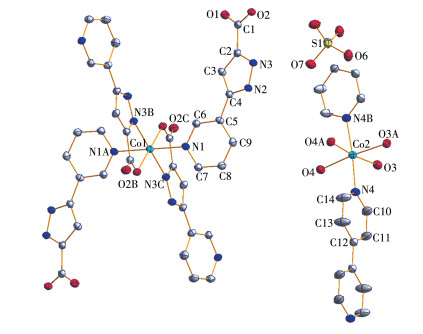
All hydrogen atoms are omitted for clarity; Symmetry code: A: x, 2-y, -1/2+z; B: 1/2-x, 1/2+y, 1/2-z; C: 1/2-x, 5/2-y, -z.
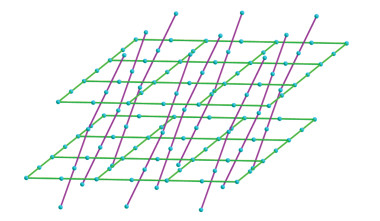
As shown in Fig. 1, complex 1 consists of two independent parts: one is an independent unit showing the 1D structure, and the other is a 2D framework formed by connecting two Co2+ with each Hppc- anion. The distance of Co…Co is 0.968 7 nm. The 2D layer and its adjacent 1D chains are further assembled into a 3D supramolecular structure (O3—H3A…O1B: O3…O1B 0.270 5(3) nm) through the strong hydrogen bond formed between the carboxylate oxygen atom of Hppc- ligand and the coordination water molecule of the 1D chain (Fig. 2). As shown in Fig. 3, if we take Hppc- and 4, 4′-bipy as lines and Co(Ⅱ) ions as nodes respectively, the entire framework can be simplified as a (2, 4)-connected network. Therefore, the structure of complex 1 can be classified as a 2, 4-c net, with the Schläfli symbol {44·62}{4}2.
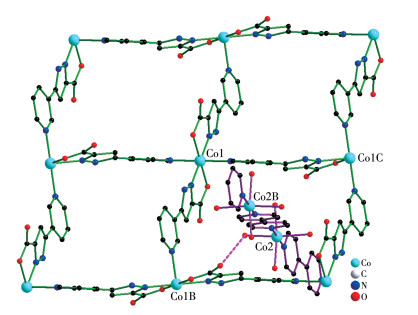
Symmetry codes: B: 1/2-x, 1/2+y, 1/2-z; C: 1/2-x, 5/2-y, -z.
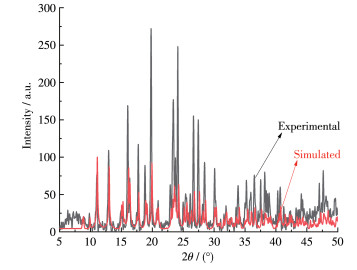
To verify the purity of the title complex, the experimental PXRD patterns (red line) and the simulated patterns (black line) of complex 1 are shown in Fig. 4, respectively. Through comparison, it can be found that the diffraction peaks of the two were highly consistent, indicating that the synthesized polycrystalline product is a single pure phase with little impurity content.
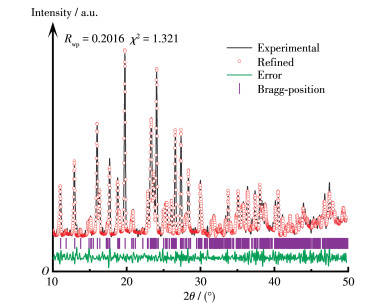
By employing the advanced technique of Rietveld refinement[14] using PXRD data (Fig. 5), the values of Rwp (weighted pattern factor) and χ2 (goodness of fit) were found to be 0.201 6 and 1.321, respectively. These results indicate that the experimental PXRD data matches well with the simulated data from the CIF file, further confirming the accuracy of the solved crystal structure.
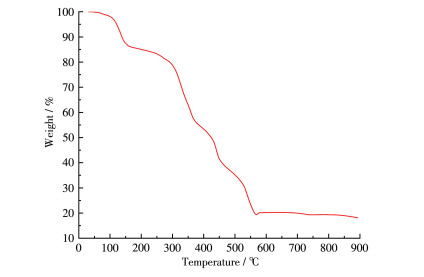
At the same time, we also adopt TGA to determine the thermal stability of complex 1 under a nitrogen atmosphere, measured at a temperature range of 30-900 ℃ with a heating rate of 10 ℃·min-1. Complex 1 underwent a two-step weight loss process, as seen in Fig. 6. The weight loss in the first stage occurred in a temperature range of 67-159 ℃, with a weight loss rate of 13.84%, which corresponds to the loss of two lattice water molecules and one free SO42- (Calcd. 14.83%). There was an indistinct stage between 159 and 276 ℃, and it can be seen that the complex did not decompose immediately after the free inorganic moieties were removed, which means that complex 1 has certain thermal stability. The weight loss in the second stage was between 276 and 575 ℃, corresponding to the collapse of the skeleton of 1 and the decomposition of free 4, 4′-bipy. Finally, the solid residue obtained might be Co2O3 (Calcd. 18.62%, Obsd. 20.26%).
Electrochemiluminescence (ECL) is a luminescence phenomenon that occurs on or near the electrode surface through a high-energy electron transfer reaction. It then rapidly returns to the ground state through energy relaxation[15-16]. However, in the past, researchers have designed ECL systems mostly based on precious metals such as Ru, Pt, Re, and Ir[17-18]. From an economic cost perspective, the widespread application of these luminescent materials in industry will be limited. Therefore, exploring transition metal complexes as ECL candidates has become an urgent issue. Based on the above considerations, we investigated the electroluminescent property of complex 1.
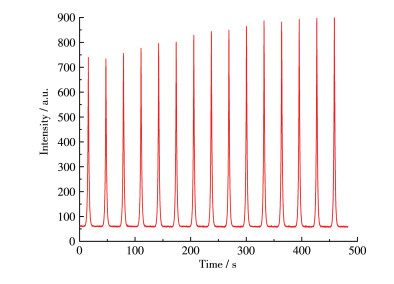
The traditional three-electrode electrochemical system used in electrochemical experiments consists of a glassy carbon electrode (GCE) as the working electrode, a platinum wire electrode as the auxiliary electrode, and a saturated calomel electrode as the reference electrode. The electrolyte was a phosphate-buffered saline (PBS, 0.01 mol·L-1, pH=7.4) containing 0.1 mol·L-1 K2S2O8 as a co-reactant. The powdered complex 1 was dissolved in DMSO with a concentration of 10 μmol·L-1. The ECL intensity of 1 was approximately 800 a.u., which is similar to reported[19], as seen in Fig. 7. The possible mechanism of ECL behavior is as follows: [20-21]
Cathode: H2ppc + 2e → Hppc- + 0.5H2
Anode: Co - 2e → Co2+
Solution: 2Hppc- + Co2+ → Co(Hppc)2·DMSO
Selecting Ru(bpy)32+ as the standard for measuring[22-23], the ECL yield of complex 1 was 0.23, which was higher than that of the recent work reported by Zhao[24-25]. Such excellent ECL performance may be due to the unique topological structure of complex 1. The effective charge transfer paths are formed through π-π stacking between 2D layers, thereby enhancing electrochemical performance and greatly improving the efficiency of ECL. Therefore, the title complex is expected to become a new type of luminescent material in the field of OLED.
To investigate the supercapacitance performance of complex 1 as working electrodes, cyclic voltammetry (CV) and galvanostatic charge-discharge (GCD) tests were conducted. Fig. 8a illustrates the CV curves of 1 at various scan rates (3, 5, 10, 20, 30, and 50 mV·s-1) within a potential range of -0.5 to 0.5 V. These curves provide insights into the capacitance behavior of complex 1 at different scan rates. As the scan rate increased, the current response became more prominent, indicating a higher charge/discharge rate. All CV curves exhibited a distinct pair of redox peaks, indicating the involvement of rapid and reversible OH- reactions in the electrochemical performance. The conversion between different oxidation states of cobalt at the electrode surface can be determined by the degree of polarization. The anodic peak observed around 0.25 V, and the cathodic peak observed at approximately 0.20 V, may correspond to these conversions. The reactions associated with these peaks are as follows[26]:
|
|
(1) |
|
|
(2) |
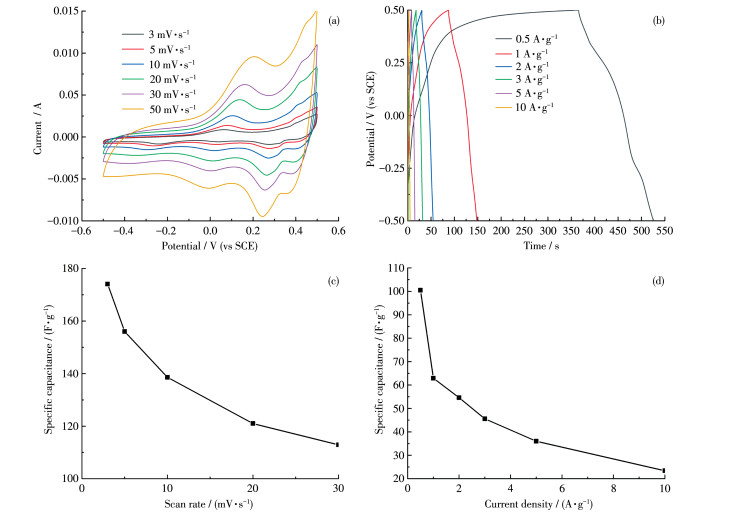
Fig. 8b displays the GCD curves of the supercapacitor prepared by complex 1 under different current densities (0.5, 1, 3, 5, 7, 10 A·g-1). These curves illustrate the charge and discharge characteristics of the supercapacitor. The gravimetric specific capacitance (Csp) was calculated using the results obtained from CV and GCD tests. The equation used for this calculation is as follows[27]:
For different scan rates,
|
|
(3) |
For different current densities,
|
|
(4) |
The variables used in the equations are I (constant current in A), v (scan rate in mV·s-1), ΔU (potential change in V), t (discharge time in s), and m (mass of the samples in g). The specific capacitances (Csp) calculated using Eq.3 were 174.1, 156.0, 138.6, 121.0, 112.9, and 100.0 F·g-1 at scan rates of 3, 5, 10, 20, 30, 50 mV·s-1 respectively (Fig. 8c), retaining 44.8% of the initial capacitance. As shown in Fig. 8d, Csp values of 100.5, 62.9, 50.6, 45.6, 36.0, and 23.4 F·g-1 at current densities of 0.5, 1, 2, 3, 5, 10 A·g-1 respectively, were obtained using Eq.4. Compared to Csp at 0.5 A·g-1, Csp values at higher current densities retained 62.6%, 50.2%, 45.6%, 35.8%, and 23.2%. It is worth noting that complex 1 exhibited a maximum Csp of 174.1 F·g-1 at 3 mV·s-1, which surpassed the Csp values (131.8 F·g-1 for Co-BDC and 147.3 F·g-1 for Co-NDC) of electrodes found in literature[28].
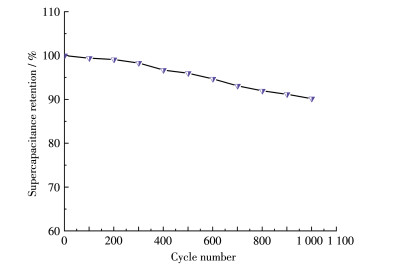
Fig. 9 demonstrates the cycle stability of complex 1 over 1 000 charge-discharge cycles at a current density of 1 A·g-1 in a 1 mol·L-1 KOH aqueous solution. The results show that complex 1 retained 91.2% of its initial capacitance after 1 000 cycles. Such good excellent cycle stability is mainly due to the unique topological structure of complex 1, which provides pathways for ions or electrons to be easily transported, increasing the capacitances of supercapacitors.
These electrochemical tests provide valuable information about the supercapacitive performance of complex 1, including its specific capacitance and excellent cycling stability. The results can be used to optimize the design and operation of complex supercapacitors for various energy storage applications.
In summary, one novel Co(Ⅱ) complex based on 5-(3-pyridyl)-1H-pyrazole-3-carboxylic acid (H2ppc) has been synthesized under solvothermal conditions and determined by IR, single-crystal X-ray diffraction and so on. Single-crystal X-ray diffraction reveals complex 1 includes two crystallographic independent parts and forms a co-crystal structure with a {44·62}{4}2 topological network. In complex 1, the 2D layer and its adjacent 1D chains are further assembled into a 3D supramolecular structure through the strong hydrogen bonds. The ECL properties of 1 have also been studied, and it displays high ECL efficiency and good supercapacitive performance, which might have potential applications in the field of OLED materials and energy storage.
Yuan S, Feng L, Wang K, Pang J, Bosch M, Lollar C, Sun Y, Qin J, Yang X, Zhang P, Wang Q, Zou L, Zhang Y, Zhang L, Fang Y, Li J, Zhou H C. Stable metal-organic frameworks: Design, synthesis, and applications[J]. Adv. Mater., 2018, 30: 1704303. doi: 10.1002/adma.201704303
Hezam A, Ünlü S, Elmalı F T. Metal complexes derived from tetradentate Schiff base ligands: Synthesis, spectroscopic analysis, thermogravimetric degradation and antimicrobial activities[J]. J. Mol. Struct., 2023, 1293: 136156. doi: 10.1016/j.molstruc.2023.136156
Liu C S, Zhang H, Chen R, Shi X S, Bu X H, Yang M. Two new Co(Ⅱ) and Ni(Ⅱ) complexes with 3-(2-pyridyl)pyrazole-based ligand: Synthesis, crystal structures, and bioactivities[J]. Chem. Pharm. Bull., 2007, 55: 996-1001. doi: 10.1248/cpb.55.996
Qiao Y, Chen Y, Zhang S, Huang Q, Zhang Y, Li G. Six novel complexes based on 5-acetoxy-1-(6-chloro-pyridin-2-yl)-1H-pyrazole-3-carboxylic acid methyl ester derivatives: Syntheses, crystal structures, and anti-cancer activity[J]. Arab. J. Chem., 2021, 14(7): 103237. doi: 10.1016/j.arabjc.2021.103237
张子钰, 秦刘磊, 刘洋, 李辉, 胡宏志, 刘尊奇. 钼基吡啶类有机-无机杂化晶体材料的合成、可逆相变及介电性质[J]. 无机化学学报, 2021,37,(2): 305-315. ZHANG Z Y, QIN L L, LIU Y, LI H, HU H Z, LIU Z Q. Synthesis, reversible phase transition and dielectric properties of molybdenum-based pyridines organic-inorganic hybrid crystalline materials[J]. Chinese J. Inorg. Chem., 2021, 37(2): 305-315.
Yang G, Raptis R G, Šafár P. Cadmium(Ⅱ) complexes of 4-(4-pyridyl)pyrazole: A case of two conformational supramolecular isomers polythreaded in the same crystal and a rare example of 5-connected nov net[J]. Cryst. Growth Des., 2008, 8: 981-985. doi: 10.1021/cg700935x
Hawes C S, Kruger P E. Dimensionality variation in dinuclear Cu(Ⅱ) complexes of a heterotritopic pyrazolate ligand[J]. Crystals, 2014, 4: 32-41. doi: 10.3390/cryst4010032
Cheng J J, Wang S M, Shi Z, Sun H, Li B, Wang M, Li M, Li J, Liu Z. Five metal-organic frameworks based on 5-(pyridine-3-yl)pyrazole-3-carboxylic acid ligand: Syntheses, structures and properties[J]. Inorg. Chim. Acta, 2016, 453: 86-94. doi: 10.1016/j.ica.2016.08.001
Wen J C, Bao Y, Niu Q, Yang J, Fan Y, Li J, Jing Y, Zhao L, Liu D. Identification of N-(6-mercaptohexyl)-3-(4-pyridyl)-1H-pyrazole-5-carboxamide and its disulfide prodrug as potent histone deacetylase inhibitors with in vitro and in vivo anti-tumor efficacy[J]. Eur. J. Med. Chem., 2016, 109: 350-359. doi: 10.1016/j.ejmech.2016.01.013
Sheldrick G M. SHELXS-97, Program for crystal structure solution. University of Göttingen, Germany, 1997.
Sheldrick G M. SHELXL-2014/7: A program for structure refinement. University of Göttingen, Germany, 2014.
Chen Y T, Zhang S N, Wang Z F, Wei Q M, Zhang S H. Discovery of thirteen cobalt(Ⅱ) and copper(Ⅱ) salicylaldehyde Schiff base complexes that induce apoptosis and autophagy in human lung adenocarcinoma A549/DDP cells and that can overcome cisplatin resistance in vitro and in vivo[J]. Dalton Trans., 2022, 51(10): 4068-4078. doi: 10.1039/D1DT03749H
Li T T, Dang L L, Zhao C C, Lv Z Y, Yang X G, Zhao Y, Zhang S H. A self-sensitized Co(Ⅱ)-MOF for efficient visible-light-driven hydrogen evolution without additional cocatalysts[J]. J. Solid State Chem., 2021, 304: 1226090.
Sakata M, Cooper M J. An analysis of the Rietveld refinement method[J]. J. Appl. Crystallogr., 1979, 12(6): 554-563. doi: 10.1107/S002188987901325X
Richter M M. Electrochemiluminescence (ECL)[J]. Chem. Rev., 2004, 104(6): 3003-3036. doi: 10.1021/cr020373d
Hu L Z, Xu G B. Applications and trends in electrochemiluminescence[J]. Chem. Soc. Rev., 2010, 39(8): 3275-3304. doi: 10.1039/b923679c
Pashaei B, Shahroosvand H, Moharramnezhad M, Kamyabi M A, Bakhshi H, Pilkington M, Nazeeruddin M K. Two in one: A dinuclear Ru(Ⅱ) complex for deep-red light-emitting electrochemical cells and as an electrochemiluminescence probe for organophosphorus pesticides[J]. Inorg. Chem., 2021, 60(22): 17040-17050. doi: 10.1021/acs.inorgchem.1c02154
Kerr E, Knezevic S, Francis P S, Hogan C F, Valenti G, Paolucci F, Kanoufi F, Sojic N. Electrochemiluminescence amplification in bead-based assays induced by a freely diffusing iridium(Ⅲ) complex[J]. ACS Sens., 2023, 8(2): 933-939. doi: 10.1021/acssensors.2c02697
Zhu L, Ye J, Yan M, Yu L, Peng Y, Huang J, Yang X. Sensitive and programmable "signal-off" electrochemiluminescence sensing platform based on cascade amplification and multiple quenching mechanisms[J]. Anal. Chem., 2021, 93: 2644-2651. doi: 10.1021/acs.analchem.0c04839
Wang Z, Sun J, Gong D, Mu J, Ji X, Bao Y. High sensitive electrochemical luminescence sensor for the determination of Cd2+ in spirulina[J]. Int. J. Electrochem. Sci., 2020, 15: 8710-8720. doi: 10.20964/2020.09.32
Feng C, Hua F Z, Guo J J, Lv C P, Zhao H. Structural elucidation and electrochemiluminescence on a 3D cadmium(Ⅱ) MOF with 5-c topology[J]. J. Inorg. Organomet. Polym., 2022, 32(5): 1891-1895. doi: 10.1007/s10904-022-02236-w
Chen Z H, Zhang S H, Zhang S M, Sun Q C, Xiao Y, Wang K. Cadmium-based coordination polymers from 1D to 3D: Synthesis, structures, and photoluminescent and electrochemiluminescent properties[J]. ChemPlusChem, 2019, 84: 190-202. doi: 10.1002/cplu.201800569
Zeng Y M, Zhang H Y, Zhang Y J, Ji F H, Liang J L, Zhang S H. Synthesis, crystal structures, fluorescence, electrochemiluminescent properties, and Hirshfeld surface analysis of four Cu/Mn Schiff‐base complexes[J]. Appl. Organomet. Chem., 2020, 34(8): e5712. doi: 10.1002/aoc.5712
Xie W N, Hua F Z, Feng C, Jiang Y H, Zhao H. 1-Substituted--[1, 2, 3]-triazole-4-carboxylic acid ligand constructed CuⅡ, NiⅡ and ZnⅡ complexes: The role of crystal structure and electrochemiluminescence[J]. Inorg. Chem. Commun., 2020, 119: 108124. doi: 10.1016/j.inoche.2020.108124
Hua F Z, Feng C, Xie W N, Luo Y N, Zhang L M, Zhao H. High efficiency electrochemiluminescence for copper(Ⅱ) and cadmium(Ⅱ) pyrazolate polymers[J]. J. Inorg. Organomet. Polym., 2021, 31: 3657-3664. doi: 10.1007/s10904-021-01983-6
Liu X X, Shi C D, Zhai C W, Cheng M L, Liu Q, Wang G X. Cobalt-based layered metal-organic framework as an ultrahigh capacity supercapacitor electrode material[J]. ACS Appl. Mater. Interfaces, 2016, 8: 4585-4591. doi: 10.1021/acsami.5b10781
Banerjee A, Chattopadhyay S. Synthesis and characterization of mixed valence cobalt(Ⅲ)/cobalt(Ⅱ) complexes with N, O-donor Schiff base ligands[J]. Polyhedron, 2019, 159: 1-11. doi: 10.1016/j.poly.2018.10.059
Lee D Y, Shinde D V, Kim E K, Lee W, Oh I W, Shrestha N K, Lee J K, Han S H. Supercapacitive property of metal-organic-frameworks with different pore dimensions and morphology[J]. Microporous Mesoporous Mat., 2013, 171: 53-57. doi: 10.1016/j.micromeso.2012.12.039

Figure 1 Coordination environment of Co(Ⅱ) ions of complex 1 with thermal ellipse at the 30% probability level
All hydrogen atoms are omitted for clarity; Symmetry code: A: x, 2-y, -1/2+z; B: 1/2-x, 1/2+y, 1/2-z; C: 1/2-x, 5/2-y, -z.

Figure 2 Supramolecular architecture formed by the hydrogen bond
Symmetry codes: B: 1/2-x, 1/2+y, 1/2-z; C: 1/2-x, 5/2-y, -z.

Figure 8 Electrochemical performance of complex 1 tested in a three-electrode system: (a) CV curves with different scan rates; (b) GCD curves with various current densities; (c) plot of specific capacitance vs scan rate; (d) plot of specific capacitance vs current density

Figure 9 Stable performance of complex 1 for 1 000 cycles measured at the current density of 1 A•g-1 in 1 mol•L-1 KOH aqueous solution
Table 1. Crystallographic data for complex 1
| Parameter | 1 | Parameter | 1 | |
| Formula | C28H36Co2N8O16S | Z | 4 | |
| Formula weight | 890.58 | Dc/(g·cm-3) | 1.642 | |
| Crystal system | Monoclinic | μ/mm-1 | 1.063 | |
| Space group | C2/c | θ range/(°) | 2.0-26.0 | |
| a/nm | 2.046 31(5) | Reflection measured, independent | 24 090, 3 543 | |
| b/nm | 1.177 02(3) | Observed reflection [I > 2σ(I)] | 3 039 | |
| c/nm | 1.538 78(3) | Rint | 0.044 | |
| β/(°) | 103.582(1) | R1 [I > 2σ(I)]a | 0.039 9 | |
| V/nm3 | 3.602 58(15) | wR2 (all data)b | 0.109 2 | |
| F(000) | 1 832 | Goodness-of-fit on F 2 | 1.05 | |
| a R1=∑||Fo|-|Fc||/∑|Fo|; b wR2=[∑w(|F2o|-|F2c|)2/∑w(|Fo2|)2]1/2. | ||||
 下载: 导出CSV
Table 2. Selected bond lengths (nm) and angles (°) for complex 1
| Co1—N1 | 0.212 9(2) | Co1—O2A | 0.206 8(2) | Co1—N3A | 0.211 9(2) |
| Co1—O2B | 0.206 8(2) | Co1—N3B | 0.211 9(2) | Co1—N1C | 0.212 9(2) |
| Co2—O4 | 0.213 2(2) | Co2—N4 | 0.213 5(3) | Co2—O3D | 0.208 9(2) |
| Co2—O4D | 0.213 2(2) | Co2—N4D | 0.213 5(3) | Co2—O3 | 0.208 9(2) |
| O2A—Co1—N1 | 91.64(9) | N1—Co1—N3A | 88.68(9) | O2B—Co1—N1 | 88.36(9) |
| N1—Co1—N3B | 91.32(9) | N1—Co1—N1C | 180.00 | O2A—Co1—N3A | 79.53(9) |
| O2A—Co1—O2B | 180.00 | O2A—Co1—N3B | 100.47(9) | O2A—Co1—N1C | 88.36(9) |
| O2B—Co1—N3A | 100.47(9) | N3A—Co1—N3B | 180.00 | N1C—Co1—N3A | 91.32(9) |
| O2B—Co1—N3B | 79.53(9) | O2B—Co1—N1C | 91.64(9) | N1C—Co1—N3B | 88.68(9) |
| O3D—Co2—N4 | 91.36(9) | O4D—Co2—N4 | 90.40(9) | N4—Co2—N4D | 175.31(9) |
| O3D—Co2—O4D | 91.76(8) | O3D—Co2—N4D | 92.19(9) | O4D—Co2—N4D | 86.44(9) |
| O3—Co2—O4 | 91.76(8) | O3—Co2—N4 | 92.19(9) | O3—Co2—O3D | 81.57(9) |
| O3—Co2—O4D | 172.89(9) | O3—Co2—N4D | 91.36(9) | O4—Co2—N4 | 86.44(9) |
| O3D—Co2—O4 | 172.89(9) | O4—Co2—O4D | 95.01(9) | O4—Co2—N4D | 90.40(9) |
| Symmetry codes: A: x, 2-y, -1/2+z; B: 1/2-x, 1/2+y, 1/2-z; C: 1/2-x, 5/2-y, -z; D: 2-x, y, 1/2-z. | |||||
下载: 导出CSV

 扫一扫看文章


扫一扫关注我们