Figure 1.
Structure of H4L

Synthesis, crystal structure, and photocatalytic activity of Co(Ⅱ) and Ni(Ⅱ) complexes based on pyromellitic acid and bis(imidazole)methyl benzene
Yu-Pei FU , Hua YANG , Dan QIAO , Lu-Lu DONG , Xiao-Li CHEN , Hua-Li CUI , Lin LIU , Ji-Jiang WANG


In recent years, the rapid development of the printing and dyeing industry has brought huge profits to many developing countries, but a large amount of wastewater polluted by dyes has caused serious envi ronmental problems. The discharge of large amounts of dye can change the pH of the water, and affect the organic carbon level and gas solubility[1]. On the other hand, dyes have complex aromatic structures that result in greater stability and difficulty to be degraded, releasing carcinogenic compounds in the process[2]. Therefore, we urgently need a green method for waste water treatment. Compared with other mature technolo gies such as adsorption and biological and electrochem ical treatment, the economical and environmentally friendly solar driven photocatalytic technology has great potential in treating organic pollutants[3-4].
Metal - organic frameworks (MOFs) are 3D supramolecular structures that are composed of metal ions or clusters as secondary building units (SBUs) and organic molecules as pillars (Struts). In recent years, the design and synthesis of MOFs have attracted intensive interest due to their fascinating structures and multi field potential applications in magnetism[5-7], molecular adsorption[8-9], molecular recognition[10-12], asymmetric catalysis[13-14], biological medicine[15], electric conductivity[16] and photoluminescence[17-18].
It is well known that the critical factors for constructing novel structures are metal ions, organic ligands, synthetic methods, reaction conditions, and pH[19-25]. The selection of appropriate organic ligands still plays a crucial role in achieving the expected coordination polymers. Imidazole derivatives and polycar-boxylate ligands possess a variety of structural features and thus have been considered ideal organic building blocks for constructing metal - organic frameworks (MOFs) [26-30]. Moreover, the carboxyl group can be partially deprotonated to form hydrogen bonds in the form of donors and acceptors and then to form supramolecules by self-assembly.
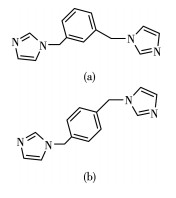
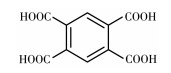
1, 2, 4, 5-Benzene tetracarboxylic acid (H4L, Fig. 1) is a rigid aromatic tetracarboxylic acid, and 1, 3-bis((1H-imidazole-1-yl) methyl) benzene (1, 3-bib, Fig. 2a) and 1, 4-bis((1H-imidazole-1-yl) methyl) benzene (1, 4-bib, Fig. 2b) are flexible imidazole derivatives. The two imidazole rings can rotate freely through the C—C bond, which provides the possibility for the construction of novel functional complexes.
Taking into the above - mentioned consideration, we chose H4L as the first ligand, 1, 3-bib, and 1, 4-bib as the auxiliary ligand. Two new coordination polymers [Co(L)0.5(1, 3-bib)] (1) and [Ni2(L)(1, 4-bib)3(H2O)2]·2H2O (2), were synthesized by using the hydrothermal method. The structures of 1 and 2 were confirmed by elemental analysis, FTIR spectroscopy, and single-crystal X-ray diffraction. In addition, the activities and mechanisms for the photocatalytic degradation of dyes by 1 and 2 were investigated in the presence of H2O2.
The solvents and reagents were purchased from the chemical companies and used without further purification. The C, H, and N elemental analyses were performed on a Perkin - Elmer 2400 elemental analyzer. The IR spectra were recorded in the 4 000 - 400 cm-1 region with a Shimadzu FTIR - 8400s spectrometer using a KBr pellet. A Netzsch STA 449C thermogravimetric analyzer was used for the thermogravimetric analysis (TGA) from 30 to 800 ℃ at a heating rate of 10 ℃ ·min-1 in a nitrogen atmosphere. Powder X - ray diffraction (PXRD) patterns were recorded with a Rigaku D/Max Ⅲ diffractometer operating at 40 kV and 30 mA using Cu Kα radiation (λ=0.154 18 nm) at a scanning rate of 2 (°)·min-1 from 5° to 50°. The fluorescence spectra were obtained with a Hitachi F-7100 fluorescence spectrophotometer at room temperature.
A mixture of Co(NO3)2·6H2O (0.029 1 g, 0.1 mmol), H4L (0.025 4 g, 0.1 mmol), 1, 3-bib (0.047 7 g, 0.2 mmol) and H2O - DMF (7 mL and 3 mL, respectively) was sealed in a Teflon-lined stainless steel vessel and heated to 160 ℃ for 96 h. The reaction system was then cooled to room temperature at a rate of 5 ℃·h-1. Lightpink crystals were obtained in ca. 53% yield based on Co. Anal. Calcd. for C 19H15CoN4O4(%): C 54.04, H 3.59, N 13.26; Found(%): C 54.06, H 3.54, N 13.24. IR (KBr, cm-1): 3 516(w), 3 138(w), 2 974(w), 2 372(w), 1 550(s), 1 379(s), 1 219(w), 1 083(s), 950(w), 819(s), 738(m), 640(m).
A mixture of Ni(NO3)2·6H2O (0.058 2 g, 0.2 mmol), H4L (0.025 4 g, 0.1 mmol), 1, 4-bib (0.023 8 g, 0.1 mmol) and H2O (10 mL) was stirred, and the pH value of it was adjusted to 6.5 with 0.5 mol·L-1 NaOH solution, then sealed in a 25 mL Telfon-lined stainless steel container, which was heated to 160 ℃ for 96 h. The reaction system was cooled to room temperature at a rate of 5 ℃·h-1. Light-green crystals were obtained in ca. 53% yield based on Ni. Anal. Calcd. for C52H52N12Ni2O12(%): C 54.05, H 4.50, N 14.55; Found (%): C 54.16, H 4.63, N 14.26. IR (KBr, cm-1): 3 608(w), 3 540(w), 3 418(m), 3 130(w), 2 361(w), 1 611(s), 1 390(s), 1 285(w), 1 242 (w), 1 098(m), 1 029(m), 812(m), 734(m), 668(w), 612 (w), 556(w).
To verify the photocatalytic degradation activity of complex 1, we mixed 1 (20 mg) with MO (methyl orange)/MB (methylene blue) (20 mL, 10 mg·L-1) under stirring to obtain stable suspensions. After the dark reaction for 20 min, the suspensions reached adsorption equilibrium and then were irradiated under visible light (500 W Xenon lamp). At 30-minute intervals, a certain volume (1 mL) of sample was removed from the photocatalytic reactor and the concentration of dyes was analyzed by UV-Vis absorption spectrometry. To verify the photocatalytic degradation activity of complex 2, the photocatalytic degradation experiment of MB/RhB (rhodamine B) by 2 was carried out similarly to 1.
Diffraction intensity data for complexes 1 and 2 were collected at room temperature on a Bruker Smart APEX Ⅱ CCD diffractometer employing graphite-monochromatized Mo Kα radiation (λ=0.071 073 nm). The structures were solved by direct methods and refined by full - matrix least - squares on F2 using the SHELXTL - 2014 program. Non - hydrogen atoms were refined anisotropically and hydrogen atoms of organic ligands were placed in calculated positions. Crystal data and structure refinement parameters for 1 and 2 are summarized in Table 1. Selected bond distances and bond angles are listed in Table 2 and 3.

 下载:
导出CSV
下载:
导出CSV
| Parameter | 1 | 2 |
| Empirical formula | C19H15CoN4O4 | C52H52N12Ni2O12 |
| Formula weight | 422.28 | 1 154.44 |
| Temperature / K | 296.20 | 296.20 |
| Crystal system | Monoclinic | Monoclinic |
| Space group | C2/c | P21/c |
| a / nm | 2.354 53(18) | 2.132 49(14) |
| b / nm | 1.191 64(9) | 1.613 75(10) |
| c / nm | 1.367 01(10) | 1.646 62(11) |
| β/(°) | 114.806(1) | 99.758 0(10) |
| V / nm3 | 3.481 6(5) | 5.584 5(6) |
| Z | 8 | 4 |
| F(000) | 1 728.0 | 2 512 |
| Dc / (g•cm-3) | 1.611 | 1.432 5 |
| μ / mm-1 | 1.022 | 0.752 |
| θ range / (°) | 2.800-28.336 | 2.126-25.000 |
| Reflection collected | 10 661 | 27 842 |
| Independent reflection | 4 236 (Rint=0.021 4) | 9 817 (Rint=0.050 2) |
| Observed reflection | 3 582 | 6 616 |
| Data, restraint, number of parameters | 4 236, 0, 253 | 9 817, 24, 739 |
| Final R indices [I≥2σ(I)]* | R1=0.028 6, wR2=0.070 1 | R1=0.047 2, wR2=0.114 2 |
| Final R indices (all data) | R1=0.037 1, wR2=0.074 3 | R1=0.084 6, wR2=0.133 3 |
| GOF | 1.103 0 | 1.018 |
| Largest diff. peak and hole / (e•nm-3) | 416 and -268 | 686 and -301 |
| * R1=∑(|Fo|-|Fc|)/∑|Fo|, wR2=[∑w(|Fo|2-|Fc|2)2/∑w(|Fo|2)2]1/2. | ||
下载:
导出CSV
| Co1—O1 | 0.228 79(12) | Co1—O2#2 | 0.221 59(12) | Co1—N4#1 | 0.208 10(14) |
| Co1—O1#2 | 0.219 94(11) | Co1—O3 | 0.197 95(12) | Co1—N1 | 0.207 07(14) |
| O1—Co1—O1#2 | 78.61(5) | O3—Co1—O2#2 | 91.98(5) | N4—Co1—O2#2 | 91.79(5) |
| O1#2—Co1—O2#2 | 59.43(4) | O3—Co1—N4#1 | 99.91(5) | N1—Co1—O1#2 | 107.96(5) |
| O2#2—Co1—O1 | 91.48(4) | O3—Co1—N1 | 100.40(5) | N1—Co1—O1 | 87.07(5) |
| O3—Co1—O1 | 83.75(4) | N4#1—Co1—O1#2 | 99.85(5) | N1—Co1—O2#2 | 167.30(5) |
| O3—Co1—O1#2 | 145.51(5) | N4#1—Co1—O1 | 175.00(5) | N1—Co1—N4#2 | 88.91(6) |
| Symmetry codes: #1: 1.5-x, 0.5-y, 1-z; #2: 1-x, y, 0.5-z; #3: 1-x, 2-y, -z. | |||||
下载:
导出CSV
| Ni1—O3 | 0.206 8(2) | Ni1—O12w | 0.216 2(3) | Ni1—N5 | 0.207 0(3) |
| Ni1—O11w | 0.212 4(3) | Ni1—N4 | 0.205 8(3) | Ni1—N12#1 | 0.208 6(3) |
| Ni2—O1w | 0.214 1(2) | Ni2—O2w | 0.213 2(2) | Ni2—O7#3 | 0.211 4(2) |
| Ni2—N1 | 0.208 1(3) | Ni2—N8#2 | 0.209 4(3) | Ni2—N9 | 0.205 3(3) |
| O3—Ni1—O11w | 88.58(10) | O3—Ni1—O12w | 84.44(10) | O3—Ni1—N5 | 89.11(11) |
| O3—Ni1—N12#1 | 87.14(11) | O11—Ni1—O12w | 88.35(10) | N4—Ni1—O3 | 174.56(12) |
| N4—Ni1—O11w | 90.37(11) | N4—Ni1—O12w | 90.20(11) | N4—Ni1—N5 | 96.21(12) |
| N4—Ni1—N12#1 | 93.48(12) | N5—Ni1—O11w | 89.41(13) | N5—Ni1—O12w | 173.23(11) |
| N5—Ni1—N12#1 | 94.93(12) | N12#1—Ni1—O11w | 173.85(12) | N12#1—Ni1—O12w | 86.85(12) |
| O2w—Ni2—O1w | 86.79(10) | O7#3—Ni2—O1w | 88.22(10) | O7#3—Ni2—O2w | 84.88(9) |
| N1—Ni2—O1w | 92.14(11) | N1—Ni2—O2w | 89.29(11) | N1—Ni2—O7#3 | 174.13(11) |
| N1—Ni2—N8#2 | 94.76(12) | N8#2—Ni—O1w | 171.17(11) | N8#2—Ni2—O2w | 87.79(11) |
| N8#2—Ni2—O7#3 | 84.36(11) | N9—Ni2—O1w | 87.14(11) | N9—Ni2—O2w | 171.77(11) |
| N9—Ni2—O7#3 | 89.37(11) | N9—Ni2—N1 | 96.50(12) | N9—Ni2—N8#2 | 97.52(13) |
| Symmetry codes: #1: -1+x, 1.5-y, -0.5+z; #2: 1+x, 0.5-y, 0.5+z; #3:1+x, y, 1+z. | |||||
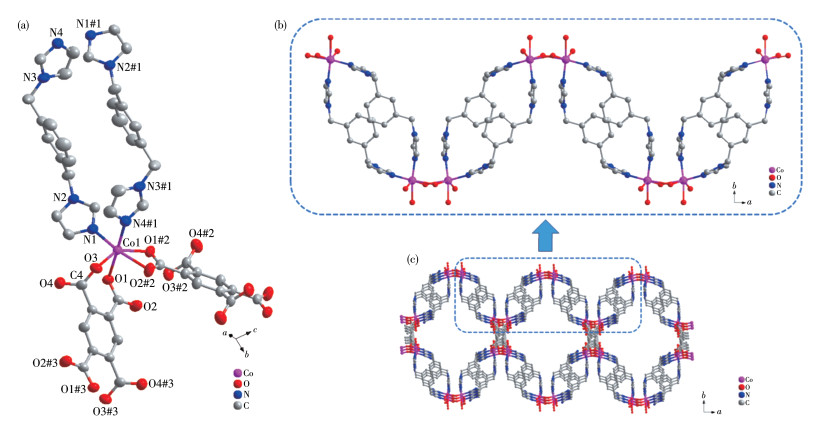
Complex 1 crystallizes in the monoclinic space group C2/c. In the asymmetric unit, there is one crystal-lographically unique Co(Ⅱ) ion, half an L4- ligand, and one 1, 3-bib molecule. As shown in Fig. 3a, the Co1 ion is coordinated by four oxygens (O1, O3, O1#2, O2#2) from two completely deprotonated L4- ligands and two nitrogens (N1, N4#1) from two 1, 3-bib molecules. Thus the Co2+ ion displays a distorted octahedral geometry. Two oxygen atoms (O1#2, O2#2) of the same carboxyl group adopt a chelate coordination mode, and two oxygen atoms (O1, O3) of different carboxyl groups show a monodentate coordination mode. O2#2, O1#2, O3, and N1 atoms are located on the equatorial plane while N4#1 and O1 occupy the axial positions with the N4#1— Co—O1 angle of 174.99°. The Co(Ⅱ) to O/N distances fall in the ranges of 0.197 95(12)-0.228 79(12) nm and 0.207 07(14)-0.208 10(14) nm, respectively, similar to those found in other Co-MOFs[31-32]. The L4- ligand was linked to four Co(Ⅱ) ions by the μ4-к2∶к1∶к2∶к1 mode.
In the 1, two 1, 3 - bib molecules connect to two Co(Ⅱ) ions to form an asymmetric unit. The asymmetric units are connected with two O1 atoms of L4- to generate a 1D chain (Fig. 3b). The chain structure extends in two different directions via the O2 and O3 atoms of L4-, forming a 3D network structure (Fig. 3c).
Symmetry codes: #1: 1.5-x, 0.5-y, 1-z; #2: 1-x, y, 0.5-z; #3: 1-x, 2-y, -z.
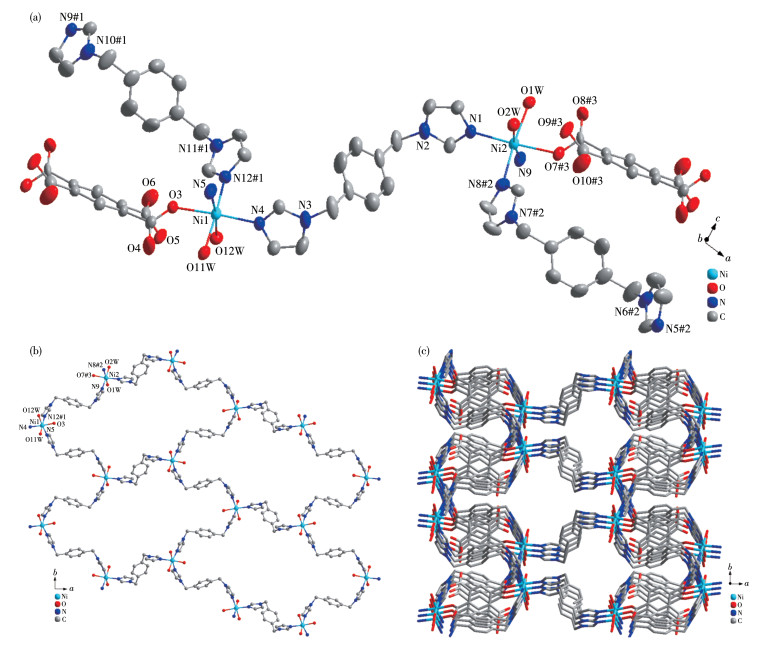
Complex 2 crystallizes in a monoclinic space group P21/c. The asymmetric unit of 2 contains two independent Ni2+ ions, one completely deprotonated L4- ligand, three 1, 4-bib molecules, two coordinated water molecules, and two lattice water molecules. As shown in Fig. 4a, the Ni1 ion is coordinated by three oxygens (O3, O11W, O12W) from one completely deprotonated L4- ligand and two coordinated water molecules, and three nitrogens (N12#1, N5, N4) from three 1, 4 - bib molecules. The coordination geometry of the Ni1 center can be described as a distorted octahedron. Three oxygen atoms and three N atoms adopt a monodentate coordination mode. O3, O12W, N4, and N5 are located on the equatorial plane, while N12#1, Ni1, O11W atoms occupy the axial positions with the N4#1—Co—O1 angle of 173.85°. The Ni(Ⅱ) to O/N distances fall in the ranges of 0.206 8(2) - 0.216 2(3) nm and 0.205 3(3) - 0.208 94(3) nm, respectively, similar to those found in other Ni-MOFs[33].The L4- ligand was linked to two Ni(Ⅱ) ions by the μ2-к1∶к0∶к1∶к0 mode.
In 2, each Ni2+ ion is connected to three 1, 4-bib molecules, and each 1, 4-bib molecule is connected to two Ni atoms, resulting in a 2D plane structure (Fig. 4b). The 2D plane structure extends to a 3D network via two carboxyl oxygen atoms of L4- (Fig. 4c).
Symmetry codes: #1:-1+x, 1.5-y, -0.5+z; #2: 1+x, 0.5-y, 0.5+z; #3:1+x, y, 1+z.
The PXRD analyses were performed at room temperature to confirm the phase purity of the bulk materials. The peaks of the simulated and experimental PXRD patterns (Fig. 5a and 5b) were in good agreement with each other, confirming the phase purities of complexes 1 and 2.
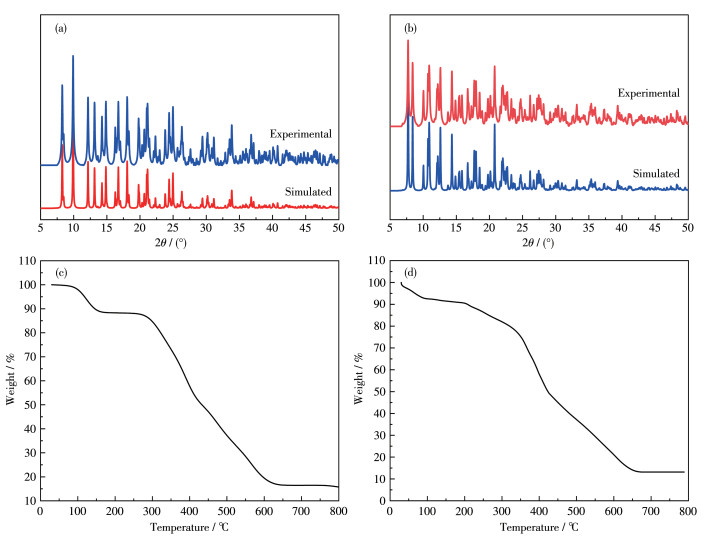
To study the thermal stabilities of 1 and 2, TGA was carried out from 20 to 800 ℃ at a heating rate of 10 ℃ ·min-1 under a nitrogen atmosphere. The TG curves of 1 and 2 are shown in Fig. 5c and 5d. Complex 1 first showed a weight loss of free H2O below 150 ℃, corresponding to 10.8%. Then 1 was relatively stable up to 150-285 ℃. The second weight loss was 71.4% in a temperature range of 285-600 ℃, corresponding to the decomposition of the L4- and 1, 3 - bib ligands (Calcd. 71.9%). The remaining weight of 19.4% was CoO, which is consistent with the calculated value of 17.8%.
Complex 2 lost 6.5% of its weight between 0 and 100 ℃, probably due to the loss of coordinated H2O and crystalline H2O in the complex (Calcd. 6.2%). The complex was relatively stable between 100 and 250 ℃, and lost 80.4% of its weight between 250 and 650 ℃, probably due to the loss of the L4- ligand as well as the 1, 4 - bib ligand (Calcd. 83.6%). The last remaining 13.1% was probably NiO (Calcd. 12.9%).
With the development of industry, a lot of organic dyes have been synthesized and applied in chemical engineering. Although organic dyes bring many benefits to our lives, organic dyes are difficult to degrade, resulting in serious pollution of our environment, especially water resources. How to deal with pollutants in water is an urgent problem.
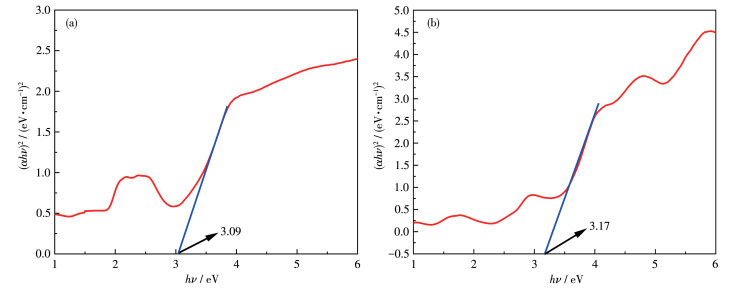
Research has shown that MOFs play an important role in the degradation of dyes in water under UV irradiation[34-35]. For this reason, we used complexes 1 and 2 to test the degradation capacity for dyes. The photocatalytic ability of the complexes is affected by their band gap energy (Eg). Therefore, using the Kubelka - Munk function, we made the plot with (αhν)2 as the vertical coordinate and hν as the horizontal coordinate. The band gap energies of 1 and 2 were calculated by the intersection of the tangent line and y=0 in it plot. As shown in Fig. 6a and 6b, the band-gap energies of 1 and 2 were 3.09 and 3.17 eV, respectively. This confirms that 1 and 2 can be activated by radiation from ultraviolet to visible light regions, suggesting that they may be used as photocatalysts.
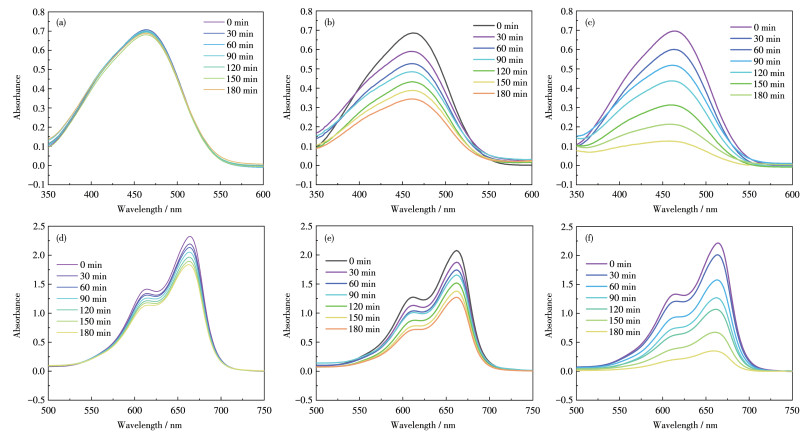
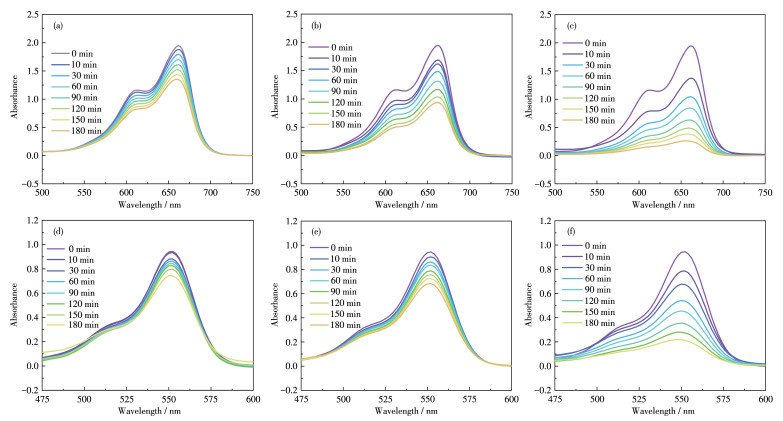
For a more comprehensive understanding of the degradation process, the photocatalytic degradation reaction of the dye was carried out under several different reaction conditions. Fig. 7 shows the UV-Vis absorption spectra of MB and MO solutions in the presence of H2O2 or/and complex 1 under visible light irradiation with time. We can see that the degradation efficiency of dyes was not the same under different conditions. In the presence of H2O2, the degradation efficiencies of MO and MB had a smaller increase (Fig. 7a and 7d) under visible light. In the presence of 1, the degradation efficiencies under visible light had a more considerable increase (Fig. 7b and 7e). When 1 (20 mg) and H2O2 (1 mL) coexisted, the degradation efficiencies were greatly improved, and the dyes were almost completely degraded (Fig. 7c and 7f). The results show that 1 has degradation activity on MO and MB under visible light irradiation.
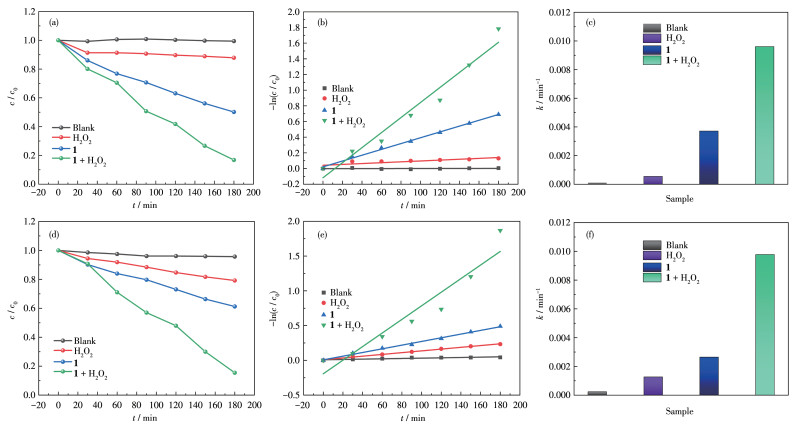
To further determine the photocatalytic degradation activity of 1, the degradation of the dyes was monitored using UV - Vis absorption spectroscopy, and the obtained c/c0 (c0: dye concentration at the beginning of irradiation; c: instantaneous concentration of dye) plots are shown in Fig. 8a and 8d. From the obtained c/c0 plots it can be found that the degradation efficiencies of MO and MB were only 0.6% and 4.3%, respectively under visible light irradiation after 180 min. In the presence of H2O2, the degradation efficiencies of MO and MB were 12.2% and 20.8%, respectively, under visible light irradiation. In the presence of 1, the degradation efficiency could reach 49.9% and 38.8%, respectively, under visible light irradiation. However, when 1 (20 mg) and H2O2 (1 mL) coexisted, the degradation efficiencies were greatly improved, reaching 83.2% (MO) and 84.5% (MB), respectively. Subsequently, we applied a pseudo-first-order kinetic model: -ln(c/c0) =kt (t: irradiation time; k: total reaction rate constant) to fit the degradation behavior of the dyes. The linear relationships are shown in Fig. 8b and 8e, respectively. The results showed that the degradation of dyes follows pseudo-first-order kinetics. As shown in Fig. 8c and 8f, in the presence of H2O2, the degradation rate constants for 1 were the highest, which could reach 0.009 6 min-1 (MO) and 0.009 8 min-1 (MB).
Following the same method, the degradation experiments of complex 2 were also carried out under different conditions. Fig. 9 shows the time - dependent UV-Vis absorption curves of MB and RhB solutions in the presence of H2O2 or/and 2 under visible light irradiation. We can learn that the degradation efficiencies of the dyes were different under different conditions. Under visible light irradiation, MB and RhB were slightly degraded in the presence of H2O2 (Fig. 9a and 9d), MB and RhB were partially degraded in the presence of 2 (Fig. 9b and 9e), while MB and RhB could be completely degraded in the coexistence of 2 and H2O2 (Fig. 9c and 9f). The results indicate that 2 has degradation activity against MB and RhB under visible light irradiation.
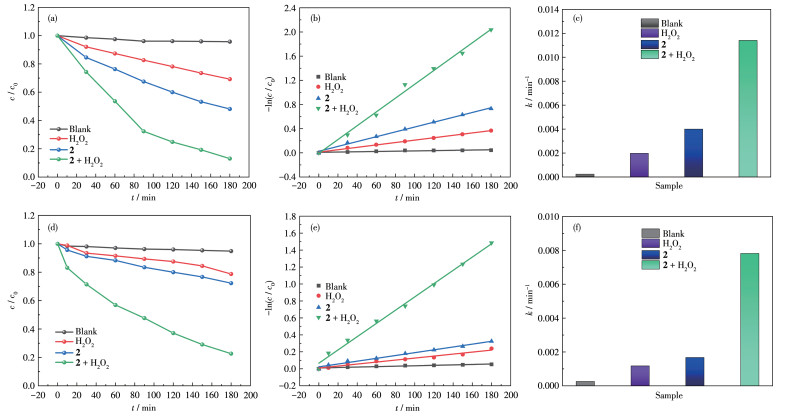
The photocatalytic degradation ability of 2 was studied by the same method. The degradation efficiencies of the dyes were monitored using UV-Vis absorption spectroscopy, and the obtained c/c0 plots are shown in Fig. 10a and 10d. From the obtained c/c0 plots, it can be found that the degradation efficiencies of MB and RhB were only 4.3% and 5.2% under visible light irradiation, and the degradation efficiencies of MB and RhB were 30.8% and 21.3% in the presence of H2O2, while 51.8% of MB and 27.8% of RhB were degraded in the presence of 2. However, when H2O2 and 2 coexisted, the degradation efficiencies of MB and RhB could be greatly improved, reaching 87.0% (MB) and 77.4% (RhB). Subsequently, we applied a pseudo-first- order kinetic model of -ln(c/c0)=kt to fit the degradation behavior of the dye. The linear relationships are shown in Fig. 10b and 10e. The results showed that the degradation of dyes follows pseudo- first- order kinetics. As shown in Fig. 10c and 10f, in the presence of H2O2, the rate constants were the highest for 2, which could reach 0.011 5 min-1 (MB) and 0.007 8 min-1 (RhB).
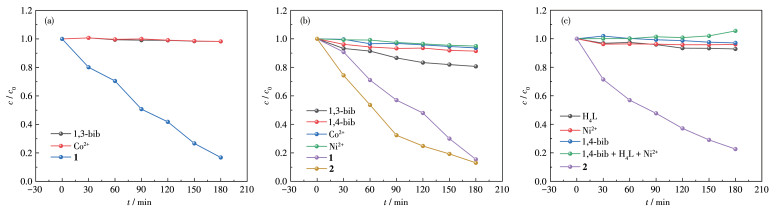
To further demonstrate that complexes 1 and 2 play a major role in the photocatalytic degradation of dyes, subsequent experiments on the photocatalytic degradation of dyes were carried out in the presence of H2O2 using metal salts (Co2+, Ni2+), auxiliary ligands (1, 3-bib, 1, 4-bib) and their mixtures, respectively, and the results are shown in Fig. 11. In the presence of Co2+ and 1, 3-bib, there was only slight degradation of MO in 180 min, while there was more pronounced degradation in the presence of 1 (Fig. 11a). MB was also only slightly degraded in the presence of 1, 3-bib, 1, 4-bib, Co2+, and Ni2+, while there was more pronounced degradation in the presence of 1 or 2 (Fig. 11b). Finally, the same was true for RhB in the presence of 1, 4-bib, H4L, Ni2+, and the mixture where there was only slight degradation, while in the presence of 2 there was more pronounced degradation (Fig. 11c).
Why we did not degrade MO and MB in the presence of H4L? This is because H4L is acidic in an aqueous solution and will break the conjugate system of MO and MB, forming new substances, which does not serve the purpose of our initial degradation, so the photocatalytic degradation experiment of H4L was not conducted.
To prove the novelty of this work, a literature review was conducted. It is found that the auxiliary ligand used in this work has more advantages in the case of the same main ligand H4L. Compared to other works, the degradation efficiency (η) can still reach 70% - 80% which is higher than that reported in the literature, as shown in Table 4.
下载:
导出CSV
| Complex | Dye | Dosage/mg | Dye concentration | η/% | Ref. |
| {[Co1.5(Hbtec)(L1)1.5(H2O)2](H2O)}n | MO | 50 | 10 mg•L-1 | 35 | [36] |
| {[Co(H2btec)(L2)](L2)0.5(H2O)2}n | MO | 50 | 10 mg•L-1 | 60 | [36] |
| [Cd(pbmb)(1, 2, 4, 5-btec)0.5]n | MB | 30 | 5×10⁻⁵mol•L-1 | 46 | [37] |
| [Zn(L1)(H2bta)] | MO | 15 | 10 mg•L-1 | 65.3 | [38] |
| {[Co5(btec)2(btx)(μ3-OH)2(H2O)2]•2H2O}n | MO | — | — | 64.1 | [39] |
| [Cd(IPA-NO2)(Htpim)]n | RhB | 30 | 4×10⁻⁵mol•L-1 | 67.4 | [40] |
| [Zn2(PMA)(Htpim)2]n | RhB | 30 | 4×10⁻⁵mol•L-1 | 68.6 | [40] |
| [Co(L)0.5(1, 3-bib)] | MO | 20 | 10 mg•L-1 | 83.2 | This work |
| [Co(L)0.5(1, 3-bib)] | MB | 20 | 10 mg•L-1 | 84.5 | This work |
| [Ni2(L)(1, 4-bib)3(H2O)2]•2H2O | MB | 20 | 10 mg•L-1 | 87.0 | This work |
| [Ni2(L)(1, 4-bib)3(H2O)2]•2H2O | RhB | 20 | 10 mg•L-1 | 77.4 | This work |
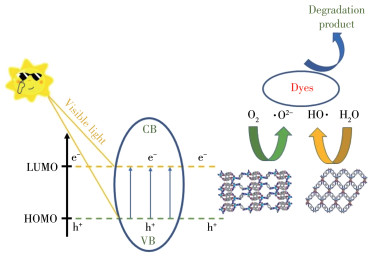
The photocatalytic mechanism of degradation of organic dyes is reported in the literature[41-44]. When semiconductor particles are excited by visible light irradiation, an electron from the highest occupied molecular orbital (HOMO) is stimulated to the lowest unoccupied molecular orbital (LUMO). Then, electron transfer from the VB (valence band) to the CB (conduction band) under irradiation of appropriate energy occurs, resulting in the formation of e- (CB) - h+ (VB) pairs[45]. For the metal-organic frameworks, the process can be described as follows: electrons are transferred from the 2p orbital of oxygen or nitrogen to the lowest empty orbital of the metal. Then, the electrons of the water molecule are trapped, leaving an equal amount of positive ·OH. Meanwhile, the e- in LUMO can react with oxygen which is adsorbed on the surface of MOFs, resulting in the generation of ·O2-. Hence, the dyes could be degraded effectively by oxidized substances and the photocatalytic process could be accelerated (Fig. 12).
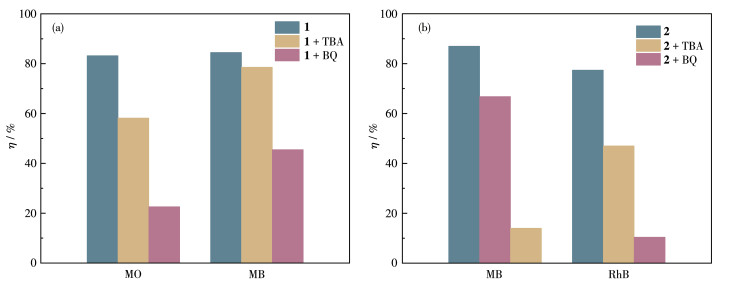
To confirm the photocatalytic degradation process, we carried out a free radical trapping experiment in the process of reaction[46]. Then, BQ (benzoquinone, 10.8mg) and TBA (tert-butyl alcohol, 2 mL) were added to the solution containing dyes (MO, MB) and complex 1, and the solution containing dyes (MB, RhB) and complex 2 to capture the ·O2- and ·OH during the reaction, respectively.
Under the same experimental conditions, the degradation performances of complexes 1 and 2 in the presence of TBA and BQ were lower than those of the control groups without TBA and BQ (Fig. 13), so we speculate that the intermediates may be ·OH and ·O2- species. They play an active role in the degradation process.
In summary, two new coordination polymers [Co(L)0.5(1, 3-bib)] (1) and [Ni2(L)(1, 4-bib)3(H2O)2]·2H2O (2) were synthesized under hydrothermal conditions. The structures of complexes were confirmed by single crystal X-ray diffraction, IR spectra, elemental analysis, PXRD, and TGA. 1 shows a 3D network structure that is built from the Co unit interconnected by the L4- ligand. In 2, each Ni2+ ion is connected to three 1, 4-bib molecules, and each 1, 4-bib molecule is connected to two Ni2+ atoms, resulting in a 2D plane structure. The 2D plane structure extends to a 3D network via two carboxyl oxygen atoms of L4-. The photocatalytic studies show that 1 has good photocatalytic performance for MB/MO, and 2 can be used as an optional functional material to degrade MB/RhB in wastewater.
Hasanbeigi A, Price L. A technical review of emerging technologies for energy and water efficiency and pollution reduction in the textile industry[J]. J. Clean. Prod., 2015, 95: 30-44. doi: 10.1016/j.jclepro.2015.02.079
Lade H, Kadam A, Paul D, Govindwar S. Biodegradation and detoxification of textile azo dyes by bacterial consortium under sequential microaerophilic/aerobic processes[J]. EXCLI J., 2015, 14: 158-174.
Huang G Q, Ye W N, Lv C X, Butenko D S, Yang C, Zhang G L, Lu P, Xu Y, Zhang S C, Wang H W, Zhu Y K, Yang D J. Hierarchical red phosphorus incorporated TiO2 hollow sphere heterojunctions toward superior photocatalytic hydrogen production[J]. J. Mater. Sci. Technol., 2022, 108: 18-25. doi: 10.1016/j.jmst.2021.09.026
Jamaluddin N S, Alias N H, Samitsu S, Othman N H, Jaafar J, Marpani F, Lau W J, Tan Y Z. Efficient chromium (Ⅵ) removal from wastewater by adsorption - assisted photocatalysis using MXene[J]. J. Environ. Chem. Eng., 2022, 10(6): 108665. doi: 10.1016/j.jece.2022.108665
Eddaoudi M, Moler D B, Li H L, Chen B L, Reineke T M, O'Keeffe M, Yaghi O M. Modular chemistry: Secondary building units as a basis for the design of highly porous and robust metal-organic carbox-ylate frameworks[J]. Acc. Chem. Res., 2001, 34: 319-330. doi: 10.1021/ar000034b
Ockwig N W, Delgado-Friedrichs O, O'Keeffe M, Yaghi O M. Reticu-lar chemistry: Occurrence and taxonomy of nets and grammar for the design of frameworks[J]. Acc. Chem. Res., 2005, 38: 176-182. doi: 10.1021/ar020022l
Lin R B, Xiang S C, Zhou W, Chen B L. Microporous metal-organic framework materials for gas separation[J]. Chem, 2020, 6(2): 337-363. doi: 10.1016/j.chempr.2019.10.012
Cheng L, Gou S H, Wang J Q. Three new 3D coordination polymers constructed by biphenyl-2, 2', 4, 4'-tetracarboxylic acid: Effect of metal ions and the second ligands[J]. J. Mol. Struct., 2011, 991: 149-157. doi: 10.1016/j.molstruc.2011.02.018
She S X, Gu X Y, Yang Y. Field - induced single molecule magnet behavior of a three-dimensional Dy (Ⅲ) -based complex[J]. Inorg. Chem. Commun., 2019, 110: 107584. doi: 10.1016/j.inoche.2019.107584
刘洋, 范广, 高丰琴, 侯磊, 朱冬雨, 王尧宇. 一种铽配合物用于水溶液中二甲硝咪唑和四环素的检测[J]. 无机化学学报, 2023,39,(7): 1235-1243. LIU Y, FAN G, GAO F Q, HOU L, ZHU D Y, WANG Y Y. A terbium complex for the detection of dimetridazole and tetracycline in an aqueous solution[J]. Chinese J. Inorg. Chem., 2023, 39(7): 1235-1243.
Wang M M, Meng X X, Song F, He Y F, Shi W, Gao H L, Tang J K, Peng C. Reversible structural transformation induced switchable single-molecule magnet behavior in lanthanide metal-organic frame-works[J]. Chem. Commun., 2018, 54(72): 10183-10186. doi: 10.1039/C8CC06058D
Han X, Xu Y X, Yang J, Xu X X, Li C P, Ma J F. Metal-assembled, resorcin arene-based molecular trimer for efficient removal of toxic dichromate pollutants and Knoevenagel condensation reaction[J]. ACS Appl. Mater. Interfaces, 2019, 11: 15591-15597. doi: 10.1021/acsami.9b02068
Liu Z Q, Chen K, Zhao Y, Kang Y S, Liu X H, Lu Q Y, Azam M, Al-Resayes S, Sun W Y. Structural diversity and sensing properties of metal-organic frameworks with multicarboxylate and 1H-imidazol-4-yl-containing ligands[J]. Cryst. Growth Des., 2018, 18(2): 1136-1146. doi: 10.1021/acs.cgd.7b01572
Zhang Y M, Yuan S, Day G, Wang X, Yang X Y, Zhou H C. Lumi-nescent sensors based on metal- organic frameworks[J]. Coord. Chem. Rev., 2018, 354: 28-45. doi: 10.1016/j.ccr.2017.06.007
Yang X G, Ma L F, Yan D P. Facile synthesis of 1D organic-inorganic perovskite micro-belts with high water stability for sensing and pho-tonic applications[J]. Chem. Sci., 2019, 10(17): 4567-4572. doi: 10.1039/C9SC00162J
Ye Y, Du J F, Sun L B, Liu Y C, Wang S, Song X W, Liang Z Q. Two zinc metal-organic framework isomers based on pyrazine tetracarbox-ylic acid and dipyridinylbenzene for adsorption and separation of CO2 and light hydrocarbons[J]. Dalton Trans., 2020, 49(4): 1135-1142. doi: 10.1039/C9DT04305E
Hou Y, Chai D F, Li B N, Pang H J, Ma H Y, Wang X M, Tan L C. Polyoxometalate-incorporated metallacalixarene @ graphene compos-ite electrodes for high - performance supercapacitors[J]. ACS Appl. Mater. Interfaces, 2019, 11(23): 20845-20853. doi: 10.1021/acsami.9b04649
Chai D F, Gomez-Garcia C J, Li B N, Pang H J, Ma H Y, Wang X M, Tan L C. Polyoxometalate-based metal-organic frameworks for boost-ing electrochemical capacitor performance[J]. Chem. Eng. J., 2019, 373: 587-597. doi: 10.1016/j.cej.2019.05.084
Li X Z, Li M, Li Z, Hou J Z, Huang X C, Li D. Concomitant and con-trollable chiral/racemic polymorphs: From achirality to isotactic, syn-diotactic, and heterotactic chirality[J]. Angew. Chem. Int. Ed., 2008, 47(34): 6371-6374. doi: 10.1002/anie.200801481
Sang R L, Xu L. Construction of a series of 1D and 2D inorganic-organic hybrid coordination polymers based on 1, 1' - bis(propionic acid)-2, 2'-biimidazole[J]. Eur. J. Inorg. Chem., 2010, 31: 4962-4968.
刘厚亭, 丁利, 周传聪, 邹会琪, 卢静, 王素娜, 李允伍. 一个基于3-(3', 5'-二羧基苯基)-6-羧基吡啶的Co-MOF的合成、结构及质子传导性能[J]. 无机化学学报, 2023,39,(4): 596-606. LIU H T, DING L, ZHOU C C, ZOU H Q, LU J, WANG S N, LI Y W. Synthesis, structure, and proton conductivity of a Co-MOF based on 3 - (3', 5' - dicarboxyphenyl) - 6 - carboxylic pyridin[J]. Chinese J. Inorg. Chem., 2023, 39(4): 596-606.
Li D S, Wu Y P, Zhao J, Lu J. Metal-organic frameworks based upon non-zeotype 4-connected topology[J]. Coord. Chem. Rev., 2014, 261: 1-27. doi: 10.1016/j.ccr.2013.11.004
Wang X Y, Gao W Y, Zhou X H, Liu D X, Hu B, Kong Z G. A new manganese(Ⅱ) coordination compound constructed by 1, 10-phenanth-roline derivative and chlorine anions: Syntheses, crystal structure and theoretical calculation[J]. Chin. J. Struc. Chem., 2019, 38: 819-824.
Zhao J, Wang Y N, Dong W W, Wu Y P, Li D S, Liu B, Zhang Q C. A new surfactant-introduction strategy for separating the pure single-phase of metal- organic frameworks[J]. Chem. Commun., 2015, 51(46): 9479-9482. doi: 10.1039/C5CC02043C
李秀梅, 潘亚茹, 刘博, 周实, 常鹰飞. 两个镉/锌超分子配合物的合成、晶体结构及理论计算[J]. 无机化学学报, 2018,34,(10): 1923-1928. doi: 10.11862/CJIC.2018.225LI X M, PAN Y R, LIU B, ZHOU S, CHANG Y F. Syntheses, crystal structures and theoretical calculation of cadmium/zinc supramolecu-lar coordination compounds[J]. Chinese J. Inorg. Chem., 2018, 34(10): 1923-1928. doi: 10.11862/CJIC.2018.225
Sun S W, Wang G F. Synthesis and structural characterization of two tetra - coordinated Co (Ⅱ) complexes with benzimidazole derivatives[J]. Crystallogr. Rep., 2019, 64: 1066-1070. doi: 10.1134/S1063774519070216
Wang G F, Sun S W, Wang W B, Sun H, Song S F. Synthesis and structural characterization of two coordination polymers constructed by bis(4-(1H -imidazol-1- yl) phenyl) methanone and 5-(tert-butyl) isophthalate ligands[J]. Z. Naturforsch. B, 2019, 74(3): 261-265. doi: 10.1515/znb-2018-0197
Wang G F, Sun S W. A zinc coordination polymer assembled from bis(4-(1H-imidazol-1-yl) phenyl) methanone and phthalic acid: Syn-thesis, structural characterization, and fluorescent properties[J]. J.Struct. Chem., 2019, 60: 131-135. doi: 10.1134/S0022476619010189
徐中轩, 石明凤, 白旭玲, 袁婷婷. 基于5-羟甲基间苯二甲酸和咪唑衍生物的半导体型Ni-MOFs的合成、晶体结构和光催化性质[J]. 无机化学学报, 2022,38,(9): 1799-1807. XU Z X, SHI M F, BAI X L, YUAN T T. Semiconductive Ni-MOFs based on 5 - (hydroxymethyl) isophthalic acid and imidazole deriva-tives: Synthesis, crystal structures, and photocatalytic properties[J]. Chinese J. Inorg. Chem., 2022, 38(9): 1799-1807.
喻敏, 宣芳, 刘光祥. 以4, 4'-(1-咪唑基亚甲基)二苯甲酸为配体的锌配合物的合成、晶体结构和荧光性质[J]. 无机化学学报, 2019,35,(1): 133-140. YU M, XUAN F, LIU G X. Syntheses, crystal structures and photolu-minescent properties of two zinc (Ⅱ) coordination polymers derived from 4, 4'-((1H-imidazol-1-yl) methylene) dibenzoic acid[J]. Chinese J. Inorg. Chem., 2019, 35(1): 133-140.
戎红仁, 王先梅, 魏英华, 陈晓娟, 赖梨芳, 刘琦. 一种高容量的层状Co-MOF基超级电容器电极材料[J]. 无机化学学报, 2021,37,(12): 2227-2234. RONG H R, WANG X M, WEI Y H, CHEN X J, LAI L F, LIU Q. A layered Co - MOF based electrode material of supercapacitor with high-capacity[J]. Chinese J. Inorg. Chem., 2021, 37(12): 2227-2234.
Cui G N, Liu W B, Wang L L, Wu R X, Bi C F, Zhang D M, Fan Y H. Two novel Co (Ⅱ) bifunctional MOFs: Syntheses and applications in photocatalytic degradation of dyes and electrocatalytic water oxi-dation[J]. J. Solid State Chem., 2021, 304: 122562. doi: 10.1016/j.jssc.2021.122562
Wang J W, Ma Y X, Kang X Y, Yang H J, Liu B L, Li S S, Zhang X D, Ran F. A novel moss - like 3D Ni - MOF for high performance supercapacitor electrode material[J]. J. Solid State Chem., 2022, 309: 122994. doi: 10.1016/j.jssc.2022.122994
Zong Z, Bi C F, Zhu Z, Fan C B, Meng X M, Zhang X, Fan Y H. Structure, sensing and photocatalytic properties of two multifunction-al 3D luminescent coordination polymers based on an N-heterocyclic carboxylic acid[J]. New J. Chem., 2018, 42(11): 8905-8913.
Meng X M, Zhang X, Qi P F, Zong Z, Fan J, Fan Y H. Syntheses, structures, luminescent and photocatalytic properties of various poly-mers based on a "V"-shaped dicarboxylic acid[J]. RSC Adv., 2017, 7(9): 4855-4871.
Hao J M, Li Y H, Li H H, Cui G H. Two cobalt (Ⅱ) metal- organic frameworks based on mixed 1, 2, 4, 5-benzenetetracarboxylic acid and bis(benzimidazole) ligands[J]. Transit. Met. Chem., 2014, 39: 1-8.
Li M, Liu L, Zhang L, Lv X F, Ding J, Hou H W, Fan Y T. Novel coordination polymers of Zn(Ⅱ) and Cd(Ⅱ) tuned by different aromatic polycarboxylates: Synthesis, structures and photocatalytic properties[J]. CrystEngComm, 2014, 16(28): 6408-6416.
Zhao X X, Hao Z C, Hou S X, Cui G H. Two 3D supramolecular coor- dination polymers constructed from aromatic carboxylic acids and flexible bis(thiabendazole) ligands[J]. J. Inorg. Organomet. Polym. Mater., 2017, 27: 934-940.
Hao J M, Wang L N, Van Hecke K, Cui G H. An unprecedented binodal (4, 10)-connected metal-organic framework based on penta-nuclear cobalt(Ⅱ) clusters[J]. Inorg. Chem. Commun., 2014, 41: 43-46.
Wang J J, Wu F F, Su N, Li P P, Wang S Y, Ma H Y, Li Y W, Yu M H. Luminescent coordination polymers constructed using a mixed -ligand strategy for highly selective luminescence sensing of nitroben-zene, Fe3+ and Cr2O72- ions and photodegradation of rhodamine B[J]. CrystEngComm, 2020, 22(27): 4650-4664.
Meng X M, Fan C B, Bi C F, Zong Z A, Zhang X, Fan Y H. Synthe-ses, structural diversity and photocatalytic properties of various Co(Ⅱ) coordination polymers based on a "V"-shaped 1, 3-di(4'-car- boxyl-phenyl) benzene acid and different imidazole bridging ligands[J]. CrystEngComm, 2016, 18(16): 2901-2912.
Etaiw S, Abd El-Aziz D, Marie H. Cd(Ⅱ) and holodirected lead(Ⅱ) 3D- supramolecular coordination polymers based on nicotinic acid: Struc-ture, fluorescence property and photocatalytic activity[J]. Solid State Sci., 2018, 79: 15-22.
Han L J, Kong Y J, Yan T J, Fan L T, Zhang Q, Zhao H J, Zheng H G. A new five- coordinated copper compound for efficient degrada-tion of methyl orange and congo red in the absence of UV - visible radiation[J]. Dalton Trans., 2016, 45(46): 18566-18571.
Qin L, Chen H Z, Lei J, Wang Y Q, Ye T Q, Zheng H G. Photodegra-dation of some organic dyes over two metal-organic frameworks with especially high efficiency for safranine T[J]. Cryst. Growth Des., 2017, 17(3): 1293-1298.
Hiskia A, Mylonas A, Papaconstantinou E. Comparison of the pho-toredox properties of polyoxometallates and semiconducting parti-cles[J]. Chem. Soc. Rev., 2001, 30(1): 62-69.
Zhang X Y, Cui L S, Zhang X, Jin F, Fan Y H. Two organoantimony (Ⅴ) coordination polymers modulated by isomers of trifluoromethyl-benzoate ligands: Syntheses, crystal structure, photodegradation properties[J]. J. Mol. Struct., 2017, 1134: 742-750.

Figure 3 (a) Coordination environment of Co(Ⅱ) center in complex 1 (Ellipsoid probability: 70%); (b) 1D chain in 1; (c) 3D network structure of 1
Symmetry codes: #1: 1.5-x, 0.5-y, 1-z; #2: 1-x, y, 0.5-z; #3: 1-x, 2-y, -z.

Figure 4 (a) Coordination environment of Ni(Ⅱ) center in complex 2 (Ellipsoid probability: 60%); (b) 2D plane structure of 2; (c) 3D plane structure of 2
Symmetry codes: #1:-1+x, 1.5-y, -0.5+z; #2: 1+x, 0.5-y, 0.5+z; #3:1+x, y, 1+z.

Figure 5 Simulated and experimental PXRD patterns of complexes 1 (a) and 2 (b); TG curves of 1 (c) and 2 (d)

Figure 7 (a, d) UV-Vis absorption spectra of MO and MB solutions in the presence of H2O2, respectively; (b, e) UV-Vis absorption spectra of MO and MB solutions in the presence of complex 1, respectively; (c, f) UV-Vis absorption spectra of MO and MB solutions in the presence of 1 and H2O2, respectively

Figure 8 (a, d) Variation of photocatalytic degradation efficiencies of MO and MB with visible light irradiation time under different conditions; (b, e) Plots of -ln(c/c0) vs t and the corresponding linear fittings for the pseudo-first-order kinetic equation; (c, f) Reaction rate constants of MO and MB under different conditions

Figure 9 (a, d) UV-Vis absorption spectra of MB and RhB solutions in the presence of H2O2, respectively; (b, e) UV-Vis absorption spectra of MB and RhB solutions in the presence of complex 2, respectively; (c, f) UV-Vis absorption spectra of MB and RhB solutions in the presence of 2 and H2O2, respectively

Figure 10 (a, d) Variation of photocatalytic degradation efficiencies of MB and RhB with visible light irradiation time under different conditions; (b, e) Plots of -ln(c/c0) vs t and the corresponding linear fittings for the pseudo-first-order kinetic equation; (c, f) Reaction rate constants of MB and RhB under different conditions

Figure 12 Mechanism of photocatalytic degradation of dyes by complexes 1 and 2 under visible light

Figure 13 Photocatalytic degradation performance of complexes 1 (a) and 2 (b) in the presence of BQ and TBA
Table 1. Crystallography and structural parameters of complexes 1 and 2
| Parameter | 1 | 2 |
| Empirical formula | C19H15CoN4O4 | C52H52N12Ni2O12 |
| Formula weight | 422.28 | 1 154.44 |
| Temperature / K | 296.20 | 296.20 |
| Crystal system | Monoclinic | Monoclinic |
| Space group | C2/c | P21/c |
| a / nm | 2.354 53(18) | 2.132 49(14) |
| b / nm | 1.191 64(9) | 1.613 75(10) |
| c / nm | 1.367 01(10) | 1.646 62(11) |
| β/(°) | 114.806(1) | 99.758 0(10) |
| V / nm3 | 3.481 6(5) | 5.584 5(6) |
| Z | 8 | 4 |
| F(000) | 1 728.0 | 2 512 |
| Dc / (g•cm-3) | 1.611 | 1.432 5 |
| μ / mm-1 | 1.022 | 0.752 |
| θ range / (°) | 2.800-28.336 | 2.126-25.000 |
| Reflection collected | 10 661 | 27 842 |
| Independent reflection | 4 236 (Rint=0.021 4) | 9 817 (Rint=0.050 2) |
| Observed reflection | 3 582 | 6 616 |
| Data, restraint, number of parameters | 4 236, 0, 253 | 9 817, 24, 739 |
| Final R indices [I≥2σ(I)]* | R1=0.028 6, wR2=0.070 1 | R1=0.047 2, wR2=0.114 2 |
| Final R indices (all data) | R1=0.037 1, wR2=0.074 3 | R1=0.084 6, wR2=0.133 3 |
| GOF | 1.103 0 | 1.018 |
| Largest diff. peak and hole / (e•nm-3) | 416 and -268 | 686 and -301 |
| * R1=∑(|Fo|-|Fc|)/∑|Fo|, wR2=[∑w(|Fo|2-|Fc|2)2/∑w(|Fo|2)2]1/2. | ||
 下载: 导出CSV
Table 2. Selected bond lengths (nm) and bond angles (°) of complex 1
| Co1—O1 | 0.228 79(12) | Co1—O2#2 | 0.221 59(12) | Co1—N4#1 | 0.208 10(14) |
| Co1—O1#2 | 0.219 94(11) | Co1—O3 | 0.197 95(12) | Co1—N1 | 0.207 07(14) |
| O1—Co1—O1#2 | 78.61(5) | O3—Co1—O2#2 | 91.98(5) | N4—Co1—O2#2 | 91.79(5) |
| O1#2—Co1—O2#2 | 59.43(4) | O3—Co1—N4#1 | 99.91(5) | N1—Co1—O1#2 | 107.96(5) |
| O2#2—Co1—O1 | 91.48(4) | O3—Co1—N1 | 100.40(5) | N1—Co1—O1 | 87.07(5) |
| O3—Co1—O1 | 83.75(4) | N4#1—Co1—O1#2 | 99.85(5) | N1—Co1—O2#2 | 167.30(5) |
| O3—Co1—O1#2 | 145.51(5) | N4#1—Co1—O1 | 175.00(5) | N1—Co1—N4#2 | 88.91(6) |
| Symmetry codes: #1: 1.5-x, 0.5-y, 1-z; #2: 1-x, y, 0.5-z; #3: 1-x, 2-y, -z. | |||||
下载: 导出CSV
Table 3. Selected bond lengths (nm) and bond angles (°) of complex 2
| Ni1—O3 | 0.206 8(2) | Ni1—O12w | 0.216 2(3) | Ni1—N5 | 0.207 0(3) |
| Ni1—O11w | 0.212 4(3) | Ni1—N4 | 0.205 8(3) | Ni1—N12#1 | 0.208 6(3) |
| Ni2—O1w | 0.214 1(2) | Ni2—O2w | 0.213 2(2) | Ni2—O7#3 | 0.211 4(2) |
| Ni2—N1 | 0.208 1(3) | Ni2—N8#2 | 0.209 4(3) | Ni2—N9 | 0.205 3(3) |
| O3—Ni1—O11w | 88.58(10) | O3—Ni1—O12w | 84.44(10) | O3—Ni1—N5 | 89.11(11) |
| O3—Ni1—N12#1 | 87.14(11) | O11—Ni1—O12w | 88.35(10) | N4—Ni1—O3 | 174.56(12) |
| N4—Ni1—O11w | 90.37(11) | N4—Ni1—O12w | 90.20(11) | N4—Ni1—N5 | 96.21(12) |
| N4—Ni1—N12#1 | 93.48(12) | N5—Ni1—O11w | 89.41(13) | N5—Ni1—O12w | 173.23(11) |
| N5—Ni1—N12#1 | 94.93(12) | N12#1—Ni1—O11w | 173.85(12) | N12#1—Ni1—O12w | 86.85(12) |
| O2w—Ni2—O1w | 86.79(10) | O7#3—Ni2—O1w | 88.22(10) | O7#3—Ni2—O2w | 84.88(9) |
| N1—Ni2—O1w | 92.14(11) | N1—Ni2—O2w | 89.29(11) | N1—Ni2—O7#3 | 174.13(11) |
| N1—Ni2—N8#2 | 94.76(12) | N8#2—Ni—O1w | 171.17(11) | N8#2—Ni2—O2w | 87.79(11) |
| N8#2—Ni2—O7#3 | 84.36(11) | N9—Ni2—O1w | 87.14(11) | N9—Ni2—O2w | 171.77(11) |
| N9—Ni2—O7#3 | 89.37(11) | N9—Ni2—N1 | 96.50(12) | N9—Ni2—N8#2 | 97.52(13) |
| Symmetry codes: #1: -1+x, 1.5-y, -0.5+z; #2: 1+x, 0.5-y, 0.5+z; #3:1+x, y, 1+z. | |||||
下载: 导出CSV
Table 4. Comparison of catalytic activity of MOFs-based photocatalysts
| Complex | Dye | Dosage/mg | Dye concentration | η/% | Ref. |
| {[Co1.5(Hbtec)(L1)1.5(H2O)2](H2O)}n | MO | 50 | 10 mg•L-1 | 35 | [36] |
| {[Co(H2btec)(L2)](L2)0.5(H2O)2}n | MO | 50 | 10 mg•L-1 | 60 | [36] |
| [Cd(pbmb)(1, 2, 4, 5-btec)0.5]n | MB | 30 | 5×10⁻⁵mol•L-1 | 46 | [37] |
| [Zn(L1)(H2bta)] | MO | 15 | 10 mg•L-1 | 65.3 | [38] |
| {[Co5(btec)2(btx)(μ3-OH)2(H2O)2]•2H2O}n | MO | — | — | 64.1 | [39] |
| [Cd(IPA-NO2)(Htpim)]n | RhB | 30 | 4×10⁻⁵mol•L-1 | 67.4 | [40] |
| [Zn2(PMA)(Htpim)2]n | RhB | 30 | 4×10⁻⁵mol•L-1 | 68.6 | [40] |
| [Co(L)0.5(1, 3-bib)] | MO | 20 | 10 mg•L-1 | 83.2 | This work |
| [Co(L)0.5(1, 3-bib)] | MB | 20 | 10 mg•L-1 | 84.5 | This work |
| [Ni2(L)(1, 4-bib)3(H2O)2]•2H2O | MB | 20 | 10 mg•L-1 | 87.0 | This work |
| [Ni2(L)(1, 4-bib)3(H2O)2]•2H2O | RhB | 20 | 10 mg•L-1 | 77.4 | This work |
下载: 导出CSV

 扫一扫看文章


扫一扫关注我们