

 Figure 1.
N2-physisorption curves of different adsorbents and supports
Figure 1.
N2-physisorption curves of different adsorbents and supports
Citation:
XU Cheng-zhi, ZHENG Mei-qin, CHEN Keng, HU Hui, CHEN Xiao-hui. CeOx doping on a TiO2-SiO2 supporter enhances Ag based adsorptive desulfurization for diesel[J]. Journal of Fuel Chemistry and Technology,
2016, 44(8): 943-953.

CeOx掺杂TiO2-SiO2载体对Ag基柴油脱硫吸附剂性能的影响
摘要:
以钛酸丁酯的乙醇溶液为钛源, 硝酸铈的水溶液为沉淀剂, 采用共浸渍法制备CeOx/TiO2-SiO2复合氧化物作为Ag基柴油脱硫吸附剂的载体, 探究CeOx掺杂TiO2-SiO2载体对吸附剂结构及脱硫性能的影响.结果表明, 采用共浸渍法制备的CeOx/TiO2-SiO2载体中, Ce物种和Ti物种均处于充分分散的状态, 掺杂CeOx可促进Ag活性物种的分散, 还会促进金属态Ag活性物种的氧化, 形成高度分散的Ag氧化物 (Ag2O2) 活性中心, 从而提高吸附剂的脱硫性能 (22.5%).在静态吸附实验中, Ag-CeOx/TiO2-SiO2对中国国II柴油 (硫含量952.9mg/kg) 的吸附硫容可达5.38mg/g, 在剂油比为1:10时可将中国国IV柴油 (硫含量39.0mg/kg) 中的硫含量降至10mg/kg以下, 达到中国国V柴油的标准.
English
CeOx doping on a TiO2-SiO2 supporter enhances Ag based adsorptive desulfurization for diesel
Abstract:
In this work, the impact of CeOx doping on a TiO2-SiO2 supporter on the Ag based adsorptive desulfurization for Chinese standard diesel was studied. The dispersion and valence states of Ce, Ti and Ag species were characterized, and the impact of Ce doping was investigated. The results indicated that Ce species and Ti species were dispersed evenly on the surface of SiO2 via a novel co-impregnation method. Following CeOx doping, the Ag species were in the form of oxides (about 5nm) instead of metallic Ag particles (about 35nm), which is due to the large amount of coordinative unsaturated sites provided by the interaction between CeOx and TiO2, as well as the oxidation-reduction property of CeOx. The Ag in the active oxide state (Ag2O2) and dispersed evenly on the supporter could interact with sulfur compounds more favorably, and therefore showed a good performance in the adsorptive desulfurization. In both static batch and dynamic breakthrough desulfurization tests, Ag-CeOx/TiO2-SiO2 was proved to be a more efficient adsorbent compared with Ag-TiO2-SiO2. It was found that the desulfurization performance of Ag-TiO2-SiO2 exhibited an excellent improvement (22.5%) after being doped with CeOx. In the static equilibrium tests, the equilibrium sulfur capacity of Ag-CeOx/TiO2-SiO2 was up to 5.38mg/g for CN-II diesel (sulfur content 952.9mg/kg) and the sulfur content of the CN-IV diesel (sulfur content 39.0mg/kg) after desulfurization was less than 10mg/kg, which could meet the CN-V standard.
-
Key words:
- commercial diesel
- / adsorptive desulfurization
- / Ag oxides
- / CeOx doping
- / adequate dispersion
-
Petroleum-based fuels, refined from different crude oils under various technological conditions, are typically a mixture of diverse organic compounds. Combustion of fuels containing high content of sulfur results in production of SOx compounds, which can damage the environment and cause health problems[1, 2]. Ultra-deep desulfurization of transportation fuel, therefore, has increasingly become a worldwide research subject and is now a mandatory request of China V standard.
Hydrodesulfurization (HDS) method is one of the most widely used desulfurization technologies[2, 3]. However, the major sulfur compounds in current Chinese commercial diesel fuel are the refractory alkyl dibenzothiophenes (DBTs), which show low hydrogenation activity because of the steric hindrance caused by their large ring size and alkyl substitutes in positions 4 and 6 such as 4, 6-dimethyldibenzothiophene. Therefore, the HDS method for ultra-deep desulfurization of Chinese diesel fuel, which theoretically requires more hydrogen consumption on a much larger catalyst bed at higher temperature and pressure, becomes less efficient and more expensive[4]. Hence, it is necessary to develop an alternative or supplementary process for lower-cost deep desulfurization of Chinese diesel fuel[5].
The adsorptive desulfurization method has been investigated as one of the most competitive and efficient techniques for producing ultraclean fuel[4-7]. A variety of adsorbents have been reported as potential desulfurization adsorbents, including silver[8, 9], copper[10-12], nickel[13-15] and cerium[16] supported on porous materials such as carbon materials[17-19], oxides and mixed oxides[20, 21], zeolites[22-24] and metal organic frameworks (MOFs)[25, 26]. However, the desulfurization efficiencies of most of these adsorbents are not high enough for commercial application due to the steric hindrance effect of alkylated sulfur compounds and the strong competitive adsorption of polyaromatic hydrocarbons[4, 5], except few adsorbent formulations like silver supported on TiO2-Al2O3 and TiO2-SiO2, which show effective desulfurization capability for diesel supplied by USA companies, including Off-Road Diesel (452 mg/kg) and Ultra Low Sulfur Diesel (7.5 mg/kg) at ambient conditions[5, 8, 27]. Silver (I) oxide (Ag2O) was the active Ag state and the interaction was proved to be the π-interactions both experimentally and theoretically[8, 9].
However, it is known that the concentrations of refractory alkyl dibenzothiophenes, nitrogen compounds and polycyclic aromatic hydrocarbons included in Chinese diesel fuels is quite different from that of USA diesels. It is proposed here to incorporate Ce component for deeper desulfurization because it might have several advantages such as: doping the surfaces with Ce would promote the formation of coordinative unsaturated sites; cerium oxide would interact with metallic silver to generate more active sites with Ag oxides; and more defects of crystal structure due to incorporation of Ce would allow silver components to be better dispersed onto the supports[21, 28-30]. TiO2-CeO2/MCM-48 has been reported as a high-efficiency adsorbent for the ultra-deep desulfurization of diesel fuel through an irradiation oxidation-adsorption desulfurization approach[4, 31].
In the present study, CeOx/TiO2-SiO2 was prepared through a novel co-impregnation method and utilized as the support for silver based desulfurization adsorbents. N2 absorption-desorption, X-ray photoelectron spectroscopy (XPS), X-ray diffraction (XRD) and transmission electron microscope (TEM) were employed to characterize active species and the dispersion. Finally, the impacts of CeOx doping on the desulfurization performance of the adsorbents was also studied. The tests were performed using Chinese II standard (CN-II), Chinese III standard (CN-III), and Chinese IV standard (CN-IV) transportation fuel. The effect of CeOx doping on adsorptive capacity of the adsorbents for organosulfur was examined in both static batch test and dynamic breakthrough test.
1 Experimental
1.1 Preparation of adsorbent
The SiO2 powder support was purchased from Qingdao Xinchanglai silica gel Co., Ltd.. Titanium butoxide (99%+) and titanium isopropoxide (97%+) were acquired from Aladdin and Alfa Aesar, respectively. Ce (NO3)3·6H2O and AgNO3 were analytical-grade reagents purchased from Shanghai Colloid Chemical Plant and were used as received.
The CeOx/TiO2-SiO2 was prepared through a novel co-impregnation method with 1:2:44.3 molar ratio of Ce:Ti:Si. Briefly, after undergoing calcination at 823 K, 1.2 g SiO2 powder was immersed in 20 mL anhydrous ethanol solution of tetrabutyl titanate (0.045 mol/L) and stirred in an ice-water bath for 60 min to form suspension. Then, 10 mL of 0.045 mol/L cerium nitrate in 80% ethanol solution was dropped into the suspension solution (0.5 mL/min). The slurry was treated by ultrasonic (50 W) for 30 min subsequently, and then oven-dried overnight at 333 K. Finally, the powdery samples were calcined in air at 823 K with ramp heating rates of 2 K/min for 2 h to prepare the CeOx/TiO2-SiO2 support. TiO2-SiO2 support was prepared by the similar method but without addition of Ce species.
Silver was dispersed onto the above supports through typical incipient wetness method[5, 8], where aqueous AgNO3 was used as the silver precursor. The incipient wetness volume of supports was about 2.33 mL/g and the corresponding Ag metal loading was 4%. The impregnated samples were dried at 383 K for 6 h and then calcined in air at 723 K with the ramp heating rates of 2 K/min for 2 h.
Ag-TiO2-Al2O3 was also prepared according to the reference for comparison with the previous studies[5]. Here, TiO2-Al2O3 (1:4.4 as the weight ratio of Ti to Al) was prepared with Al2O3 purchased from Alfa Aesar and titanium isopropoxide dissolved in isopropanol through incipient wetness method. Then, a 4% of Ag was loaded on the TiO2-Al2O3 through incipient wetness method to obtain the final adsorbent.
1.2 Characterization of adsorbent
N2-physisorption was utilized to determine pore structure of adsorbents and supports. The N2-physisorption isotherms were obtained at 77 K with a Micromeritics ASAP 2020 adsorption porosimeter. XRD measurements were performed on a PANalytical X'pert Pro Super X-ray diffractometer operating in the reflection with Co Kα radiation (40 kV, 30 mA). Diffraction patterns were taken over a 2θ range of 5°-90° and scanned at a speed of 0.208 8(°)/s with a step size of 0.016 7°. XPS measurements were performed with ESCALAB 250 (Thermo Scientific) spectrometer with a monochromatized Al Kα radiation. XPS spectra were obtained with pass energy of 30 eV. The C 1s hydrocarbon peak was fixed at a binding energy of 284.66 eV to subtract the surface charging effect. Images of transmission electron microscopy (TEM), high-resolution transmission electron microscopy (HRTEM) and high angle annular dark field scanning transmission electron microscopy (HAADF-STEM) were recorded on a Tecnai G2F20 microscope. The samples were suspended in methanol and dispersed on standard Cu TEM-grids covered with lacey carbon.
1.3 Desulfurization experiments
CN-II diesel, CN-III diesel, and CN-IV diesel were collected from Sinopec Esso petrol station (492 Xihong Road, Fuzhou, Fujian). The model diesel was prepared by adding 4, 6-dimethyldibenzothiophene into n-dodecane solvent. The initial sulfur contents of CN-II diesel, CN-III diesel, CN-IV diesel and model diesel were 952.9, 292.1, 39.0 and 43.8 mg/kg, respectively, measured by ultraviolet fluorescence using a total sulfur analyzer (TS-3000, Jiangsu Jiangfen Electroanalysis Instrument Co., Ltd.). The lower detection limit of TS-3000 was 0.5 mg/kg.
Both static batch tests and dynamic breakthrough tests were performed in order to assess the desulfurization performances of the adsorbents. In static equilibrium tests, 1-3 g adsorbent was mixed with 30 mL fuel and the mixture was mechanically shaken at 333 K for 48 h. The equilibrated fuel was analyzed to measure the sulfur content, which was used to calculate equilibrium sulfur adsorption capacity. In adsorption rate curve tests, 3 g adsorbent was mixed with 90 mL CN-IV diesel fuel in a flask at 333 K. The mixture was stirred vigorously and sampled at set intervals.
The dynamic breakthrough tests were performed using CN-IV diesel at 298 K and atmospheric pressure. In each experiment, 0.7 g adsorbent (270-425 μm size) was packed in a quartz tube with inner diameter of 5 mm using quartz wool to cover both ends and imbedded in a vertical thermostatic oven. Fuels were pumped by a plunger pump and flowed upward vertically with a liquid hourly space velocity (LHSV) of 0.3-0.9 h-1 to ensure complete wetting of all adsorbent particles. Samples were collected and analyzed at outlet at set intervals. The sulfur content of fuels was determined by ultraviolet fluorescence using a total sulfur analyzer (TS-3000, Jiangsu Jiangfen Electroanalysis Instrument Co., Ltd.). The regeneration experiment of Ag-CeOx/TiO2-SiO2 was performed by heating the adsorbent bed in flowing air. The temperature was ramped to 473 K for 2 h and then ramped to 723 K for 2 h with the ramp heating rates of 2 K/min for 2 h.
2 Results and discussion
2.1 Pore structural characterization of the adsorbents
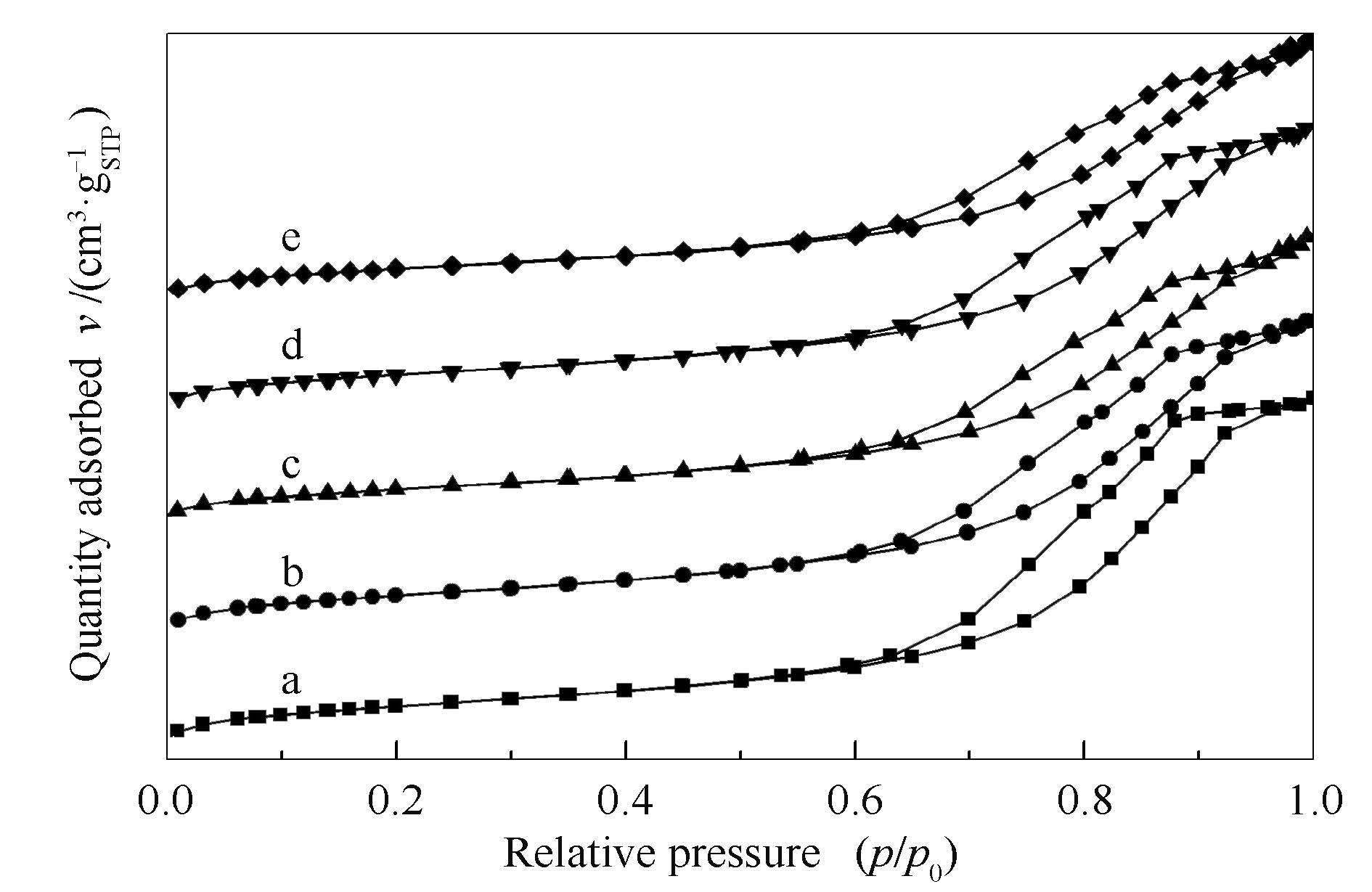
Compared with incipient wetness impregnation reported in the reference[5], where the pore volume of Ag-TiO2-Al2O3 was only half of support Al2O3, the deposition-precipitation method employed here can effectively reduce the blockage of the pore structure (Figure 1 and Table 1).
Figure 1.
N2-physisorption curves of different adsorbents and supports
 Table 1.
Porous parameters of different adsorbents and supports
Table 1.
Porous parameters of different adsorbents and supports
TiO2-SiO2 335.9 0.91 10.8 Ag-TiO2-SiO2 297.2 0.83 11.1 CeOx/TiO2-SiO2 318.0 0.82 10.3 Table 1. Porous parameters of different adsorbents and supportsThe N2-physisorption isotherms of different adsorbents are similar in shape (Figure 1). The obtained porous parameters are shown in Table 1. The differences in the pore structure parameters of the studied adsorbents indicate the decline of specific surface area and pore volume after the introduction of active species. But the decline is slight and the average pore size of the adsorbent does not change significantly. It can be speculated that the active species do not form large clusters which would block the pores, and thus the pore structure of the adsorbent remains well.
2.2 Determination of valence states of various species using XPS
The valence state of titanium and cerium were studied by XPS, as shown in Figure 2 and Figure 3, respectively. The binding energy (BE) of Ti 2p3/2 and Ti 2p1/2 in CeOx/TiO2-SiO2 is 458.9 eV and 464.5 eV, respectively. These are close to the standard BE of TiO2 (458.7 and 464.4 eV) [32], which suggests that the valence state of titanium is Ti4+ and titanium species mainly exist as TiO2. In the Ag-CeOx/TiO2-SiO2, TiO2 is also detected as the main form of titanium species.
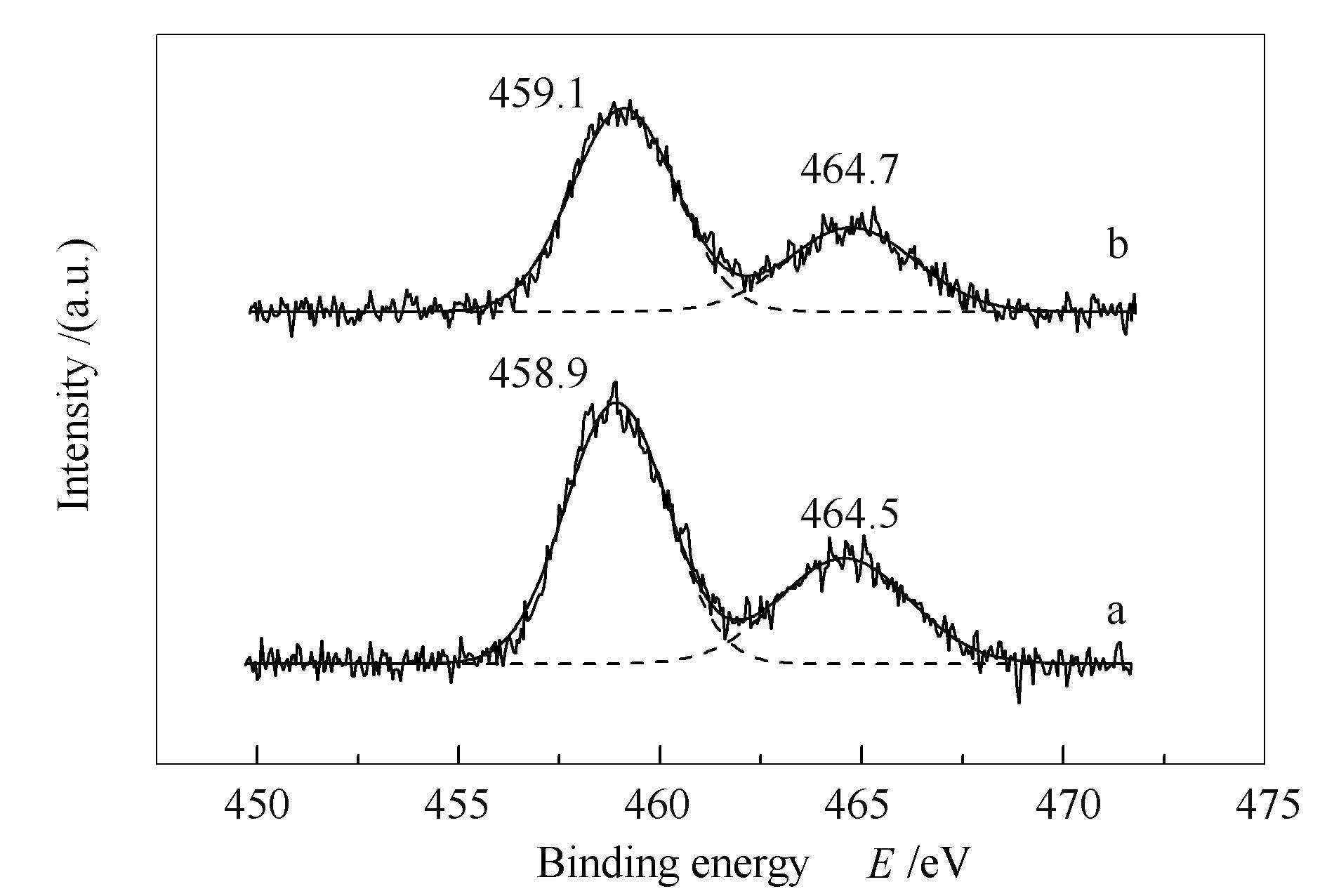 Figure 2.
XPS Ti 2p spectra of CeOx/TiO2-SiO2 and Ag-CeOx/TiO2-SiO2
Figure 2.
XPS Ti 2p spectra of CeOx/TiO2-SiO2 and Ag-CeOx/TiO2-SiO2
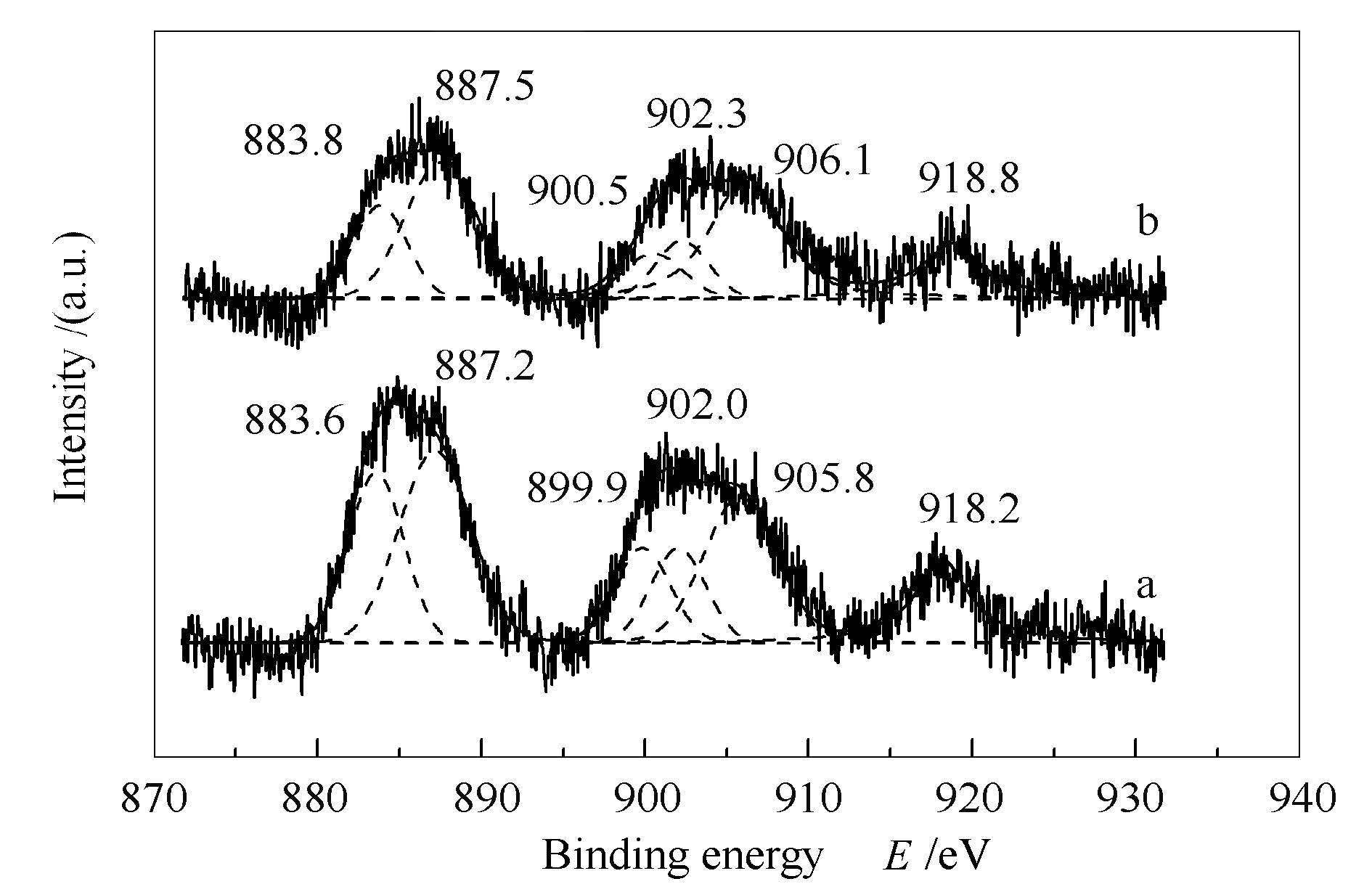 Figure 3.
XPS Ce 3d spectra of CeOx/TiO2-SiO2 and Ag-CeOx/TiO2-SiO2
Figure 3.
XPS Ce 3d spectra of CeOx/TiO2-SiO2 and Ag-CeOx/TiO2-SiO2
Due to the spin-orbit splitting, the spectra of Ce 3dare roughly separated to 3d5/2 and 3d3/2 multiples and exhibits three-lobed envelopes (Figure 3). The standard BE of Ce3+ and Ce4+ are quite distinct, but they will overlap when the two species are present together[33, 34]. As shown in Table 3, v, v2 and v3 (u, u2 and u3) can be attributed to Ce4+, while v0 and v1 (u0 and u1) are due to Ce3+. The changes in the peak area and peak position could be used to distinguish between the Ce3+ and Ce4+ ions[35, 36]. The probe peak u3 (about 918 eV) observed in the XPS Ce 3d spectra of CeOx/TiO2-SiO2 and Ag-CeOx/TiO2-SiO2 (Figure 3) confirms the presence of the CeO2. Both peaks v and v2 shift toward v1, which is the primary peak of Ce3+. This indicate that a certain proportion of Ce species are present in the form of Ce2O3. The area percentages (the results of curves fitting are not shown here for brevity) of u3 peak in the Ce 3d region of CeOx/TiO2-SiO2 (13.2%) and Ag-CeOx/TiO2-SiO2 (13.0%) are both less than 14%, which also suggests the co-existence of Ce2O3[36]. However, the proportion of Ce2O3 is quite small, because the BE shifts are small and the satellite peak v0 is almost invisible. Therefore, the Ce should exist primarily in the form of CeO2 with some oxygen vacancies.
Table 3.
Static equilibrium test results of different adsorbents and supports
TiO2-SiO2 1:30 CN-IV 26.5 32.0 0.31 CeOx/TiO2-SiO2 1:30 CN-IV 25.6 34.4 0.35 Ag-SiO2 1:30 CN-IV 27.6 29.3 0.29 Ag-TiO2-SiO2 1:30 CN-IV 23.1 40.8 0.40 Ag-CeOx/TiO2-SiO2 1:30 CN-IV 19.7 49.5 0.49 Ag-CeOx/TiO2-SiO2 1:20 CN-IV 14.8 62.0 0.41 Ag-CeOx/TiO2-SiO2 1:10 CN-IV 8.1 79.1 0.26 Ag-CeOx/TiO2-SiO2 1:30 CN-III 166.6 43.0 3.16 Ag-CeOx/TiO2-SiO2 1:30 CN-II 738.5 22.4 5.38 a all the desulfurization were processed at 333 K and atmospheric pressure, the adsorbents were mixed with the diesels under mechanical shaking for 48 h, respectively;
b A/F represent adsorbent to diesel fuel ratios; Ce represent the equilibrium concentration; η is the desulphurization efficiencies; CS represent the sulfur adsorption capacityTable 3. Static equilibrium test results of different adsorbents and supportsThe obvious BE shift of Si 2p (Table 2) reveals the strong interaction between Ce, Ti species and SiO2 supports. Meanwhile, it is also found that the loading of Ag species caused the BE shift of SiO2, TiO2 and CeOx by comparing XPS data for CeOx/TiO2-SiO2and Ag-CeOx/TiO2-SiO2 supports. These shifts (ranged in 0.2-0.6 eV) should be the result of interactions between Ag species and the other supports, suggesting a high dispersion of Ag species among CeOx, TiO2 and SiO2. All these results suggest that our method is effective for co-loadings of highly dispersed multicomponents. Furthermore, the BE shift of O 1s (Table 2) shows that the metallic Ag is at least partly oxidized and exists as Ag oxides in the Ag-CeOx/TiO2-SiO2 adsorbent. However, the BE of Ag is not a good way to determine Ag oxidation state in the Ag-CeOx/TiO2-SiO2 due to the insensitive BE and the relatively small amount of Ag[37]. The oxidation state of Ag would be analyzed in following determination.
Table 2.
XPS binding energy of O 1s, Si 2p and Ce 3d peaks
v 882.6 883.6 883.8 v1 885.45 - - v2 888.85 887.2 887.5 v3 898.4 899.9 900.5 Ce 3d3/2a u0 898.9 - - u 901.05 902 902.3 u1 904.05 - - u2 907.45 905.8 906.1 u3 916.7 918.2 918.8 Si 2pb 103.7 102.9 103.0 a: the reference binding energy of the ten Ce 3d peaks were from reference[33];
b: the reference binding energy of O 1s and Si 2p in silica gel were from reference[34]Table 2. XPS binding energy of O 1s, Si 2p and Ce 3d peaks2.3 Determination of crystall stuctures of various species using XRD
XRD patterns are shown in Figure 4. The patterns of TiO2-SiO2 and CeOx/TiO2-SiO2 supports, and Ag-TiO2-SiO2 and Ag-CeOx/TiO2-SiO2 adsorbents do not show any remarkable peaks, except at 2θ of about 25°, implying that the silver, titanium oxide and cerium oxide are in an amorphous and disordered phase or the crystal particles are too small to be detected by XRD. It is also possible that the introduction of TiO2 and CeOx provides more surface defects and enhances the interaction between the active Ag species and the carrier, thus facilitating the dispersion of the active Ag species and even changing the valence state of the active Ag species. Therefore, silver, cerium, titanium should have been evenly dispersed on the supports.
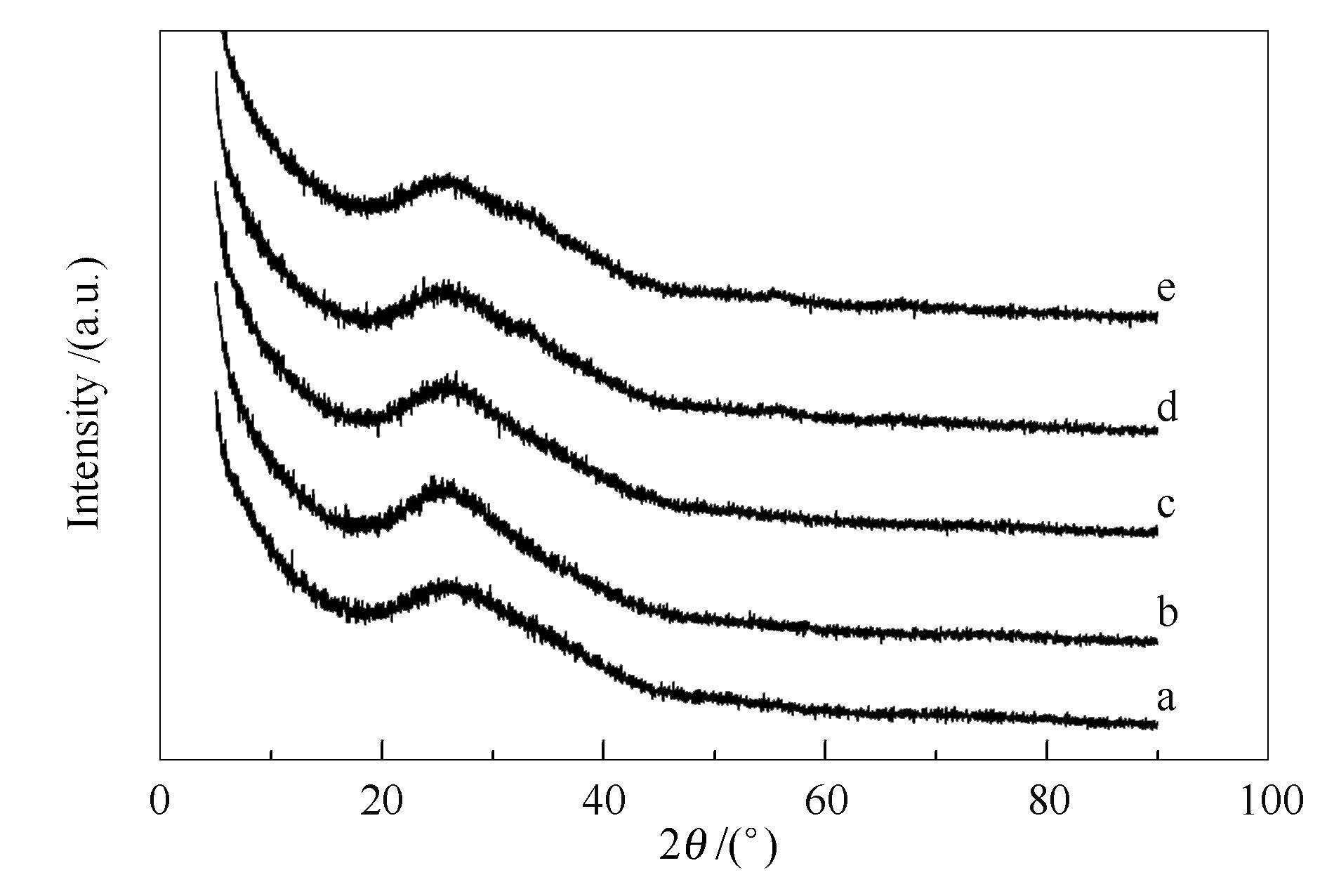 Figure 4.
XRD patterns of different adsorbents
Figure 4.
XRD patterns of different adsorbents
2.4 Determination of Ag state on CeOx/TiO2-SiO2 using TEM
In previous XPS and XRD experiments, it was speculated that at least a part of Ag should be presented as Ag oxides and well dispersed on the CeOx/TiO2-SiO2 supports. TEM study was performed here to further clarify how silver was incorporated in the Ag-TiO2-SiO2 and Ag-CeOx/TiO2-SiO2 as shown in Figure 5 and Figure 6.
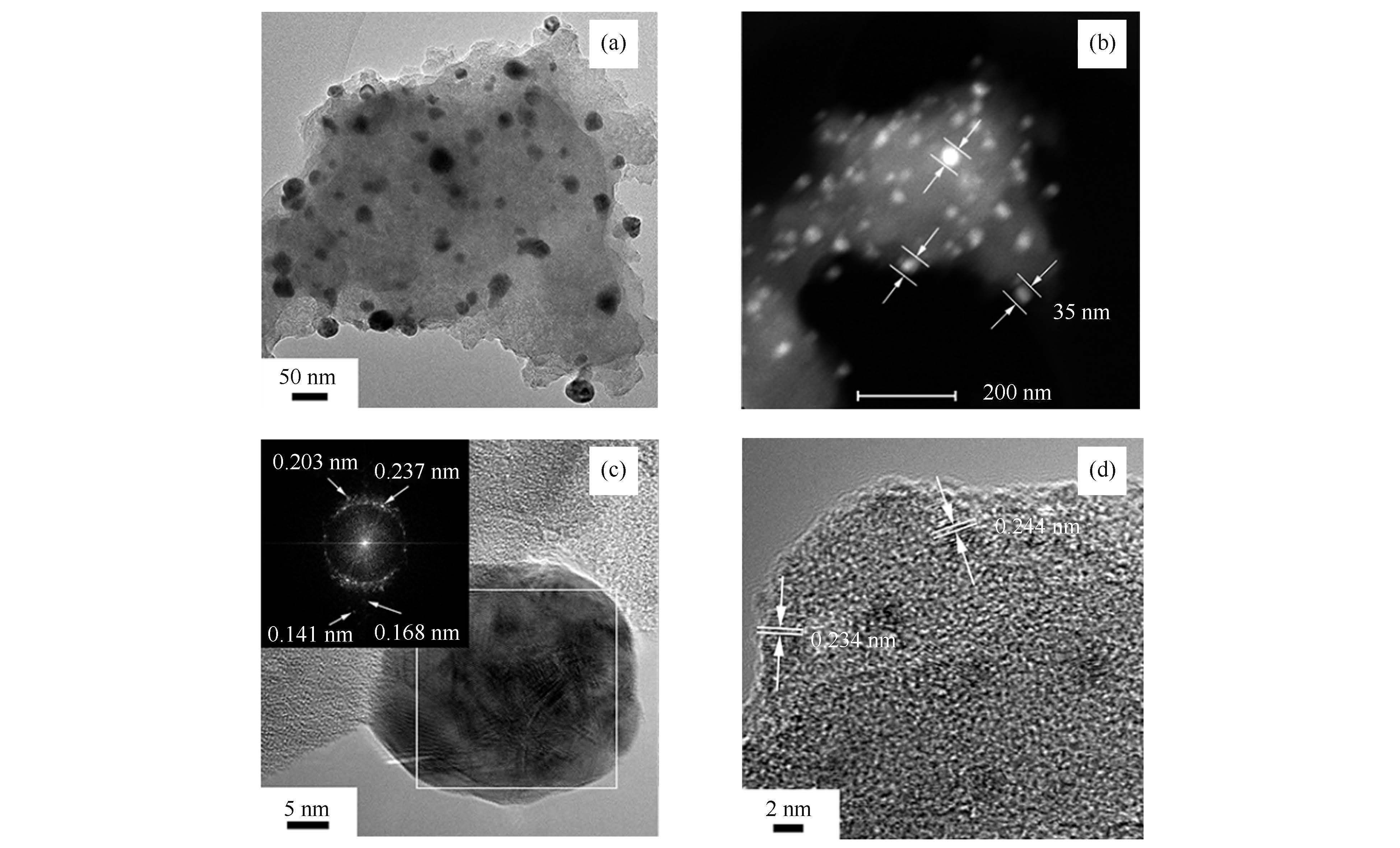 Figure 5.
TEM images of Ag-TiO2-SiO2
Figure 5.
TEM images of Ag-TiO2-SiO2
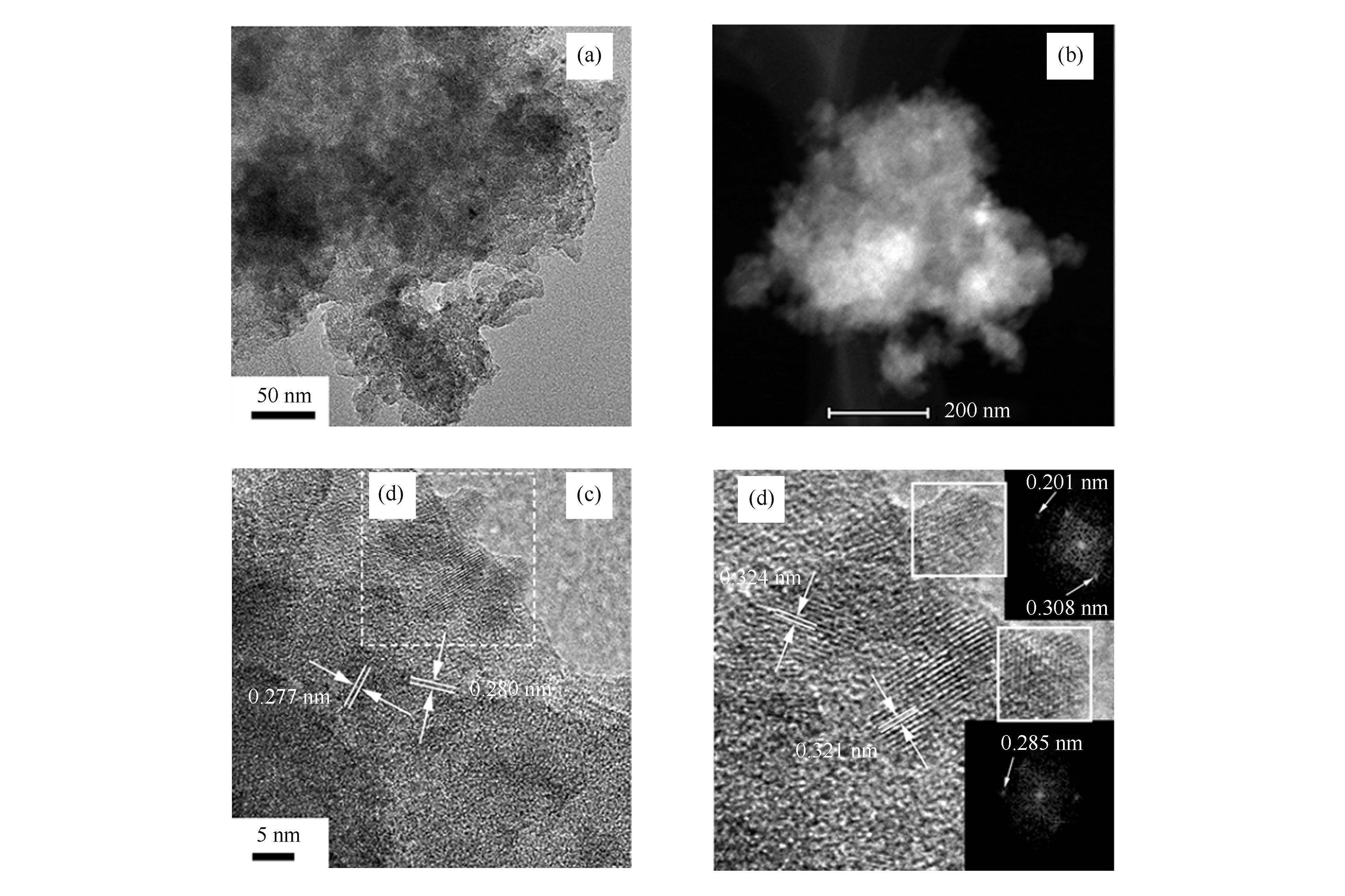 Figure 6.
TEM images of Ag-CeOx/TiO2-SiO2
Figure 6.
TEM images of Ag-CeOx/TiO2-SiO2
Bright field TEM images of Ag-TiO2-SiO2 and Ag-CeOx/TiO2-SiO2 are displayed in Figure 5(a) and Figure 6(a). It is obvious that there are granular clusters dispersed on the surface of Ag-TiO2-SiO2, whereas it is not observed in Figure 6(a), suggesting a high dispersion of Ag component on CeOx/TiO2-SiO2 support.
HAADF-STEM (High-Angle Annular Dark Field-Scanning Transmission Electron microscope) tests are also performed as depicted in Figure 5(b) and Figure 6(b). In Figure 5(b), the Ag particles, which have higher Z compared to the Ti and Si, are imaged as brighter dots. The diameters of these dots are about 35 nm. In contrast, no dot is observed in the images of Ag-CeOx/TiO2-SiO2 (Figure 6(b)). This indicates that Ag is more uniformly dispersed on CeOx modified support as found on the bright field image.
In addition, HRTEM images were recorded to analyze the component of active species. The distance of crystal plane (d, nm) was measured directly or analyzed through Fast Fourier Transform (FFT). In Figure 5(c), the distance of crystal plane of 0.141, 0.203 and 0.237 nm correspond to the crystallographic planes of Ag in metallic state (JCPDS file: 00-004-0783). The d of 0.168 nm might be attributed to Ag2O (JCPDS file: 00-041-1104), which has been detected on the Ag/TiO2 adsorbents in the reference[37]. These reveal that Ag species particles exist mainly in metallic state together with a small amount in the form of oxides (e.g. Ag2O).
The d of 0.234 and 0.244 nm are found to match the crystallographic planes of anatase TiO2 (JCPDS file: 00-021-1272), which is highly dispersed on the surface of the support with a particle size of about 2-5 nm (Figure 5(d)).
Likewise, in Figure 6(c) and Figure 6(d), the d of 0.324 and 0.321 nm are found to be close to the (110) crystallographic planes of rutile TiO2 (JCPDS file: 00-021-1276), the d of 0.201 and 0.308 nm might be attributed to CeOx (JCPDS file of Ce2O3: 00-023-1048, JCPDS file of CeO2: 00-034-0394), and the d of 0.277, 0.280 and 0.285 nm are attributed to Ag2O2 (JCPDS file: 00-051-0945). It is obvious that the crystal structure of TiO2 and CeOx is incomplete and highly distorted, and thus a significant amount of coordinative unsaturated sites are formed. These provides extra sites for the incorporation of Ag species and even changes the valence state of Ag active centers. Ag active centers on CeOx/TiO2-SiO2 are in a state of highly electron-deficient Ag2+, which could enhance the affinity between adsorbents and sulfur compounds via π interaction. Furthermore, the sizes of Ag2O2 are about 5 nm instead of 35 nm, which is the average size of the Ag particles in Ag-TiO2-SiO2. The dispersion of Ag species is significantly improved as compared with Ag-TiO2-SiO2, which could directly improve the adsorptive desulfurization performance.
2.5 Effect of Ce on organosulfur adsorption performance
The static equilibrium tests of the supports and adsorbents were processed at 333 K and atmospheric pressure. The comparison between the capacities of the supports is illustrated in Table 3, which indicates significant improvements of sulfur adsorption capacities of the supports after being modified by titanium oxide and cerium oxide. The improvements in capacity for desulfurization after the loading of Ag species are significantly different among different supports. A following order is found: SiO2 (0.076 mg/g) < TiO2-SiO2 (0.086 mg/g) < CeOx/TiO2-SiO2 (0.149 mg/g).
An excellent improvement of sulfur capacity (about 22.5%) is observed in static equilibrium tests after the Ag-TiO2-SiO2 absorbent is doped with CeOx. The desulfurization rate of CN-IV diesel could reach 49.5% with 1:30 as the ratio of adsorbent Ag-CeOx/TiO2-SiO2 to diesel. Ag-CeOx/TiO2-SiO2 exhibits a more favorable desulfurization performance than Ag-TiO2-Al2O3 which has been considered to be an better effective adsorbent for diesel desulfurization among the reported adsorbent formulations[5]. A certain number of higher ratios of adsorbent to diesel oil are also performed in this study. It is found that the sulfur content could be reduced to 8.1 mg/kg (less than 10 mg/kg of the CN-V standard) as the ratio was 1:10 g/mL. On the other hand, the CN-II diesel and CN-III diesel, which have higher sulfur content, are also treated with Ag-CeOx/TiO2-SiO2. The sulfur capacity is found to reach 5.38 mgS/g, when 1 g Ag-CeOx/TiO2-SiO2 is mixed with 30 mL CN-II diesel under mechanical shaking.
Adsorption rate curves of Ag-TiO2-SiO2 and Ag-CeOx/TiO2-SiO2 are also recorded in batch desulfurization tests at 333 K under vigorous stirring. The changes of relative sulfur concentration (C/C0) over time are depicted in Figure 7. It is obvious that Ag-CeOx/TiO2-SiO2 exhibits a more favorable desulfurization performance than Ag-TiO2-SiO2. As shown in Figure 7, total sulfur content of CN-IV diesel fuel decreases as the time extends. The rate is rather high at the initial stages of the contact period, and then decreased in the rest of time. This phenomenon is due to the fact that a large number of vacant adsorptive sites are available for adsorption during the initial stage, and the remaining vacant adsorptive sites are difficult to be occupied due to competitive adsorption of polycyclic aromatic hydrocarbons through π-interaction and the slow internal diffusion.
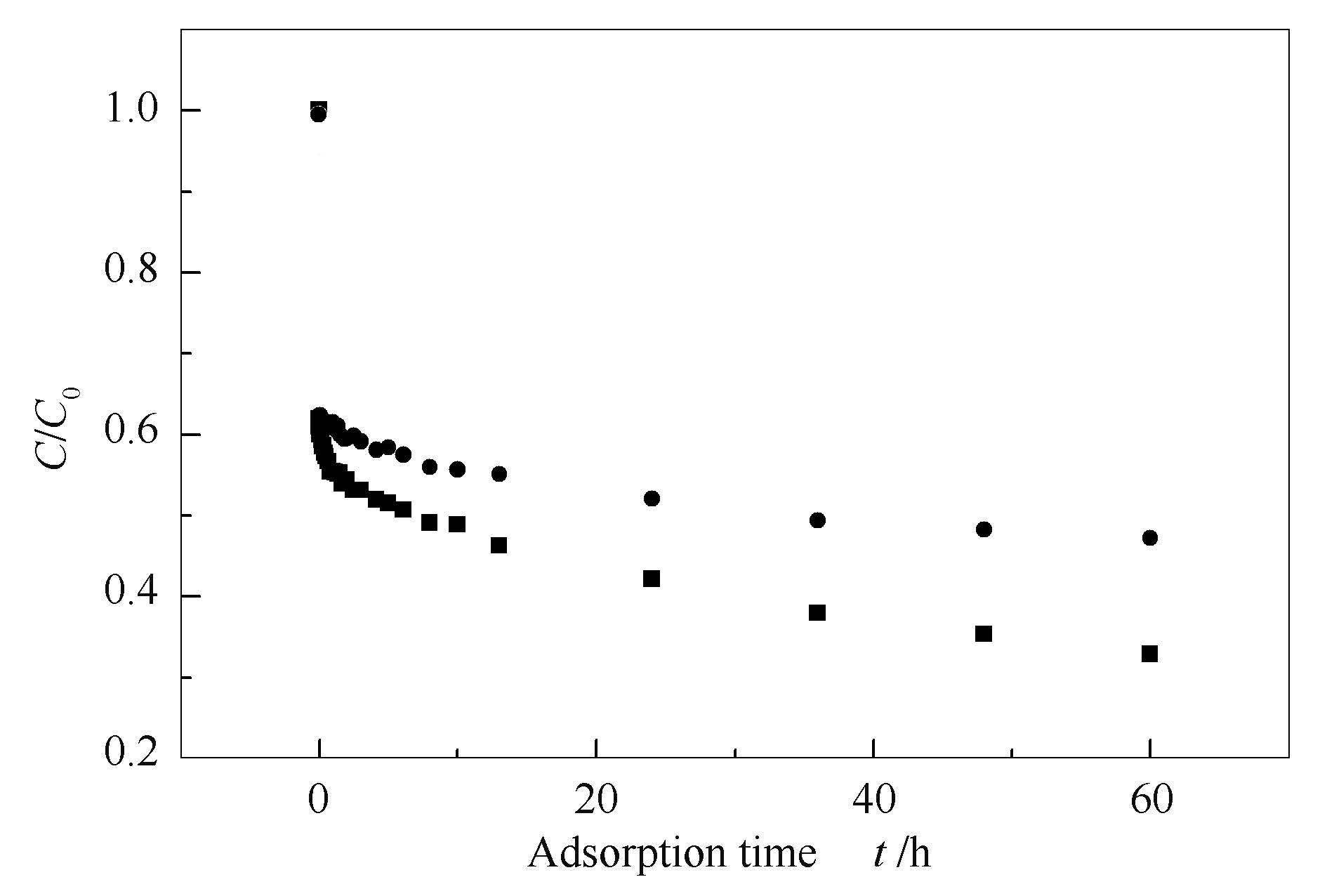 Figure 7.
Relative sulfur concentration (C/C0) varies with adsorption time 3 g adsorbent was mixed with 90 mL CN-IV diesel fuel in a flask at 333 K and atmospheric pressure under vigorous stirring
Figure 7.
Relative sulfur concentration (C/C0) varies with adsorption time 3 g adsorbent was mixed with 90 mL CN-IV diesel fuel in a flask at 333 K and atmospheric pressure under vigorous stirring
When the adsorption time is 48 h, the desulfurization efficiencies of Ag-TiO2-SiO2 and Ag-CeOx/TiO2-SiO2 are about 51.8% and 64.6%, which are quite higher than that obtained in the static equilibrium test (40.8% and 49.5%). This is due to the fact that vigorous stirring, which was employed in the static equilibrium test, is more favorable than that of shaking. The effect of initial concentration (Table 3) also reveals that the mass transfer driving force becomes larger when the initial concentration increases, and thus resulting in higher sulfur adsorption capacity. All these illustrate that the mass diffusion, including external diffusion and internal diffusion, would have a serious impact on the desulfurization efficiency of Ag-CeOx/TiO2-SiO2. It will take further work to tap the desulfurization potential of Ag-CeOx/TiO2-SiO2.
On the other hand, the effect of CeOx doping in supporter was also examined in dynamic breakthrough tests. The breakthrough characteristics of the adsorbents with CN-IV are illustrated in Figure 8. It is obvious that the curve of Ag-TiO2-SiO2 breaks more early and rapidly than that of Ag-CeOx/TiO2-SiO2. Additionally, the variation of LHSV in the range of 0.3-0.9 h-1 shows some slight effect on desulfurization performance (Figure 8). It shows higher performance under a lower LHSV. The breakthrough curves of Ag-CeOx/TiO2-SiO2 with a LHSV of 0.3 h-1 showed in the inset graph in Figure 8 indicate that the trend toward saturation is quite slow, which is associated with the too slow mass diffusion rate of sulfur compounds or the competitive adsorption of polycyclic aromatic hydrocarbons. When the elution volume reaches 200 mL/g adsorbent, the relative sulfur concentration (C/C0) is 0.83 and the sulfur capacity of adsorbent is found to be up to 2.0 mg/g.
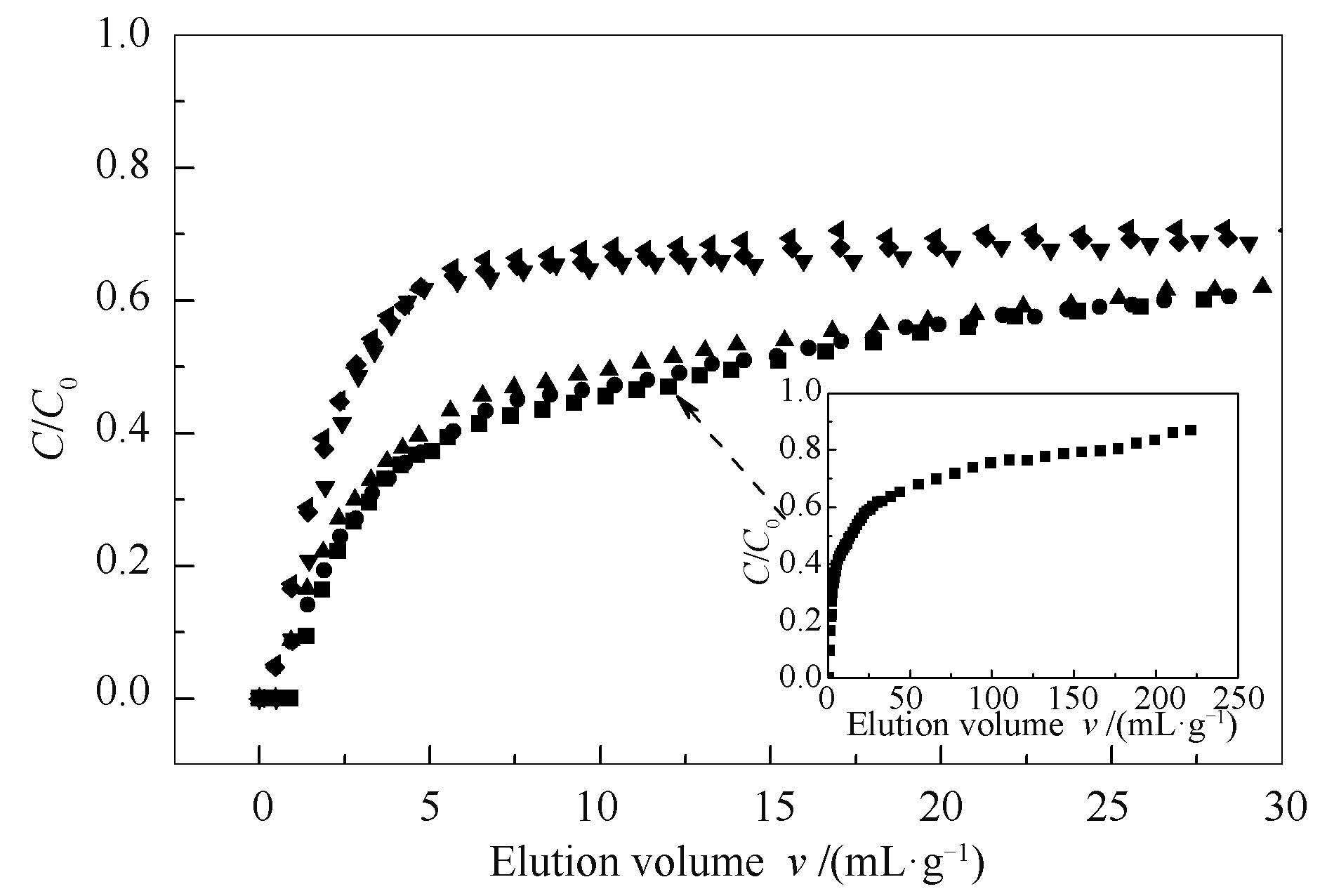 Figure 8.
Breakthrough curves of adsorbents obtained with CN-IV diesel at 298 K, atmospheric pressure and different LHSV
Figure 8.
Breakthrough curves of adsorbents obtained with CN-IV diesel at 298 K, atmospheric pressure and different LHSV
To further investigate the adsorption performance of Ag-CeOx/TiO2-SiO2, adsorptive selectivity and regenerability of Ag-CeOx/TiO2-SiO2 are also studied. The selectivity of adsorbents is revealed by contrasting the adsorption rate curves of CN-IV diesel and model diesel as shown in Figure 9. It is found that the competitive adsorption components, including polycyclic aromatic hydrocarbon, trace amounts of organonitrogen, fuel additives and moisture in commercial diesel have an impact on adsorption rate, but have no significant effect on equilibrium adsorption value. Ag-CeOx/TiO2-SiO2 has a good adsorptive selectivity property for sulphur compounds. The results of the regeneration experiment (Figure 10) indicate that Ag-CeOx/TiO2-SiO2 also has a favorable regenerability.
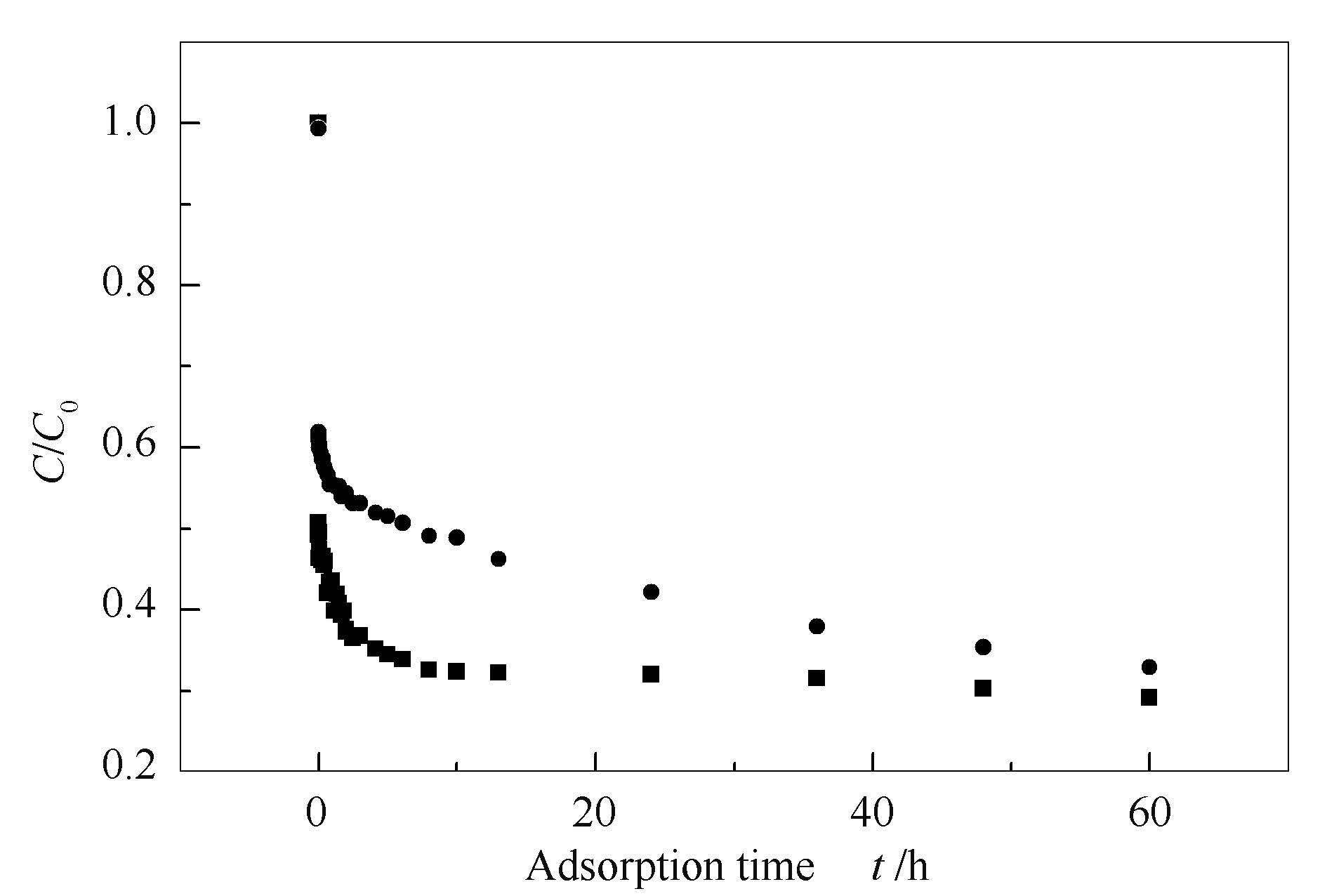 Figure 9.
Contrasting the adsorption rate curves of CN-IV diesel and model diesel 3 g Ag-CeOx/TiO2-SiO2 was mixed with 90 mL diesel fuel in a flask at 333 K and atmospheric pressure under vigorous stirring
Figure 9.
Contrasting the adsorption rate curves of CN-IV diesel and model diesel 3 g Ag-CeOx/TiO2-SiO2 was mixed with 90 mL diesel fuel in a flask at 333 K and atmospheric pressure under vigorous stirring
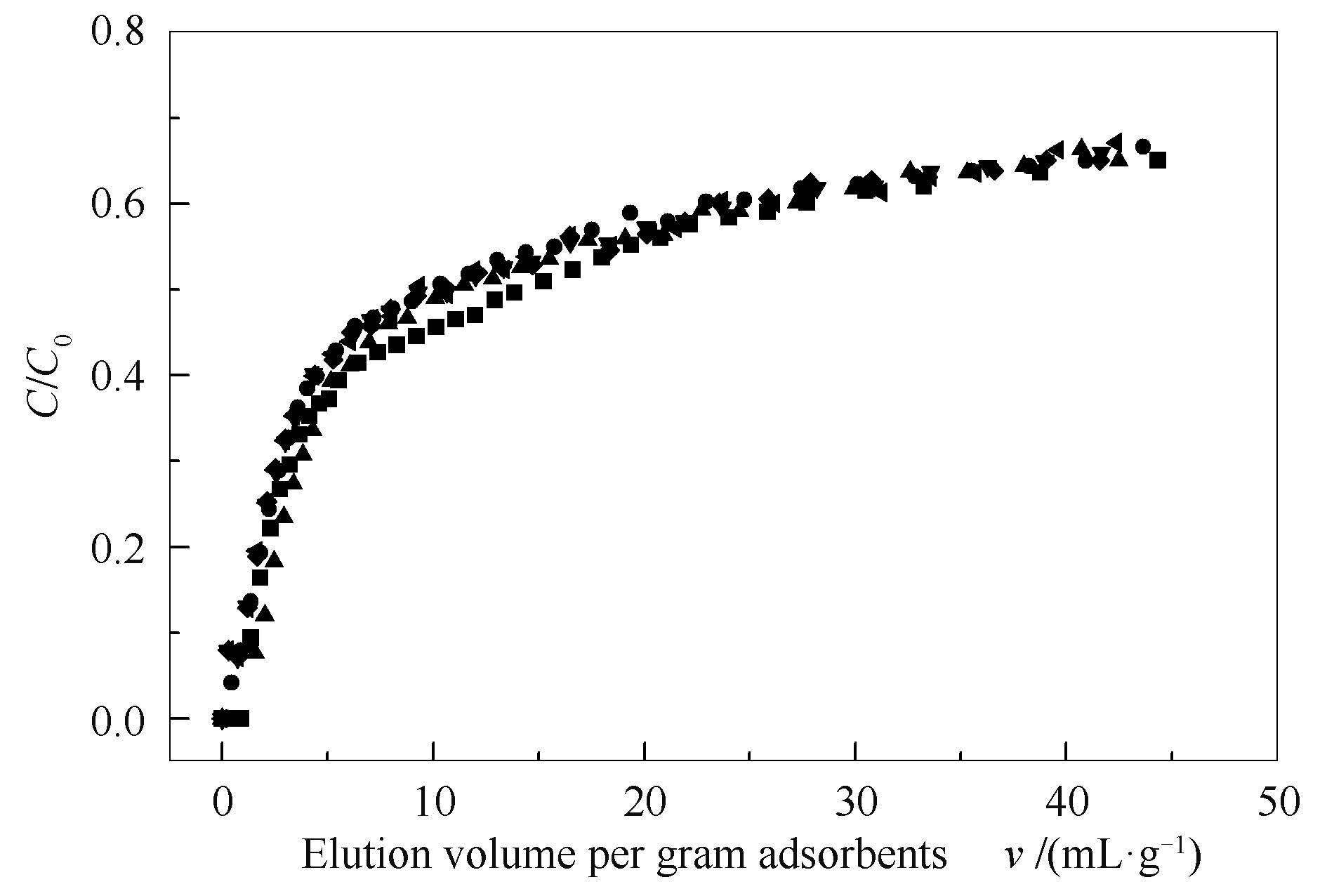 Figure 10.
Regeneration experiment of Ag-CeOx/TiO2-SiO2 obtained with CN-IV diesel at 298 K, atmospheric pressure and 0.3 h-1 of LHSV
Figure 10.
Regeneration experiment of Ag-CeOx/TiO2-SiO2 obtained with CN-IV diesel at 298 K, atmospheric pressure and 0.3 h-1 of LHSV
Taken together, all the adsorption performance tests indicate that doping CeOx in the TiO2-SiO2 supporter could improve the desulfurization performance of Ag-based adsorbent effectively and dramatically. Ag-CeOx/TiO2-SiO2 is considered to be one of efficient and potential adsorbents for desulfurization of diesel fuel.
2.6 Effect of Ce on Ag-based adsorbent
Based on the characteristics of the adsorbents, no peak corresponding to Ce species and Ti species could be observed in the XRD patterns (Figure 4). The pore structure of adsorbents remains well during the co-impregnation. Additionally, the sizes of Ce species and Ti species with a particle size about 2-5 nm are observed in the TEM images (Figure 5 and Figure 6). All these indicate that Ce species and Ti species are adequately dispersed on the supports and suggest that our method is effective for co-loadings of highly dispersed multi-components.
The doped Ce species are demonstrated to be existed as CeO2 containing a certain amount of Ce2O3 through the XPS spectra of Ce 3d (Figure 3). The Ti species is detected as rutile TiO2 on Ag-CeOx/TiO2-SiO2. It is different from anatase TiO2 detected on Ag-TiO2-SiO2. The doping of CeOx might promote the phase transition from anatase TiO2 to rutile TiO2. Furthermore, the interaction between the doped CeOx and TiO2 on the surface of SiO2 would form a surface containing a large number of defect sites (as reflected in Figure 6), which could provide extra sites for sulfur compound adsorption directly. Thus, the sulfur capacity per unit surface area of TiO2-SiO2 and CeOx/TiO2-SiO2is 9.2 mg/cm2 and 11.0 mg/cm2, respectively.
Furthermore, the increase of defect sites also leads to the increase of active sites for the Ag loading and enhances the interaction between Ag species and supports, thus promoting the dispersion of Ag species. The binding energy shifts of Si 2p, Ti 2d and Ce 3d after the Ag loading also support this point (Figure 4 and Figure 5).
Moreover, the reversible CeO2 and Ce2O3 reduction transition might also facilitate the oxidation of metallic Ag to form Ag oxides, which would further enhance the affinity between the Ag active centers and sulfur compounds via π-interactions. Thus, the improvement due to Ag species loading on CeOx/TiO2-SiO2 (0.149 mg/g) is significantly higher than that on TiO2-SiO2 (0.086 mg/g). Ag-CeOx/TiO2-SiO2 exhibits a more favorable desulfurization performance compared with Ag-TiO2-SiO2.
3 Conclusions
CeOx was doped in the TiO2-SiO2 supporter of Ag-based desulfurization adsorbent for Chinese standard diesel fuel by a novel co-impregnation method. Ce species and Ti species were observed to be adequately dispersed on the supports, and the pore structure of adsorbents maintained well. The experimental results demonstrated that Ce species existed as CeO2 which contained a certain amount of oxygen vacancies. The introduction of CeOx could promote the phase transition from anatase TiO2 to rutile TiO2.The interaction between the doped CeOx and TiO2 on the supports could not only provide extra sites for sulfur adsorption, but also offer extra sites for incorporation of Ag species. The doping of CeOx could dramatically facilitate the dispersion of Ag species and change the valence state of Ag species. Ag species supported on CeOx/TiO2-SiO2 were detected as silver (II) oxides with a particle size of about 5 nm instead of 35 nm, the size of the metallic silver particles. The adequately dispersed Ag active centers in highly electron-deficient state enhanced the affinity between adsorbents and sulfur compounds via π-interactions. The doping of Ce enhanced the desulfurization performances of Ag-TiO2-SiO2 adsorbents for CN standard diesel fuels dramatically in static equilibrium test. Ag-CexO/TiO2-SiO2 can reduce the sulfur content of CN-IV diesel fuel from 39.0 mg/kg initially down to less than 10 mg/kg in the static equilibrium test. The equilibrium sulfur capacity also reached 5.38 mg/g for CN-II (952.9 mg/kg initially). Compared with Ag-TiO2-SiO2, Ag-CeOx/TiO2-SiO2 was proved to be a more efficient adsorbent in both adsorption curve tests and dynamic breakthrough tests. The desulfurization efficiency of Ag-CeOx/TiO2-SiO2 was constrained by mass diffusion. All these findings demonstrated that the adsorptive desulfurization presented in this study should be a promising adsorbent for deep desulfurization of CN-IV diesel to meet CN-V mandatory request for sulfur component.
-
-
[1]
WU L, XIAO J, WU Y, XIAN S, MIAO G, WANG H, LI Z. A combined experimental/computational study on the adsorption of organosulfur compounds over metal-organic frameworks from fuels[J]. Langmuir, 2014, 30(4): 1080-1088. doi: 10.1021/la404540j
-
[2]
PALOMINO J M, TRAN D T, HAUSER J L, DONG H, OLIVER S R. Mesoporous silica nanoparticles for high capacity adsorptive desulfurization[J]. J Mater Chem, 2014, 2(36): 14890-14895. doi: 10.1039/C4TA02570A
-
[3]
XU X, ZHANG S, LI P, SHEN Y. Adsorptive desulfurization of liquid Jet-A fuel at ambient conditions with an improved adsorbent for on-board fuel treatment for SOFC applications[J]. Fuel Process Technol, 2014, 124: 140-146. doi: 10.1016/j.fuproc.2014.03.001
-
[4]
XIAO J, WANG X, CHEN Y, FUJⅡ M, SONG C. Ultra-deep adsorptive desulfurization of light-irradiated diesel fuel over supported TiO2-CeO2 adsorbents[J]. Ind Eng Chem Res, 2013, 52(45): 15746-15755. doi: 10.1021/ie402724q
-
[5]
HUSSAIN A S, TATARCHUK B J. Adsorptive desulfurization of jet and diesel fuels using Ag/TiOx-Al2O3 and Ag/TiOx-SiO2 adsorbents[J]. Fuel, 2013, 107: 465-473. doi: 10.1016/j.fuel.2012.11.030
-
[6]
QIN Y, MO Z, YU W, DONG S, DUAN L, GAO X, SONG L. Adsorption behaviors of thiophene, benzene, and cyclohexene on FAU zeolites:Comparison of CeY obtained by liquid-, and solid-state ion exchange[J]. Appl Surf Sci, 2014, 292: 5-15. doi: 10.1016/j.apsusc.2013.11.036
-
[7]
KHAN N A, HASAN Z, JHUNG S H. Ionic liquids supported on metal-organic frameworks:Remarkable adsorbents for adsorptive desulfurization[J]. Chem Eur J, 2014, 20(2): 376-380. doi: 10.1002/chem.v20.2
-
[8]
HUSSAIN A S, TATARCHUK B J. Mechanism of hydrocarbon fuel desulfurization using Ag/TiO2-Al2O3 adsorbent[J]. Fuel Process Technol, 2014, 126: 233-242. doi: 10.1016/j.fuproc.2014.05.006
-
[9]
HUSSAIN A S, MCKEE M L, HEINZEL J M, SUN X, TATARCHUK B J. Density functional theory study of organosulfur selective adsorption on Ag-TiO2 adsorbents[J]. J Phys Chem C, 2014, 118(27): 14938-14947. doi: 10.1021/jp503097y
-
[10]
LIU B, ZHU Y, LIU S, MAO J. Adsorption equilibrium of thiophenic sulfur compounds on the Cu-BTC metal-organic framework[J]. J Chem Eng Data, 2012, 57(4): 1326-1330. doi: 10.1021/je300130s
-
[11]
YANG R T, HERNANDEZ-MALDONADO A J, YANG F H. Desulfurization of transportation fuels with zeolites under ambient conditions[J]. Science, 2003, 301(5629): 79-81. doi: 10.1126/science.1085088
-
[12]
HE G, SUN L, SONG X, LIU X, YIN Y, WANG Y. Adjusting host properties to promote cuprous chloride dispersion and adsorptive desulfurization sites formation on SBA-15[J]. Energy Fuels, 2011, 25(8): 3506-3513. doi: 10.1021/ef200723m
-
[13]
XU X, ZHANG S, LI P, SHEN Y. Equilibrium and kinetics of Jet-A fuel desulfurization by selective adsorption at room temperatures[J]. Fuel, 2013, 111: 172-179. doi: 10.1016/j.fuel.2013.04.068
-
[14]
MA X, SPRAGUE M, SONG C. Deep desulfurization of gasoline by selective adsorption over nickel-based adsorbent for fuel cell applications[J]. Ind Eng Chem Res, 2005, 44(15): 5768-5775. doi: 10.1021/ie0492810
-
[15]
VELU S, MA X, SONG C, NAMAZIAN M, SETHURAMAN S, VENKATARAMAN G. Desulfurization of JP-8 jet fuel by selective adsorption over a Ni-based adsorbent for micro solid oxide fuel cells[J]. Energy Fuels, 2005, 19(3): 1116-1125. doi: 10.1021/ef049800b
-
[16]
SHEN Y, XU X, LI P. A novel potential adsorbent for ultra deep desulfurization of jet fuels at room temperature[J]. RSC Adv, 2012, 2(15): 6155-6160. doi: 10.1039/c2ra20224g
-
[17]
TRIANTAFYLLIDIS K S, DELIYANNI E A. Desulfurization of diesel fuels:Adsorption of 4, 6-DMDBT on different origin and surface chemistry nanoporous activated carbons[J]. Chem Eng J, 2014, 236: 406-414. doi: 10.1016/j.cej.2013.09.099
-
[18]
WANG L, YANG R T, SUN C L. Graphene and other carbon sorbents for selective adsorption of thiophene from liquid fuel[J]. AlChE J, 2013, 59(1): 29-32. doi: 10.1002/aic.v59.1
-
[19]
BALTZOPOULOU P, KALLIS K X, KARAGIANNAKIS G, KONSTANDOPOULOS A G. Diesel fuel desulfurization via adsorption with the aid of activated carbon:Laboratory-and pilot-scale studies[J]. Energy Fuels, 2015, 29(9): 5640-5648. doi: 10.1021/acs.energyfuels.5b01133
-
[20]
XU X, ZHANG S, LI P, SHEN Y. Desulfurization of Jet-A fuel in a fixed-bed reactor at room temperature and ambient pressure using a novel selective adsorbent[J]. Fuel, 2014, 117: 499-508. doi: 10.1016/j.fuel.2013.09.074
-
[21]
GUO J, JANIK M J, SONG C. Density functional theory study on the role of ceria addition in TixCe1-xO2 adsorbents for thiophene adsorption[J]. J Phys Chem C, 2012, 116(5): 3457-3466. doi: 10.1021/jp2063996
-
[22]
TIAN F, SHEN Q, FU Z, WU Y, JIA C. Enhanced adsorption desulfurization performance over hierarchically structured zeolite Y[J]. Fuel Process Technol, 2014, 128: 176-182. doi: 10.1016/j.fuproc.2014.07.018
-
[23]
WANG Y, YANG R T, HEINZEL J M. Desulfurization of jet fuel byπ-complexation adsorption with metal halides supported on MCM-41 and SBA-15 mesoporous materials[J]. Chem Eng Sci, 2008, 63(2): 356-365. doi: 10.1016/j.ces.2007.09.002
-
[24]
HERNANDEZ-MALDONADO A J, YANG R T. Desulfurization of commercial liquid fuels by selective adsorption viaπ-complexation with Cu (I)-Y zeolite[J]. Ind Eng Chem Res, 2003, 42(13): 3103-3110. doi: 10.1021/ie0301132
-
[25]
PERALTA D, CHAPLAIS G, SIMON-MASSERON A, BARTHELET K, PIRNGRUBER G D. Metal-organic framework materials for desulfurization by adsorption[J]. Energy Fuels, 2012, 26(8): 4953-4960. doi: 10.1021/ef300762z
-
[26]
LIU X, WANG J, LI Q, JIANG S, ZHANG T, JI S. Synthesis of rare earth metal-organic frameworks (Ln-MOFs) and their properties of adsorption desulfurization[J]. J Rare Earths, 2014, 32(2): 189-194. doi: 10.1016/S1002-0721(14)60050-8
-
[27]
NAIR S, TATARCHUK B J. Supported silver adsorbents for selective removal of sulfur species from hydrocarbon fuels[J]. Fuel, 2010, 89(11): 3218-3225. doi: 10.1016/j.fuel.2010.05.006
-
[28]
WATANABE S, MA X, SONG C. Characterization of structural and surface properties of nanocrystalline TiO2-CeO2 mixed oxides by XRD, XPS, TPR, and TPD[J]. J Phys Chem C, 2009, 113(32): 14249-14257. doi: 10.1021/jp8110309
-
[29]
SCIRE S, MINICO S, CRISAFULLI C, SATRIANO C, PISTONE A. Catalytic combustion of volatile organic compounds on gold/cerium oxide catalysts[J]. Appl Catal B:Environ, 2003, 40(1): 43-49. doi: 10.1016/S0926-3373(02)00127-3
-
[30]
ZHANG Y, ANDERSSON S, MUHAMMED M. Nanophase catalytic oxides:I. Synthesis of doped cerium oxides as oxygen storage promoters[J]. Appl Catal B:Environ, 1995, 6(4): 325-337. doi: 10.1016/0926-3373(95)00041-0
-
[31]
XIAO J, WANG X, FUJⅡ M, YANG Q, SONG C. A novel approach for ultra-deep adsorptive desulfurization of diesel fuel over TiO2-CeO2/MCM-48 under ambient conditions[J]. AlChE J, 2013, 59(5): 1441-1445. doi: 10.1002/aic.14085
-
[32]
GONBEAU D, GUIMON C, PFISTER-GUILLOUZO G, LEVASSEUR A, MEUNIER G, DORMOY R. XPS study of thin films of titanium oxysulfides[J]. Surf Sci, 1991, 254(1): 81-89.
-
[33]
ROMEO M, BAK K, FALLAH J E, NORMAND F L, HILAIRE L. XPS study of the reduction of cerium dioxide[J]. Surf Interface Anal, 1993, 20(6): 508-512. doi: 10.1002/(ISSN)1096-9918
-
[34]
GROSS T, RAMM M, SONNTAG H, UNGER W, WEIJERS H M, ADEM E H. An XPS analysis of different SiO2 modifications employing a C 1s as well as an Au 4f7/2 static charge reference[J]. Surf Interface Anal, 1992, 18(1): 59-64. doi: 10.1002/(ISSN)1096-9918
-
[35]
NAGPURE I, PITALE S S, TSHABALALA K, KUMAR V, NTWAEABORWA O, TERBLANS J, SWART H. Luminescence response and CL degradation of combustion synthesized spherical SiO2:Ce nanophosphor[J]. Mater Res Bull, 2011, 46(12): 2359-2366. doi: 10.1016/j.materresbull.2011.08.051
-
[36]
LARACHI F, PIERRE J, ADNOT A, BERNIS A. Ce 3d XPS study of composite CexMn1-xO2-y wet oxidation catalysts[J]. Appl Surf Sci, 2002, 195(1): 236-250.
-
[37]
SAMOKHVALOV A, NAIR S, DUIN E C, TATARCHUK B J. Surface characterization of Ag/titania adsorbents[J]. Appl Surf Sci, 2010, 256(11): 3647-3652. doi: 10.1016/j.apsusc.2010.01.002
-
[1]
-

Figure 1 N2-physisorption curves of different adsorbents and supports
a: SiO2; b: TiO2-SiO2; c: Ag-TiO2-SiO2; d: CeOx/TiO2-SiO2; e: Ag-CeOx/TiO2-SiO2

Figure 2 XPS Ti 2p spectra of CeOx/TiO2-SiO2 and Ag-CeOx/TiO2-SiO2
a: CeOx/TiO2-SiO2; b: Ag-CeOx/TiO2-SiO2

Figure 3 XPS Ce 3d spectra of CeOx/TiO2-SiO2 and Ag-CeOx/TiO2-SiO2
a: CeOx/TiO2-SiO2; b: Ag-CeOx/TiO2-SiO2

Figure 4 XRD patterns of different adsorbents
a: SiO2; b: TiO2-SiO2; c: Ag-TiO2-SiO2; d: CeOx/TiO2-SiO2; e: Ag-CeOx/TiO2-SiO2

Figure 5 TEM images of Ag-TiO2-SiO2
(a): bright field image; (b): HADDF-STEM image; (c), (d): HRTEM image

Figure 6 TEM images of Ag-CeOx/TiO2-SiO2
(a): BF image; (b): HADDF-STEM image; (c), (d): HRTEM image; (d) is the enlargement of the part enclosed by dotted lines in (c)

Figure 7 Relative sulfur concentration (C/C0) varies with adsorption time 3 g adsorbent was mixed with 90 mL CN-IV diesel fuel in a flask at 333 K and atmospheric pressure under vigorous stirring
●: Ag-TiO2-SiO2; ■: Ag-CeOx/TiO2-SiO2

Figure 8 Breakthrough curves of adsorbents obtained with CN-IV diesel at 298 K, atmospheric pressure and different LHSV
■: Ag-CeOx/TiO2-SiO2 LHSV=0.3 h-1;
●: Ag-CeOx/TiO2-SiO2 LHSV=0.6 h-1;
▲: Ag-CeOx/TiO2-SiO2 LHSV=0.9 h-1;
▼: Ag-TiO2-SiO2 LHSV=0.3 h-1;
◆: Ag-TiO2-SiO2 LHSV=0.6 h-1;
◀: Ag-TiO2-SiO2 LHSV=0.9 h-1
Figure 9 Contrasting the adsorption rate curves of CN-IV diesel and model diesel 3 g Ag-CeOx/TiO2-SiO2 was mixed with 90 mL diesel fuel in a flask at 333 K and atmospheric pressure under vigorous stirring
●: CN-IV diesel; ■: model diesel

Figure 10 Regeneration experiment of Ag-CeOx/TiO2-SiO2 obtained with CN-IV diesel at 298 K, atmospheric pressure and 0.3 h-1 of LHSV
■: fresh;
●: 1st recycling;
▲: 2nd recycling;
▼: 3rd recycling;
◆: 4th recycling;
◀: 5th recyclingTable 1. Porous parameters of different adsorbents and supports
TiO2-SiO2 335.9 0.91 10.8 Ag-TiO2-SiO2 297.2 0.83 11.1 CeOx/TiO2-SiO2 318.0 0.82 10.3  下载: 导出CSV
Table 3. Static equilibrium test results of different adsorbents and supports
TiO2-SiO2 1:30 CN-IV 26.5 32.0 0.31 CeOx/TiO2-SiO2 1:30 CN-IV 25.6 34.4 0.35 Ag-SiO2 1:30 CN-IV 27.6 29.3 0.29 Ag-TiO2-SiO2 1:30 CN-IV 23.1 40.8 0.40 Ag-CeOx/TiO2-SiO2 1:30 CN-IV 19.7 49.5 0.49 Ag-CeOx/TiO2-SiO2 1:20 CN-IV 14.8 62.0 0.41 Ag-CeOx/TiO2-SiO2 1:10 CN-IV 8.1 79.1 0.26 Ag-CeOx/TiO2-SiO2 1:30 CN-III 166.6 43.0 3.16 Ag-CeOx/TiO2-SiO2 1:30 CN-II 738.5 22.4 5.38 a all the desulfurization were processed at 333 K and atmospheric pressure, the adsorbents were mixed with the diesels under mechanical shaking for 48 h, respectively;
b A/F represent adsorbent to diesel fuel ratios; Ce represent the equilibrium concentration; η is the desulphurization efficiencies; CS represent the sulfur adsorption capacity
下载: 导出CSV
Table 2. XPS binding energy of O 1s, Si 2p and Ce 3d peaks
v 882.6 883.6 883.8 v1 885.45 - - v2 888.85 887.2 887.5 v3 898.4 899.9 900.5 Ce 3d3/2a u0 898.9 - - u 901.05 902 902.3 u1 904.05 - - u2 907.45 905.8 906.1 u3 916.7 918.2 918.8 Si 2pb 103.7 102.9 103.0 a: the reference binding energy of the ten Ce 3d peaks were from reference[33];
b: the reference binding energy of O 1s and Si 2p in silica gel were from reference[34]
下载: 导出CSV
-


 扫一扫看文章
计量
- PDF下载量: 0
- 文章访问数: 0
- HTML全文浏览量: 0
 下载:
下载:

