

 Figure 1.
Catalytic activity of copper silica aerogel in methanol steam reforming.
Citation:
Taher Yousefi Amiri, Jafarsadegh Moghaddas. Reaction parameters influence on the catalytic performance of copper-silica aerogel in the methanol steam reforming[J]. Journal of Fuel Chemistry and Technology,
2016, 44(1): 84-90.

Reaction parameters influence on the catalytic performance of copper-silica aerogel in the methanol steam reforming
English
Reaction parameters influence on the catalytic performance of copper-silica aerogel in the methanol steam reforming
Abstract:
Steam reforming of methanol was carried out on the copper-silica aerogel catalyst. The effects of reaction temperature, feed rate, water to methanol molar ratio and carrier gas flow rate on the H2 production rate and CO selectivity were investigated. Methanol conversion was increased considerably in the range of about 240-300, after which it increased at a slightly lower rate. The used feed flow rate, steam to methanol molar ratio and carrier gas flow were 1.2-9.0 mL/h, 1.2-5.0 and 20-80 mL/min, respectively. Reducing the feed flow rate increased the H2 production rate. It was found that an increase in the water to methanol ratio and decreasing the carrier gas flow rate slightly increases the H2 production rate. Increasing the water to methanol ratio causes the lowest temperature in which CO formation was observed to rise, so that for the ratio of 5.0 no CO formation was detected in temperatures lower than 375 ℃. In all conditions, by approaching the complete conversion, increasing the main product concentration, increasing the temperature and contact time, and decreasing the steam to methanol ratio, the CO selectivity was increased. These results suggested that CO was formed as a secondary product through reverse water-gas shift reaction and did not participate in the methanol steam reforming reaction mechanism.
-
Key words:
- copper-silica aerogel
- / activity
- / CO selectivity
- / reaction parameters
- / methanol steam reforming
-
Hydrogen fuel cell has received particular attention as an alternative energy source to internal engines for transportation purpose[1, 2]. To overcome the hydrogen storage, safety and handling problems, its on-board production from proper hydrogen sources can be used[3, 4]. Methanol is a favorable option which can be converted to hydrogen by steam reforming[5-7]:
However, using the conventional Cu/ZnO/Al2O3 catalysts in this process CO was produced as by-product in appreciable amount. Since CO is a poison to the fuel cell electrodes, CO content in the reformate gas has to be removed before entering the fuel cell which requires additional reactors and complicates the overall process. Therefore, CO production is to be avoided as much as possible. Also, for mobile application the catalyst has to be stable for long periods of operation[1, 5]. Copper has the highest activity and selectivity in the methanol steam reforming[5, 8], however, the nature and properties of support, promoter and catalyst composition have a significant effect on the catalyst performance[1, 9]. Many researchers have attempted to develop a new catalyst with effective performance. In their studies various components such as La, Y[5], Zr[1, 10], Ce[1], Cr[10], Pd[11-13], Ni, Pt[13] were investigated and supports other than alumina such as CeO2[7, 14], ZrO2[5, 6, 15], SiO2[2, 13, 16], Cr2O3[2, 13], MnO2, MgO, La2O3, NdO3[13] and Nb2O5were used. High activity and desired selectivity were reported for Cu-SiO2 catalyst[17, 18]. Two scheme of reaction on the Cu-SiO2 catalyst was suggested in the literature. In the first mechanism no CO forms in the reaction[13, 18]:
The second scheme consists of the steam reforming of methanol and CO formation via reverse water-gas shift reaction[17]:
Due to the attractive properties of silica aerogel such as high surface area, large and open mesoporosity in catalytic applications[19, 20], in previous work[21], we synthesized and characterized the copper-silica aerogel catalyst. In a typical condition its activity and selectivity was favorable in comparison with a commercial catalyst. However, in addition to catalyst properties, the reaction parameters are also important in the optimization of catalyst performance[3, 7]. Using a commercial Cu/ZnO/Al2O3 catalyst, it is observed that even at 200 ℃, CO was formed and its concentration was increased by temperature. Also, at 260 ℃, in order to maintain 90% conversion the maximum feed flow rate may be restricted to 12 cm3/h, in which condition CO selectivity is about 6%[22]. Inconsistency was observed in the steam to methanol ratio effect on the hydrogen production rate and CO selectivity[22, 23]. It is reported that for Cu/ZnO/Al2O3 catalyst CO is formed under the condition that methanol conversion is higher than 70%[23]. The effect of reaction temperature and weight hourly space velocity (WHSV) in methanol steam reforming using Mo2C supported on-alumina and zirconia was investigated. The best result was obtained for Mo2C/ZrO2 in which at 400 ℃ and WHSV of 3 h-1, 97% methanol conversion and 5.5 mmol/(h·g) hydrogen production rate could be achieved. However, CO production was very high and its selectivity varied from about 15% to 35% by increasing temperature from 300 to 500 ℃[24]. The objective in the present study is to find the dependency of the activity and selectivity of Cu-SiO2 aerogel catalyst to the operating conditions in the methanol steam reforming to gain enhanced understanding of the reaction mechanism using the Cu-SiO2 aerogel catalyst, and to handle the process in the optimum conditions. Therefore, after investigation of catalyst stability, influence of reaction temperature, steam to methanol molar ratio, methanol feed rate or contact time and carrier gas flow rate on the reaction rate and CO selectivity were discussed.
1 Experimental
Copper-silica aerogel catalyst which was used in this study was synthesized using silicate sodium and copper nitrate trihydrates as silica and copper precursor, respectively. Cogelation and ambient pressure drying methods were used to incorporate the copper in the silica matrix and to dry the gels, respectively. Chemical surface modification of gels was performed using 20% HMDZ solution in hexane. Detailed synthesis procedure was reported in[21].
Catalytic tests were performed in a fixed bed Pyrex tubular reactor (i.d=4 mm) which was immersed in a temperature-controlled furnace. Liquid feed mixture (methanol: water) was introduced with a given flow rate to the reactor entrance on the inert Pyrex bed using a syringe pump (702 SM Titrino, Metrohm), and was carried by argon to the reactor, which evaporated before reaching the catalyst bed. The reactor effluent gas was dried by passing through two condensers in the line and then was analyzed using an on-stream gas chromatography (Agilent Technologies 7890AGC) equipped with TCD detector and HP-Plot/Q (30 m, 0.53 mm, 40 μm) capillary column. The flow rates of water and methanol entrance were known and the product gas flow rate and CO2, CO and H2 concentration in the product gas were measured. The methanol conversion was determined from the material balance. Prior to MSR reaction the catalyst was reduced by H2 stream at 300 ℃ for 2 h.
2 Results and discussion
2.1 Catalyst stability
In our previous work[21], the performance of catalyst in terms of activity and selectivity was compared with commercial CuO/ZnO/Al2O3 which showed better results. Another important requirement in development of a new catalyst is its stability. To investigate the synthesized copper-silica aerogel stability under normal reaction condition the methanol conversion and hydrogen production rate as a function of time on stream over a period of 60 h was obtained and is shown in Figure 1.
Figure 1.
Catalytic activity of copper silica aerogel in methanol steam reforming.
As can be seen, no deactivation of the catalyst was observed during this time. Even this sample was used several days at different conditions for various catalytic tests experiments but decreased activity in catalysts was not observed. Comparison of various catalysts stability in the methanol steam reforming which reported in literature is shown in Table 1. These results showed relatively good stability of prepared copper silica aerogel catalyst in methanol steam reforming process.
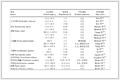 Table 1.
Stability comparison of various methanol steam reforming catalysts
Catalyst Reaction temp. t/℃ Time on stream t/h Decrease in MeOH conversion w/% CuO/Cr2O3/F2O3/Graphite[2] 220 100 about 30%-40% of its initial activity CuO/ZrO2/CeO2[2] CuO/ZnO/Al2O3/Graphite[2] Cu/La2O3/ZrO2 [5] 300 10 about 18%-24% of its initial activity Cu/Y2O3/ZrO2 30/20/50[5] 300 10 stable at about 70% Cu/Y2O3/ZrO2[5] 300 10 about 11%-32% of its initial activity Cu/CeO2/ZrO2[5] 300 10 about 30% of its initial activity Cu/Al2O3/ZrO2[5] 300 10 about 21%-32% of its initial activity CuO/CeO2[14] 300 40 from 98% to 90% in the first 10 h, then stable at 90% Cu/ZnO/Al2O3[15] 400 8 from 82% to 52% Cu/ZrO2[15] 400 8 from 64% to 22% Cu/ZnO/25%ZrO2[15] 400 24 from 93% to 70% 40-Cu/SiO2[17] 300 6 from 95% to 84% Mo2C/ZrO2[24] 400 10 stable at about 90% Cu/ZnO/Al2O3[25] 250 8 from 39% to 33% 50%Cu/ZnO[25] 250 8 stable at 22%-23% 40%Cu/ZnO/ZrO2[25] 250 8 stable at 31%-32% 50%Cu/ZnO[25] 400 7 from 89% to 69% 40%Cu/ZnO/ZrO2[25] 400 28 from 100% to 80% Cu/ZnO/ZrO2/Al2O3[26] 260 5 from 98% to 92% ZnO/Cu/SiO2[27] 300 6 stable at 87%-88% CuO/ZnO/ZrO2/Al2O3[28] 250 110 about 18%-31% of its initial activity CuO/ZnO/Al2O3[29] 250 320 from 60% to 52% CuO/ZnO/Al2O3[30] 250 24 stable at about 92%-94% This work 300 60 stable at about 88%-92% Table 1. Stability comparison of various methanol steam reforming catalysts2.2 Effect of feed flow rate
Methanol conversion and CO selectivity at different temperatures vs feed flow rate (H2O/CH3OH=2) is shown in Figure 2. Water: methanol molar ratio in these experiments was 2. Obviously, by increasing the feed flow and decreasing the contact time, the methanol conversion or hydrogen production per mole of methanol was reduced; however, the hydrogen production rate was increased.
 Figure 2.
Effect of the feed flow rate on the methanol conversion, H2 production and CO selectivity at different temperatures (H2O/CH3OH (molar ratio)=2)
For example, hydrogen production rate was increased from 69 to 200 mmol/(h·g) when WHSV was increased from 1.6 to 5.3 h-1 at 350 ℃, while methanol conversion was decreased from complete conversion to 88%. Also, by increasing the feed flow rate the CO formation was decreased. CO production was observed at nearly complete conversions. These results may indicate that on the copper-silica aerogel catalyst CO does not form in the reaction mechanism or as a by-product from the reactants, but is produced as a consecutive product from the main reaction products through the reverse water-gas shift reaction. The higher the conversion, the higher the main product (CO2 and H2) concentration and thus the possibility of CO production is increased. Even at high temperatures which have lower conversions the formation of CO was not observed and as the methanol exists in the reaction space the CO formation is not desirable. As a result, the copper-silica aerogel catalyst in the methanol steam reforming CO does not participate in the reaction mechanism and the direct conversion of reactant to CO is unlikely. This result was in good agreement with the observations and proposed mechanism for Cu-SiO2 catalyst in[13, 17, 18, 31].This is an advantage for the catalyst in MSR process which has no tendency to produce CO from reactants and also its selectivity to the consecutive CO production reaction is very low.
2.3 Effect of water: methanol ratio
Hydrogen production rate as a function of methanol inlet at different molar ratios of water to methanol at 300 ℃ was plotted in Figure 3. As seen, when this ratio is increased the hydrogen production per mole of methanol inlet was increased slightly. These results show that the presence of steam in the reaction environment has a favorable effect on the catalyst activity. This becomes even more important when we know that, in this case fixed rate of methanol does not mean the same total feed rate; however, for a constant methanol inlet, by increasing the water to methanol ratio the total feed flow was increased, and by increasing the water: methanol ratio at a constant methanol feed, although the total liquid feed flow is increased or retention time was decreased, the hydrogen production or methanol conversion was increased. In other words, at a constant methanol feed, with higher ratios of water to methanol despite the retention time of methanol in the reactor being lower, the methanol conversion is higher. For instance, at about the same methanol feed rate, 63.5 and 62.8 mmol/(h·g) for steam to methanol ratio of 3.0 and 2.0, respectively, WHSV is 5.4 and 4.3 h-1 and hydrogen production rate is 151.3 and 134.3 mmol/(h·g), respectively. This favorable effect of steam concentration was reported in[23, 32], too. This favorable effect is not limited to catalyst activity, as the higher ratios of water to methanol lead to desired selectivity. So by increasing this ratio the minimum temperature in which the formation of CO was observed was increased. In other words, by increasing this ratio CO production at the same reaction temperature was reduced. This result is in agreement with the obtained result in the section 2.2 which indicates CO was produced as a secondary product through reverse water gas shift reaction. Indeed, by increasing the amount of water in the reaction environment by increasing its molar ratio in the feed, the progress of the water gas shift reaction toward CO production side will be inhibited or decreased.
 Figure 3.
Hydrogen production rate using different molar ratio (R) of steam to methanol
The lowest reaction temperature at which CO was formed and the corresponding CO selectivity for different water: methanol molar ratio was given in Table 2. For molar ratios of 1.2 and 2 the formation of CO was observed at 325 ℃, however, for ratio of 2 CO was not formed at higher feed flow rates. This indicates that CO selectivity is lower for a ratio of 2 rather than 1.2. For water: methanol molar ratio of 3.0 and 5.0 the lowest temperature of CO formation was 350 and 375 ℃, respectively. Thus, the CO selectivity decreases with water: methanol molar ratio.
Table 2.
Lowest temperature of the CO formation and corresponding CO selectivity at different steam to methanol molar ratios
Steam to methanol molar ration Lowest temperature of CO formation t/℃ Liquid feed flow q/(mL·h-1) CO selectivity s/% 1.2 325 1.2 8.8 2.4 6.9 4.8 5.2 6.0 4.5 2 325 1.2 8.2 1.8 4.4 3.0 0 4.8 0 3 350 3.0 3.4 6.0 2.8 9.0 2.0 5 375 8.4 2.5 Table 2. Lowest temperature of the CO formation and corresponding CO selectivity at different steam to methanol molar ratios2.4 Effect of reaction temperature
Effect of reaction temperature on the reaction rate is shown in Figures 4 and 5. Results of Figures 4 and 5 are obtained at water to methanol ratios of 5 and 2, respectively. As seen, temperature had a significant effect on the methanol conversion. For instance, for molar ratio of 5.0 the methanol conversion increases from 49% to 100% as the temperature was increased from 210 to 275 ℃ at feed rate of 1.8 mL/h, and increases from 21% to 84% as the temperature was increased from 210 to 300 ℃ at feed rate of 8.4 mL/h. At molar ratio of 2.0 and feed rate of 3 mL/h the methanol conversion increases from 30% to 80% as the temperature was increased from 240 to 300 ℃. In the case of selectivity, for all performed experiments no CO formation was observed at temperatures lower than 300 ℃ and the lowest temperatures of CO formation and CO selectivity for various conditions are given in Table 2. Generally, it is observed that CO formation increases with reaction temperature which is compatible with the CO formation through reverse water gas shift reaction. Indeed, reverse water gas shift reaction is an endothermic reaction with CO2 and H2 as reactants. In addition to the direct influence of rising temperature, the methanol conversion and also CO2 and H2 concentration in the reactor were increased as the temperature rose. Therefore, as the temperature is increased the conditions for this reaction became favorable. The influence of temperature on the CO selectivity is also shown in Figure 4.
 Figure 4.
Effect of reaction temperature on the methanol conversion using H2O/CH3OH molar ratio of 5.0 at different liquid feed rates
 Figure 5.
Effect of reaction temperature on the methanol conversion and CO selectivity using H2O/CH3OH molar ratio of 2.0 at different liquid feed rates
It is found that to maintain the methanol conversion of at least 95%, and to produce the highest hydrogen amount without CO formation, feed rates of 3.0 and 8.4 mL/min and temperatures of 325 and 350 ℃ can be used for steam to methanol ratio of 2.0 and 5.0, respectively. In these conditions the hydrogen production rates were 114 and 186 mmol/(h·g).
2.5 Effect of carrier gas flow
The effect of carrier gas flow rate variation on the methanol conversion at a constant feed flow rate and various conditions is shown in Figure 6.
 Figure 6.
Effect of carrier gas flow rate on the methanol conversion at different conditions
In all conditions, increasing the carrier flow rate decreases the methanol conversion and this is due to the reduction of reactant residence time. However, this effect is not significant, so when the carrier flow rate increases 3, 4 times, the methanol conversion only reduces about 5%-10%. Although increasing the carrier flow decreases the hydrogen production, on the other hand, it slightly reduces CO selectivity. The effect of carrier flow rate on the CO selectivity is given in Figure 7. Here, CO2 and H2 concentration is reduced in the product and according to CO formation through reverse water gas shift reaction the possibility of reaction between CO2 and H2 and CO formation is lessened.
 Figure 7.
Effect of carrier gas flow rate on CO selectivity at different conditions (R: H2O/CH3OH molar ratio, F: liquid feed flow: (mL/h), t: reaction temperature (℃))
3 Conclusions
The stability of the prepared copper-silica aerogel catalyst in the normal reaction condition of methanol steam reforming was established. Reaction parameters showed a significant effect on the hydrogen production rate and CO selectivity. The most effective parameter on the catalyst performance was reaction temperature. On the basis of feed flow and steam to methanol molar ratio the complete conversion of methanol can be achieved at about 300-350 ℃ without any CO formation. Increasing the steam to methanol molar ratio had a favorable effect on the reaction, and CO formation was decreased when this ratio was increased. To maintain the methanol conversion value higher than 95% and to achieve the highest rate of hydrogen production with no CO formation, the best result was obtained at 350 ℃ with liquid feed flow of 8.4 mL/min and steam to methanol ration of 5.0. In this condition the WHSV was 7.85 h-1 and hydrogen production rate was 186 mmol/(h·g). Lower CO selectivity was obtained at higher contact time, higher liquid feed flow rate or carrier gas flow, and lower concentration of H2 and CO2 in the reactor effluent as well as lower reaction temperature. The most likely path to CO formation is reverse water gas shift reaction. This scheme is a consecutive reaction and takes place about complete conversions in which no methanol presents within the reactor. The Cu-SiO2 aerogel catalyst had very low selectivity to CO formation.
-
-
[1]
JONES S D, HAGELIN-WEAVER H E. Steam reforming of methanol over CeO2-and ZrO2-promoted Cu-ZnO catalysts supported on nanoparticle Al2O3[J]. Appl Catal A: Gen, 2009, 90(1/2): 195-204.
-
[2]
FRANK B, JENTOFT F C, SOERIJANTO H, KRöHNERT J, SCHLÖGL R, SCHOMÖCKER R. Steam reforming of methanol over copper-containing catalysts: Influence of support material on microkinetics[J]. J Catal, 2007, 246(1): 177-192. doi: 10.1016/j.jcat.2006.11.031
-
[3]
AGRELL J, BIRGERSSON H, BOUTONNET M. Steam reforming of methanol over a Cu/ZnO/Al2O3 catalyst: A kinetic analysis and strategies for suppression of CO formation[J]. J Power Sources, 2002, 106(1/2): 249-257.
-
[4]
SA S, SOUSA J M, MENDES A L. Steam reforming of methanol over a CuO/ZnO/Al2O3 catalyst part Ⅱ: A carbon membrane reactor[J]. Chem Eng Sci, 2011, 66(22): 5523-5530. doi: 10.1016/j.ces.2011.06.074
-
[5]
CLANCY P, BREEN J P, ROSS J R H. The preparation and properties of coprecipitated Cu-Zr-Y and Cu-Zr-La catalysts used for the steam reforming of methanol[J]. Catal Today, 2007, 127(1/4): 291-294.
-
[6]
PURNAMAA H, GIRGSDIES F, RESSLER T, SCHATTKA J H, CARUSO R A, SCHOMACKERC R, SCHLÖGL R. Activity and selectivity of a nanostructured CuO/ZrO2 catalyst in the steam reforming of methanol[J]. Catal Lett, 2004, 94(1): 61-68.
-
[7]
MONYANON S, LUENGNARUEMITCHAI A, PONGSTABODEE S. Optimization of methanol steam reforming over a Au/CuO-CeO2 catalyst by statistically designed experiments[J]. Fuel Process Technol, 2012, 96: 160-168. doi: 10.1016/j.fuproc.2011.12.024
-
[8]
TURCO M, CAMMARANO C, BAGNASCO G, MORETTI E, STORARO L, TALON A, LENARDA M. Oxidative methanol steam reforming on a highly dispersed CuO/CeO2/Al2O3 catalyst prepared by a single-step method[J]. Appl Catal B: Environ, 2009, 91(1/2): 101-107.
-
[9]
SZIZYBALSKI A, GIRGSDIES F, RABIS A, WANG Y, NIEDERBERGER M, RESSLER T. In situ investigations of structure-activity relationships of a Cu/ZrO2 catalyst for the steam reforming of methanol[J]. J Catal, 2005, 233(2): 297-307. doi: 10.1016/j.jcat.2005.04.024
-
[10]
LINDSTRRÖM B, PETTERSSON L J, MENON P G. Activity and characterization of Cu/Zn, Cu/Cr and Cu/Zr on alumina for methanol reforming for fuel cell vehicles[J]. Appl Catal A: Gen, 2002, 234(1/2): 111-125.
-
[11]
CONANT T, KARIM A M, LEBARBIER V, WANG Y, GIRGSDIES F, SCHLOGL R, DATYE A. Stability of bimetallic Pd-Zn catalysts for the steam reforming of methanol[J]. J Catal, 2008, 257(1): 64-70. doi: 10.1016/j.jcat.2008.04.018
-
[12]
CHIN Y H, DAGLE R, HU J, DOHNALKOVA A C, WANG Y. Steam reforming of methanol over highly active Pd/ZnO catalyst[J]. Catal Today, 2002, 77(1/2): 79-88.
-
[13]
TAKEZAWA N, IWASA N. Steam reforming and dehydrogenation of methanol: Difference in the catalytic functions of copper and group VIII metals[J]. Catal Today, 1997, 36(1): 45-56. doi: 10.1016/S0920-5861(96)00195-2
-
[14]
UDANI P P C, GUNAWARDANA P V D S, LEE H C, KIM D H. Steam reforming and oxidative steam reforming of methanol over CuO-CeO2 catalysts[J]. Int J Hydrogen Energy, 2009, 34(18): 7648-7655. doi: 10.1016/j.ijhydene.2009.07.035
-
[15]
MATSUMURA Y, ISHIBE H. High temperature steam reforming of methanol over Cu/ZnO/ZrO2 catalysts[J]. Appl Catal B: Environ, 2009, 91(1/2): 524-532.
-
[16]
TAKEZAWA N, KOBAYASHI H, HIROSE A, SHIMOKAWABE M, TAKAHASHI K. Steam reforming of methanol on copper-silica catalysts; effect of copper loading and calcination temperature on the reaction[J]. Appl Catal, 1982, 4(2): 127-134. doi: 10.1016/0166-9834(82)80243-1
-
[17]
MATSUMURA Y, ISHIBE H. Selective steam reforming of methanol over silica-supported copper catalyst prepared by sol-gel method[J]. Appl Catal B: Environ, 2009, 86(3/4): 114-120.
-
[18]
TAKAHASHI K, TAKEZAWA N, KOBAYASHI H. The mechanism of steam reforming of methanol over a copper-silica catalyst[J]. Appl Catal, 1982, 2(6): 363-366. doi: 10.1016/0166-9834(82)80154-1
-
[19]
DUNN B C, COLE P, COVINGTON D, WEBSTER M C, PUGMIRE R J, ERNST R D, EYRING E M, SHAH N, HUFFMAN G P. Silica aerogel supported catalysts for Fischer-Tropsch synthesis[J]. Appl Catal A: Gen, 2005, 278(2): 233-238. doi: 10.1016/j.apcata.2004.10.002
-
[20]
DOMINGUEZ M, TABOADA E, MOLINS E, LLORCA J. Co-SiO2 aerogel-coated catalytic walls for the generation of hydrogen[J]. Catal Today, 2008, 138(3/4): 193-197.
-
[21]
YOUSEFI AMIRI T, MOGHADDAS J S. Cogeled copper-silica aerogel as a catalyst in hydrogen production from methanol steam reforming[J]. Int J Hydrogen Energy, 2015, 40(3): 1472-1480. doi: 10.1016/j.ijhydene.2014.11.104
-
[22]
PARK G G, SEO D J, PARK S H, YOON Y G, KIM C S, YOON W L. Development of microchannel methanol steam reformer[J]. Chem Eng Sci, 2004, 101(1/3): 87-92.
-
[23]
DU X, SHEN Y, YANG L, SHI Y, YANG Y. Experiments on hydrogen production from methanol steam reforming in the microchannel reactor[J]. Int J Hydrogen Energy, 2002, 37(17): 12271-12280.
-
[24]
LIN S S Y, THOMSON W J, HAGENSEN T J, HA S Y. Steam reforming of methanol using supported Mo2C catalysts[J]. Appl Catal A: Gen, 2007, 318: 121-127. doi: 10.1016/j.apcata.2006.10.054
-
[25]
MATSUMURA Y, ISHIBE H. Effect of zirconium oxide added to Cu/ZnO catalyst for steam reforming of methanol to hydrogen[J]. J Mol Catal A: Chem, 2011, 345(1/2): 44-53.
-
[26]
JEONG H, KIM K I, KIM T H, KO C H, PARK H C, SONG I K. Hydrogen production by steam reforming of methanol in a micro-channel reactor coated with Cu/ZnO/ZrO2/Al2O3 catalyst[J]. J Power Sources, 2006, 159(2): 1296-1299. doi: 10.1016/j.jpowsour.2005.11.095
-
[27]
MATSUMURA Y, ISHIBE H. Suppression of CO by-production in steam reforming of methanol by addition of zinc oxide to silica-supported copper catalyst[J]. J Catal, 2009, 268(2): 282-289. doi: 10.1016/j.jcat.2009.09.026
-
[28]
HUANG G, LIAW B J, JHANG C J, CHEN Y Z. Steam reforming of methanol over CuO/ZnO/CeO2/ZrO2/Al2O3 catalysts[J]. Appl Catal A: Gen, 2009, 358(1): 7-12. doi: 10.1016/j.apcata.2009.01.031
-
[29]
PURNAMA H, RESSLER T, JENTOFT R E, SOERIJANTO H, SCHLÖGL R, SCHOMÄCKER R. CO formation/selectivity for steam reforming of methanol with a commercial CuO/ZnO/Al2O3 catalyst[J]. Appl Catal A: Gen, 2004, 259(1): 83-94. doi: 10.1016/j.apcata.2003.09.013
-
[30]
SHISHIDO T, YAMAMOTO Y, MORIOKA H, TAKAKI K, TAKEHIRA K. Active Cu/ZnO and Cu/ZnO/Al2O3 catalysts prepared by homogeneous precipitation method in steam reforming of methanol[J]. Appl Catal A: Gen, 2004, 263(2): 249-253. doi: 10.1016/j.apcata.2003.12.018
-
[31]
TAKAHASHI K, KOBAYASHI H, TAKEZAWA N. On the difference in reaction pathways of steam reforming of methanol over copper-silica and platinum catalysts[J]. Chem Lett, 1982, 14(6): 759-762.
-
[32]
BASILE A, PARMALIANA A, TOSTI S, IULIANELLI A, GALLUCCI F, ESPRO C, SPOOREN J. Hydrogen production by methanol steam reforming carried out in membrane reactor on Cu/Zn/Mg-based catalyst[J]. Catal Today, 2008, 137(1): 17-22. doi: 10.1016/j.cattod.2008.03.015
-
[1]
-

Figure 1 Catalytic activity of copper silica aerogel in methanol steam reforming.
(t=300 ℃, H2O/CH3OH (molar ratio)=2, Ar flow=30 mL/min, MeOH Feed=23.5 mmol·h-1·gcat-1)

Figure 2 Effect of the feed flow rate on the methanol conversion, H2 production and CO selectivity at different temperatures (H2O/CH3OH (molar ratio)=2)
■: 240 ℃; ▲: 300 ℃◇: 325 ℃; ●: 350 ℃

Figure 3 Hydrogen production rate using different molar ratio (R) of steam to methanol

Figure 4 Effect of reaction temperature on the methanol conversion using H2O/CH3OH molar ratio of 5.0 at different liquid feed rates

Figure 5 Effect of reaction temperature on the methanol conversion and CO selectivity using H2O/CH3OH molar ratio of 2.0 at different liquid feed rates

Figure 6 Effect of carrier gas flow rate on the methanol conversion at different conditions
(R: H2O/CH3OH molar ratio, F: liquid feed flow: (mL/h), t: reaction temperature (℃))

Figure 7 Effect of carrier gas flow rate on CO selectivity at different conditions (R: H2O/CH3OH molar ratio, F: liquid feed flow: (mL/h), t: reaction temperature (℃))
Table 1. Stability comparison of various methanol steam reforming catalysts
Catalyst Reaction temp. t/℃ Time on stream t/h Decrease in MeOH conversion w/% CuO/Cr2O3/F2O3/Graphite[2] 220 100 about 30%-40% of its initial activity CuO/ZrO2/CeO2[2] CuO/ZnO/Al2O3/Graphite[2] Cu/La2O3/ZrO2 [5] 300 10 about 18%-24% of its initial activity Cu/Y2O3/ZrO2 30/20/50[5] 300 10 stable at about 70% Cu/Y2O3/ZrO2[5] 300 10 about 11%-32% of its initial activity Cu/CeO2/ZrO2[5] 300 10 about 30% of its initial activity Cu/Al2O3/ZrO2[5] 300 10 about 21%-32% of its initial activity CuO/CeO2[14] 300 40 from 98% to 90% in the first 10 h, then stable at 90% Cu/ZnO/Al2O3[15] 400 8 from 82% to 52% Cu/ZrO2[15] 400 8 from 64% to 22% Cu/ZnO/25%ZrO2[15] 400 24 from 93% to 70% 40-Cu/SiO2[17] 300 6 from 95% to 84% Mo2C/ZrO2[24] 400 10 stable at about 90% Cu/ZnO/Al2O3[25] 250 8 from 39% to 33% 50%Cu/ZnO[25] 250 8 stable at 22%-23% 40%Cu/ZnO/ZrO2[25] 250 8 stable at 31%-32% 50%Cu/ZnO[25] 400 7 from 89% to 69% 40%Cu/ZnO/ZrO2[25] 400 28 from 100% to 80% Cu/ZnO/ZrO2/Al2O3[26] 260 5 from 98% to 92% ZnO/Cu/SiO2[27] 300 6 stable at 87%-88% CuO/ZnO/ZrO2/Al2O3[28] 250 110 about 18%-31% of its initial activity CuO/ZnO/Al2O3[29] 250 320 from 60% to 52% CuO/ZnO/Al2O3[30] 250 24 stable at about 92%-94% This work 300 60 stable at about 88%-92%  下载: 导出CSV
Table 2. Lowest temperature of the CO formation and corresponding CO selectivity at different steam to methanol molar ratios
Steam to methanol molar ration Lowest temperature of CO formation t/℃ Liquid feed flow q/(mL·h-1) CO selectivity s/% 1.2 325 1.2 8.8 2.4 6.9 4.8 5.2 6.0 4.5 2 325 1.2 8.2 1.8 4.4 3.0 0 4.8 0 3 350 3.0 3.4 6.0 2.8 9.0 2.0 5 375 8.4 2.5
下载: 导出CSV
-


 扫一扫看文章
计量
- PDF下载量: 0
- 文章访问数: 0
- HTML全文浏览量: 0
 下载: